

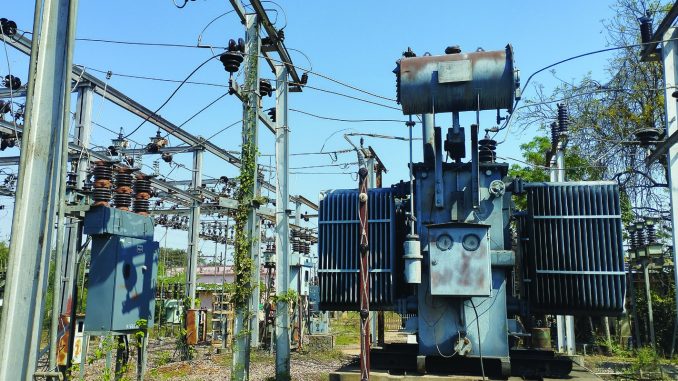
India’s transmission network has seen unprecedented expansion over the past couple of years, resulting in the formation of one of the largest single synchronous grids in the world. Transformers and reactors are some of the most important equipment in a power system. Indeed, they represent a large expense to the system over the course of their purchase, preparation, assembly, operations and maintenance. Testing and measurement (T&M) solutions for transformers and reactors assist in creating a robust, reliable and optimally planned power distribution network in the country.
There exists a wide variety of T&M solutions that can be utilised for transformers and reactors, to enhance their condition assessment, monitoring and maintenance.
Power Line takes a look at some of the widely used T&M methods:
Transformer testing
Transformer testing can be carried out either at the factory during the manufacturing process, or at the consumer’s site at the time of installation. Routine testing of transformers is typically conducted on samples taken from batches delivered by manufacturers to storage. Every transformer should be visually inspected at the store for physical damage. If utilities opt for 100 per transformer testing, in-process inspections at the manufacturing stage can be skipped. Utilities can initiate CUT-OPEN testing of transformers at their store, reducing the need to visit manufacturer factories and mitigating inspection malpractices. Loss testing should be conducted on a random sample from each lot. Additionally, every transformer should undergo insulation resistance and loss tests at the utility store.
Type tests: These are mainly conducted on a prototype unit to ensure that manufacturing is compliant with customer-specified requirements, basic design expectations and standard criteria. It checks the quality, performance and safety of the unit. Commonly used type tests include winding resistance tests, dielectric tests and temperature rise tests.
A winding resistance test is deployed to check the resistance of a transformer’s windings and connections, by passing and measuring a direct current voltage through them. This ensures that each circuit is correctly wired, with all connections properly secured. The test can help in determining factors that could potentially damage the transformer, such as poor design, assembly and handling, or improper maintenance.
A dielectric test verifies the dielectric strength of the insulation by evaluating its ability to withstand standard operational voltages as well as significantly higher levels. This test is required to check insulation adequacy in order to prevent the possibility of a transformer failure. It is carried out in two stages – source voltage withstand test and induced voltage withstand test.
A temperature rise test is done to determine whether the temperature rise limit of the transformer winding and oil is as per the specified criteria. It is carried out by placing one thermometer in a pocket in the transformer’s top cover, and two at the inlet and outlet of the cooler bank. Temperature rise is subsequently tested at the rated voltage and frequency.
Routine tests: These are conducted to check the operational efficiency of individual units in a production lot. They are carried out on all manufactured units, unlike type tests, which are conducted on only one unit. However, these tests also share many similarities with type tests (barring temperature tests). The Central Electricity Authority’s (CEA’s) guidelines mandate that a transformer should be tested as per the manufacturing quality plan provided by the purchaser, and also specify a loss range of 2 per cent to avoid the possibility of transformer rejection.
There are various types of routine tests, such as ratio tests and polarity and vector group tests. Ratio tests are carried out in the event of a fault that is suspected to have damaged the transformer windings completely or partially. This test is performed by using a transformer turns ratio meter, and measures the induced voltages at the high-voltage and low-voltage terminals of the transformer so as to calculate the actual transformer voltage, and identify any abnormalities in winding due to shorted or open turns.
In a three-phase transformer, polarity and vector group tests are conducted to determine the phase relationship and polarity of the transformer’s connections. “Polarity” refers to the direction of induced voltages in the primary and secondary windings of the transformer. A polarity test is used to identify which terminals of the primary and secondary windings have the same polarity.
Pre-commissioning tests: All transformers are also subjected to pre-commissioning tests, periodic condition monitoring tests and emergency tests at the installation site prior to the start of their operations. Such tests are necessary to ensure the health of transformers and make sure that all system components are properly installed and tested. Protective relay testing and transformer oil testing are some of the different kinds of pre-commissioning tests used.
Protective relay testing checks the communication path between the relays to ensure that it is unbroken, and the signal strength is within the specified limits. This test needs to be carried out on a regular basis to mitigate the risks of electrical faults and damage to the equipment, and ensure operational safety of the system.
A dynamic short-circuit test should be conducted on the high voltage (HV)-impedance voltage (IV) combination at both the nominal and extreme tap positions. For the low voltage (LV) winding, the dynamic short-circuit test should be performed on either the HV-LV or IV-LV combination, depending on which one is likely to result in the higher short circuit current according to calculations. Additionally, dissolved gas analysis, frequency response analysis and all routine tests should be conducted both before and after the short-circuit test.
Transformer oil testing is considered to be a proven loss prevention technique. Transformer oil serves as a heat transfer medium and is used to insulate and cool a transformer. Electrical disturbances inside the transformer can generate gases within it. Performing dissolved gas analysis (DGA) on a sample of the insulating oil is among the widely known methods of oil testing. DGA is employed to identify the reason, nature, amount and rate of gas generation, helping determine the type and degree of abnormality, as well as the urgency of corrective action.
Reactor testing
Reactors are made up of inductive material and are primarily used for voltage and current regulation. They limit the voltage levels and the flow of electric current to manageable levels. Hence, regular testing of reactors is critical in ensuring the stability and efficiency of electric grids.
A measurement of reactance test measures the reactance of each winding in a shunt reactor by applying a three-phase supply voltage, and measuring the current flowing through each phase of a winding. The test is useful for checking the inductance of the windings. The measurement of DC insulation resistance from each winding to earth and between windings should be carried out at 5000 V DC. The polarisation index (PI) is the ratio of the insulation resistance value at the end of a 10-minute test to that at the end of a one-minute test at a constant voltage. It is recommended that PI values be higher than 1.3. A reactor should be tested in grounded specimen testing mode only from winding to tank for the measurement of capacitance and tan delta of winding to earth at 2 kV and 10 kV voltage levels. The tan delta of a winding should not exceed 0.5 per cent at ambient temperature. No temperature correction factor should be applied.
Regulatory framework
In 2021, the CEA revised its specifications for transformers and reactors, with a focus on dynamic short-circuit testing. The regulations mandated that transformer designs must have undergone this test within the past five years according to IS 2026 Part-5. This has eliminated the need for repeated tests, streamlining the procurement process and reducing delivery times. Design standardisation helps reduce the frequency of design reviews and promotes the interchangeability of transformers and reactors, lowering inventory requirements. Manufacturers are required to conduct compulsory type tests and can use National Accreditation Board for Testing and Calibration Laboratories-certified labs while upgrading their facilities.
The CEA’s 2022 guidelines state that transformers passing all relevant tests should not be rejected, and short-circuit tests need not be repeated if component ratings meet or exceed standards. This amendment simplifies procurement, ensures timely project completion and supports standardisation efforts.
Conclusion
The CEA’s revised testing procedures and standardisation criteria aim to enhance the performance and functionality of transformers and reactors. While these regulations present short-term challenges, such as reduced competition among manufacturers and increased testing burdens due to rising energy demand and grid complexity, they promise long-term benefits. Improved reliability, performance and energy efficiency will lead to reduced costs, fewer failures and quicker fault detection for transmission utilities. The T&M sector is poised for significant growth and transformation, driven by technological advancements and industrial energy demands. These developments will contribute to the construction of a robust and reliable power grid.