
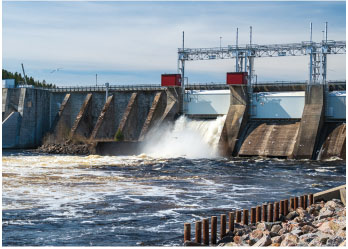
 Hydropower plants have higher availability and longer life expectancy compared to most other generation technologies, with the potential to exceed 95 per cent availability under favourable conditions. Achieving such high levels of availability is contingent upon the facility being operated and maintained using best practices. An effective hydropower operations and maintenance (O&M) strategy aims to enhance public, staff and plant safety while safeguarding investments and ensuring a return throughout the facility’s life.
Asset management of hydropower plants has undergone a transformation, shifting from traditional reactive and fixed-interval maintenance practices to more proactive, preventative and risk-based approaches. The emphasis is on minimising downtime for individual generating units and the entire plant, maximising operational reliability, and ensuring seamless electricity generation to meet grid demands efficiently and sustainably. Further, compliance with relevant rules, regulations and safety measures is essential, as is adhering to approved maintenance schedules to maximise plant life. This includes maintaining and repairing civil structures, machinery, instruments and tools. Detailed records of generation, auxiliary consumption, export and import must be kept. Plant operations should be optimised based on water availability, and regular inspections of the water conductor system, both internally and externally, are necessary to assess conditions such as silt deposition, leakages and rusting/erosion.
However, there is no universal O&M strategy for hydropower facilities as each must be tailored to unique influencing factors. These include the country and its economic development, location and accessibility, and the type, age, size and capacity of the facility. Other considerations are operating constraints such as grid codes, PPA requirements, environmental licences, e-flows, flood protection and gradient controls, as well as regional environmental regulations.
Asset management
Water intake, water conduit system and associated equipment
The water storage (reservoir) and water conductor system, including the intake, the head race tunnel, the surge shaft, emergency valves, pressure shafts, penstock and main inlet valves are crucial components of a hydropower plant. Due to the impacts of water hammer during sudden changes in water flow, these components require meticulous attention. Regular testing of the conduit isolation system and equipment, such as intake gates, butterfly valves, excess flow devices and surge equipment, is essential. Periodic physical inspections of the water conductor system, both internally and externally, are necessary to assess its condition, including silt deposition and rusting/erosion. Detailed records of these inspections should be maintained, noting both normal and abnormal findings, and compared with installation data to detect changes due to ageing or water hammer stresses. Any abnormalities should be investigated further through hydraulic testing, ultrasonic thickness measurements and stress tests at critical locations.
Leakages must be meticulously recorded and the deteriorated valve seals should be replaced with new, advanced materials to extend equipment life. The hydraulic system oil should be purified and frequently tested according to manufacturer recommendations, with online electrostatic liquid cleaners recommended for optimal results. Monitoring for cavitation and erosion at the top portion due to air rush during fill-up, adhering to inspection schedules for anti-corrosive paints, and establishing replacement schedules for vulnerable parts such as bends and open conduits are also necessary. Regular inspection and cleaning of open conduits, timely O&M of cranes, hoists, trash-rack/intake gate filters and communication systems, availability of power supply and emergency operation equipment, and construction of approach roads are all critical to the proper functioning of the hydropower plant.
Turbine and its auxiliaries
Turbines and their auxiliaries require consistent maintenance, especially Francis turbines, which often need isolation due to their frequent immersion in water. Manufacturer guidelines should be strictly followed to avoid damage. Cavitation can cause significant damage to the turbine wheel, reducing performance and efficiency. Repairs using compounds like Belzona, Loctite, SS Metalset and Throtex, or low heat input welding, can address erosions and pitting effectively.
Each power station should install a system to continuously monitor silt content, taking action to protect underwater parts and minimise downtime. Microprocessor-based digital PID speed governors offer fast response and require periodic maintenance of all mechanical, electrical and electronic components. Proper dressing of control circuits and maintenance of electronic components at appropriate temperatures are essential. Transducers and meters should be periodically calibrated and tested, and the hydraulic oil’s purity should be maintained.
Specific turbine maintenance tasks include periodic non-destructive testing such as ultrasonic testing, annual polishing of underwater parts, expert inspection of runners for residual life assessment, labyrinth seal inspection, anti-corrosive painting of runner housing, and application of anti-erosion coating on runners. For Pelton turbines, brake jet operation should be checked quarterly. Governor maintenance involves purifying hydraulic oils using centrifugal and electrostatic cleaners, undertaking periodic maintenance of servo valves and motors, inspecting pistons and housings for wear, replacing leaking seals, and maintaining an inventory of critical components.
Generator and its auxiliaries
The main components of a generator –stator and rotor windings, bearings and the excitation system – require diligent maintenance. The insulation resistance values of the windings should be regularly recorded and Tan Delta and DLA tests should be conducted for the stator winding insulation, and impedance tests for rotor winding condition should be done. Proper cooling must be maintained to limit stator winding temperature rise and extend its life. Regular inspections ensure the stator winding’s firmness in core slots and the health of the overhang portion, including end winding caps, end spacers and slot wedges. Re-varnishing windings can enhance their life, while addressing stator core looseness. Inter-lamination insulation is critical to prevent eddy current loss-induced heating. Maintenance records should be meticulously kept, and corrective actions taken as necessary.
Periodic tasks include checking and tightening foundations, monitoring vibrations for signs of misalignment or component issues, cleaning or replacing air and oil coolers, and testing protection systems. Mock trials of firefighting and evacuation systems, and regular checks on CO2 cylinder weight with replenishments as needed, are also necessary.
Repair and rehabilitation
Dam rehabilitation involves restoring dams to their original state while enhancing them to meet updated safety standards. Assessing functional requirements and using standardised materials optimise costs and enhance plant safety. Early rehabilitation and retrofitting of civil structures is crucial for sustained operation. Standardising repair processes aids in the early detection of deficiencies, ensuring structural integrity and addressing safety concerns exacerbated by monsoon-induced sediment and ageing. Regular inspections identify damage such as cracks and spalling, guiding repair planning under tight deadlines with quality assurance systems for timely completion. Various construction materials, including high performance concrete and epoxy compounds, bolster structural integrity and waterproofing. The Dam Rehabilitation and Improvement Project by the Central Water Commission and the World Bank aims to enhance systemwide safety, crucial amid challenges like population density and land use intensity. Renovation, modernisation and upgrades rely on technological advancements and updated studies for optimal safety and efficiency gains.
Digital solutions
The digitalisation of hydropower plants can significantly enhance asset value, productivity and safety while optimising O&M costs. Digital controls provide precise measurements of parameters like flow, pressure and power, thereby improving project efficiency and reservoir management.
Continuous data collection in digital power plants enables the analysis and identification of performance deviations and potential faults. Smart software can detect issues before they occur, thus reducing downtime. Advanced real-time monitoring systems can identify normal plant parameters and raise alerts for anomalies, shifting maintenance strategies from corrective to preventive and predictive. This approach reduces equipment breakdowns, saves costs, increases generation and improves performance. Automation allows remote plant operation, while analytical software provides comprehensive management of maintenance activities, facilitating better scheduling, planning and accuracy.
Remote monitoring technologies, such as drones and computer vision, reduce the need for on-site personnel in remote terrain. Artificial intelligence and machine learning enable predictive maintenance by learning failure modes and optimising capital and operations expenditure. Big data analytics aggregate data from multiple sources, facilitating the integration of energy sources and market data into production planning. Advanced analytics leverage IoT data for early detection of underperformance and failure, increasing productivity and optimising production for maximum revenue based on historical trends and forecasts.
Conclusion
The evolution of asset management in hydropower plants towards proactive, preventative and risk-based approaches underscores the industry’s commitment to maximising operational efficiency and reliability. By adhering to international standards and leveraging advanced technologies such as digital controls, IoT sensors and digital twins, hydropower operators can effectively monitor, analyse and optimise plant performance in real time. Integrated digital solutions not only improve asset management but also facilitate seamless integration with renewable energy sources, contributing to sustainable and efficient energy production. As the industry continues to innovate and adopt these technologies, the future of hydropower promises greater efficiency, reliability and environmental sustainability.