

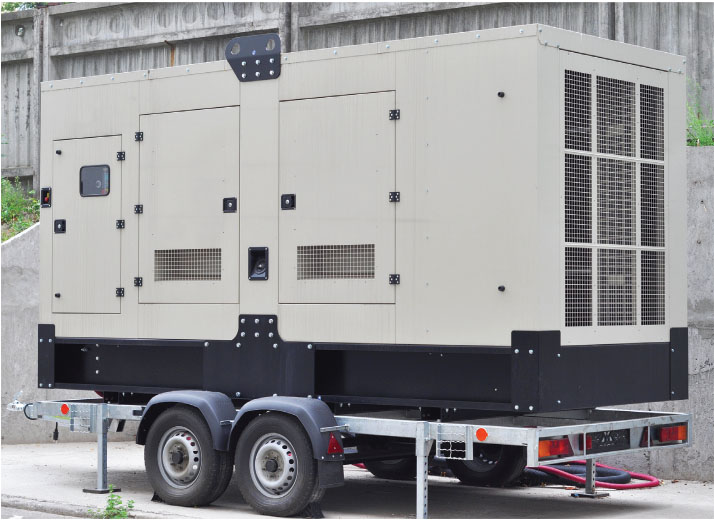
 Technological advancements in diesel engines and gensets have picked up pace in recent years due to growing demand for cleaner and sustainable sources of reliable power supply. Energy security and environmental concerns in the country are driving the demand for gensets with cleaner emissions, reduced noise and enhanced power output. Hybrid power systems are witnessing wider adoption for optimal resource utilisation and cost efficiency. The optimisation of diesel gensets through battery energy storage systems boosts productivity by reducing fuel requirements and maintenance costs. Moreover, the integration of technologies such as electronic control systems, predictive maintenance and advanced analytics in diesel gensets is enabling remote monitoring, better fuel efficiency and risk mitigation with regard to engine failures. Further, by leveraging digital solutions, smart diesel gensets facilitate operation control, load distribution and efficient combustion.
Power Line takes a look at some of the emerging technological trends in diesel engines and gensets…
Hybrids and multifuel technology
Hybrids and multifuel generators are new-age generators that offer several benefits, ranging from improved system reliability and efficiency to substantial cost savings. These innovative solutions combine conventional diesel gensets with renewable energy sources such as solar, wind and biomass, resulting in fuel consumption efficiency, noise reduction and sustainable power supply. The most common hybrid technology combines diesel gensets with solar PV systems, while multifuel technologies enable the use of biomass feedstock and coal interchangeably. Over the years, the cost of PV systems has declined significantly, making them more accessible. Solar PV-diesel hybrid systems are becoming more reliable by offsetting the PV system load and daytime solar intermittency, as well as by minimising reliance on diesel gensets. An emerging technology in the hybrid genset space is storage battery, which ensures that energy supply meets demand effectively. While these technologies pose high initial capex costs, they reduce dependence on costly diesel fuel, operating costs and carbon footprint. Additionally, by enabling energy generation through the utilisation of renewable sources, they also allow for uninterrupted power supply in the long run.
Natural gas gensets
Natural gas gensets are emerging as a sustainable energy solution amidst increasing environmental regulations and falling natural gas prices. These gensets provide a cleaner and quieter alternative to diesel-based gensets. Characterised by environmental benefits such as lower noise levels, odour, and nitrogen oxide and carbon dioxide emissions during combustion, these gensets generate significantly smaller carbon footprints, leading to escalating demand among end-user segments. Natural gas gensets provide drastically longer runtimes and produce 90 per cent lesser emissions compared to their diesel counterparts, making them an environmentally friendly option. Economically, they boast several advantages, ranging from 40 per cent lower operating costs and installation expenses to reduced maintenance requirements and cheap availability of natural gas. These factors make them well-suited for diverse sectors, including industrial, commercial and residential. Additionally, gas gensets are ideal solutions for power generation in remote or off-grid locations where traditional power infrastructure is limited. They are also increasingly gaining market presence in states such as Delhi, Gujarat, Madhya Pradesh and Maharashtra, where natural gas is readily available through an extensive network of gas pipelines.
IoT-based smart diesel gensets
Smart diesel gensets represent another emerging technology, featuring end-to-end automation. Unlike conventional analogue systems, these gensets utilise digital controls to enable real-time alerts for all critical parameters of a diesel engine, including fuel, engine oil, coolant, engine temperature, battery status and transfer switch status. These solutions are increasingly gaining traction among businesses and industries for enabling substantial cost savings, optimised maintenance and immediate alerting of potential issues. Further, by facilitating continuous remote monitoring of fuel consumption and engine performance, smart gensets can adjust their operations based on load and environmental conditions, increasing efficiency. They also allow for real-time fault detection and security surveillance by displaying the system status and progress on a computer screen, thereby offering greater space savings compared to analogue systems. Additionally, smart diesel gensets equipped with internet of things (IoT) sensors come with advanced algorithms and built-in redundancy for identifying possible system complications and conducting fault diagnostics.
Modular and compact designs
Containerised diesel gensets are also increasingly being deployed due to their compact design, enhanced durability, reduced noise, ease of transportation and resistance to high temperatures and harsh weather. These features make them particularly suitable for locations where space is limited, such as remote cell towers, construction sites or disaster relief centres. Unlike traditional generators, containerised diesel gensets provide exceptional reliability and scalability, offering an efficient solution for power generation. The quick deployment and reduced set-up time of these gensets minimise downtime and ensure swift response to power demands. Further, the modular designs of diesel gensets allow for greater flexibility and ease of expansion. Rather than installing a fixed-size generator from the outset, a basic unit can be installed to meet initial power needs, with gradual scaling up of modules as electricity requirements grow. As such, these gensets allow for a high level of customisation to meet specific power needs, which facilitates easier maintenance and built-in redundancy in the event of a module breakdown, as other modules continue to operate and minimise disruption. Manufacturers are also making smaller gensets without loss of power, catering to compact single-unit requirements. Compact gensets provide 30-50 per cent more power in a smaller space compared to standard designs.
Silent diesel gensets
Silent diesel gensets are designed to produce minimal noise while offering robust and efficient performance across a range of applications. Active noise cancellation technologies are a critical aspect of their product design and are more effective than traditional metal cages. These systems use noise-cancelling speakers to generate inverse sound waves that cancel out the noise from the cooling fan, a process called interference. In addition to active noise cancellation, passive technologies can also be employed. These involve fitting sophisticated solutions such as sound-attenuated pockets and muffler systems within the prechamber of the engine to reduce noise levels during internal combustion. The strategically designed and spaced pockets, made from noise-dampening composite materials, serve to nullify the detonation waves caused during engine start-up. Alternatively, these pockets can be filled with porous or metallic ceramic pellets coated with platinum or rhodium, catalysing complete combustion and attenuating noise levels. Exhaust mufflers are another effective measure of noise reduction, incorporating sound-absorbing materials that transform the kinetic energy of sound waves into heat, which radiates silently. This allows for quiet operation, high efficiency and reliability.
Thermal storage technology
A new and emerging technology is thermal storage systems for diesel gensets to enhance the efficiency and sustainability of power generation. This technology captures and stores the surplus thermal energy generated by diesel engines during operation, and later reuses it for electricity generation with diesel fuel. Excess heat can be stored for hours, days and even months, contributing to decarbonisation of electricity generation and improvement in overall energy utilisation. At the core of thermal storage technology is the critical concept of waste heat utilisation. Diesel engines typically convert only about 33 per cent of the applied fuel energy into electrical power, while the remaining energy is lost as waste heat due to the incomplete combustion of fuel in the engine and other friction losses. By integrating thermal storage systems, this waste heat can be captured and stored in materials with high energy density, such as phase change materials and molten salts. Thermal storage technology has broad and diverse applications, including balancing energy demand between daytime and night-time, storing summer heat for winter heating and bulk power management. Additionally, it offers multiple benefits, such as improved energy efficiency, reduced greenhouse gas emissions and fuel consumption, increased capacity, long-duration storage, flexible energy generation, economic savings through lower operating costs and meeting seasonal energy needs.
Conclusion
Innovation and technological advancements in diesel gensets have been on the rise to meet the demand for sustainable power. Upgrades in terms of engine modifications, fuel system efficiency, digital controls and emission treatments are poised to enhance overall engine performance, increase energy efficiency and improve fuel economy, while also catering to the government’s heightened focus on environmental regulations and emissions control. Looking ahead, with the evolving energy landscape and increasing renewable energy push, the future of diesel gensets appears transitional over the long term.