
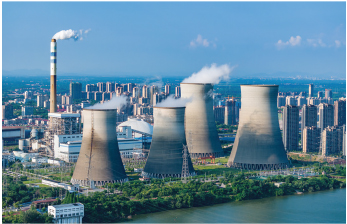
 In August 2021, the Central Electricity Regulatory Commission (CERC) issued a mechanism to establish a compensation mechanism for thermal gencos installing emission control systems (ECSs). However, due to some initial hiccups, the regulator has now introduced revisions in the mechanism.
The compensation mechanism included a separate tariff structure for ECS, financial and operational parameters, and methods for tariff recovery. Based on the challenges faced by the generating companies in financing the installation of ECSs, technological developments in the field, and limited operational and commercial data, the CERC is revisiting certain aspects of the mechanism. The new mechanism proposes to focus on depreciation recovery, operations and maintenance (O&M) expenses, and the costs of debt and equity for ECS as well as offer interim relief through provisional tariffs. A closer look at the proposed changes…
Proposed revisions in the compensation mechanism
Recovery of depreciation
The CERC had specified the operational life of a thermal generating station as 35 years in the 2024 Tariff Regulations. Considering this, the commission had set the recovery period for 70 per cent of the depreciation of an ECS as 12 years, aligning with the standard loan tenor. Most thermal power generating stations under competitively bid tariffs are relatively new, with loan tenors between 12 and 15 years. The commission has proposed that depreciation shall be computed from the date of operation of the ECS; this would help gencos to meet their debt service obligations.
The remaining depreciation will be spread over the rest of the station’s operational life.
Operations & maintenance expenses
Initially, operations and maintenance (O&M) expenses for competitively bid projects were set at 2.5 per cent, but the 2024 Tariff Regulations adjusted this to 2 per cent, excluding IDC and IEDC. The modified order specifies that O&M expenses are set at 2 per cent of additional capital expenditure (ACE) for ECS installation (excluding IDC, IEDC, and FERV), escalated at 5.25 per cent per annum until March 31, 2029, or until further revision. For the first year, O&M expenses are 2 per cent of ACE proportionate, if ECS operates part of the year. From the second year onwards, expenses are escalated annually at 5.25 per cent. Income from gypsum or by-products will reduce the additional O&M expenses. The proposed changes suggest that all generating companies must maintain separate records of ECS O&M expenses and submit them to the commission as directed.
Cost of debt and equity of emission control systems
For the servicing of capital employed each year during the contract period, the commission has proposed that it will be calculated based on the net fixed asset (adjusted for cumulative depreciation of ECS) and the interest rate of funds. The interest rate will be the lower of either the weighted average actual interest on loans for the thermal generating station, including ECS, or the State Bank of India’s marginal cost of lending rate (one-year tenor) plus 350 basis points as of April 1 of the year in consideration. Gencos must determine the applicable interest rate for the cost of capital incurred on the ECS each year.
Other changes
In the 2024 Tariff Regulations, the commission mandated separate servicing of debt and equity in alignment with the Tariff Policy, 2006, and National Tariff Policy, 2016. Despite no compulsory debt-equity ratio requirement for competitively bid projects under the National Tariff Policy, gencos retain flexibility in financing. They can independently decide on debt-equity ratios and secure loans accordingly. The CERC asserts that its approach of using net fixed assets and the cost of capital employed adheres to principles of economic restitution. Thus, it continues to advocate for this approach in servicing ACE on ECSs.
Under the existing mechanism, annual capital servicing is computed using net fixed assets adjusted for ECS depreciation, employing the weighted average interest rate on station loans, treating all capital as debt. In contrast, the 2024 Tariff Regulations stipulate actual debt rates and equity at one-year MCLR plus 350 bps. For combined capital, it uses the lower of the weighted average loan rate or one-year MCLR plus 350 bps, which could deter equity investments.
Net net, by aligning with revised standards and economic principles, the proposed regulations ensure predictable depreciation recovery, streamlined O&M expenses, and balanced servicing of debt and equity. Ultimately, these are expected to enhance financial sustainability, support low carbon transition, and mitigate financial uncertainties for both gencos and procurers in the power sector.
Aastha Sharma