

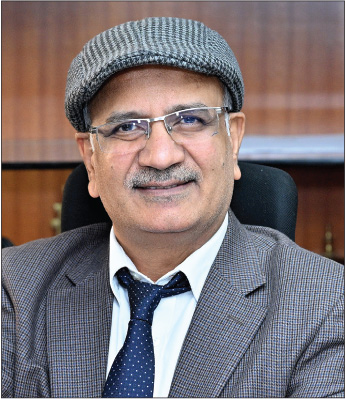
 In a recent interview with Power Line, Dr Manoj Kumar Jhawar, Chairman and Managing Director (Additional Charge) and Director (Commercial and Operations), PTC India Limited, shared his views on the performance of the power trading segment in India, the key issues and challenges, and the future outlook and opportunities in the segment. He also discussed PTC India’s recent business highlights, as well as its top priorities and future plans. Edited excerpts…
What is your assessment of the current state of the power sector?
The Indian power sector is undergoing a dynamic transformation, driven by both policy reforms and market evolution. We are witnessing a robust shift towards renewable energy, with India’s non-fossil fuel capacity now accounting for over 40 per cent of total installed capacity, aligning with the government’s commitment to achieving 500 GW of non-fossil energy capacity by 2030. This is an encouraging trajectory as we move towards sustainability and decarbonisation.
However, there are challenges that need attention. Recent peaks in power demand, touching 250 GW in the summer of 2024, have underscored the critical need for enhancing grid resilience and integrating renewable energy sources seamlessly. The focus on energy storage solutions, such as large-scale battery projects and pumped hydro, is essential for balancing intermittent renewables.
The regulatory environment, with progressive policies like the market-based economic dispatch (MBED) mechanism and the Green Open Access Rules, 2022, is fostering a more competitive market. These initiatives promote efficiency and cleaner energy access. However, we must continue addressing discoms’ liquidity issues, which remain the weakest link in the value chain. Initiatives such as the Revamped Distribution Sector Scheme (RDSS) are vital for mitigating these financial challenges.
In summary, while the sector is poised for growth, collaboration between policymakers, industry stakeholders and market participants will be crucial in ensuring a resilient and sustainable energy future.
How has the power trading segment performed in the past one year or so?
The power trading segment in India has experienced substantial growth over the past year, fuelled by rising demand and policy-driven market reforms. With the total power traded crossing 240 BUs in FY 2023-24, the market has matured, offering greater liquidity and flexibility for participants. The introduction of the MBED and the increasing adoption of the real-time market (RTM) have enhanced grid efficiency and facilitated better demand-supply management. A significant development has been the evolution of green power trading. The green day-ahead market (G-DAM) has seen increased volumes, supporting India’s ambitious renewable energy targets. Furthermore, the push for market coupling will likely promote cross-border trade, opening new avenues for power trading in the region. Despite these positive trends, challenges persist. Price volatility in the spot markets due to fuel shortages and the occasional mismatch in supply and demand are key concerns. However, with ongoing regulatory enhancements and the strengthening of trading platforms, we expect the segment to continue witnessing robust growth, enabling a competitive, transparent and efficient power market.
What are the issues and challenges facing the segment? How can these be addressed?
While the power trading segment has shown commendable growth, several challenges persist that need strategic resolution. One of the primary issues is price volatility, often driven by supply-demand imbalances and fluctuations in fuel availability, particularly coal and gas. This can disrupt both short-term and long-term market operations, impacting price signals and reliability for participants. Another significant challenge is the financial health of discoms. Despite reform efforts, liquidity issues within discoms continue to hinder their ability to meet payment obligations, creating downstream effects on the entire value chain. Improving their financial stability through schemes like the RDSS and ensuring stricter enforcement of payment discipline will be key.
Transmission constraints also limit market performance, especially during peak demand periods. As more renewable energy comes online, the need for grid expansion and modernisation becomes critical. Investments in grid infrastructure and the development of energy storage solutions will help overcome these barriers, enabling better integration of renewable sources. Addressing these challenges requires a coordinated effort between regulators, market participants and policymakers to ensure the sustainable growth of power trading in India.
What is your outlook for the power trading market, volumes, prices, etc., in the medium to long term?
The power trading market in India is on a dynamic growth trajectory, with significant expansions expected in volumes and complexity. The integration of distributed energy resources (DERs), including rooftop solar, battery storage and electric vehicles, will play a pivotal role in shaping future market dynamics. These DERs, when aggregated through platforms like virtual power plants (VPPs), will create new avenues for trading, allowing even smaller energy producers to participate effectively in the market. This will boost overall liquidity and offer greater flexibility to the grid.
With the growing focus on virtual power purchase agreements (VPPAs), corporate consumers are increasingly looking to participate in the power trading ecosystem. These agreements enable businesses to source renewable energy without being tied to physical assets, thus expanding the demand for green energy trading. This shift will likely increase volumes in G-DAMs and other green-focused trading platforms, supporting India’s renewable energy ambitions.
In the medium term, MBED will further optimise resource allocation and integrate DERs more effectively into the grid. This, combined with the evolution of RTM, will provide greater transparency and reduce price volatility, allowing smoother operation and trading flexibility.
In the long term, as the sector incorporates more renewable sources and DERs, energy storage solutions will be crucial for mitigating intermittency and ensuring stable prices. Enhanced cross-border trading opportunities, leveraging advanced grid technologies, will further boost market depth and trading efficiency, creating a more competitive and resilient power market.
What are the new and emerging opportunities in the segment?
With India’s aggressive push towards 500 GW of renewable capacity by 2030, there is a significant opportunity in trading renewable energy. The implementation of the Green Energy Open Access Rules, 2022, is enabling smaller consumers to directly procure renewable energy, boosting demand for green energy trading. The upcoming Green Hydrogen Certificate Scheme under the National Hydrogen Mission also presents new opportunities. As green hydrogen becomes more integral to industries to meet sustainability targets and support decarbonisation efforts, the scheme will certainly bring new avenues and opportunities. With the recent rise in peak demand, which reached 250 GW in May 2024, there is a growing need for efficient short-term power markets. Power exchanges and platforms like the RTM are becoming more active, and the MBED framework will further enhance opportunities for market-driven power trading. In addition, the growing integration of renewable energy highlights the need for ancillary services such as battery storage. Traders can leverage the increasing demand for grid stability services and facilitate the trading of stored energy. The evolving role of VPPs and energy aggregators is a promising area, allowing DERs to be pooled and traded as a unified power source. This opens new possibilities for innovative trading solutions, including demand response programmes.
What have been the key highlights of PTC India in the past one year or so?
PTC India had a strong performance in FY 2023-24, maintaining its leadership in the power trading market. The company achieved a trading volume of 74.84 BUs, a 6 per cent growth over the previous year. Short-term trading volumes surged by around 13 per cent, reflecting a growing shift towards short-term procurement. Additionally, PTC expanded its portfolio in renewable energy, signing PPAs with a cumulative capacity of 10 GW, including cross-border trade. The company’s cross-border transactions with Bhutan and Bangladesh continued to be significant, reinforcing its regional presence. Notably, PTC successfully facilitated Bhutan’s first power sale transaction on the Indian Power Exchange, further demonstrating its cross-border trading strength. The inauguration of PTC’s Innovation and Data Analytics Lab in 2023 was another milestone, aimed at leveraging data-driven insights to improve decision-making and market predictions, giving PTC a competitive edge in an evolving energy landscape. PTC also extended its energy portfolio management (EPM) services to various state utilities, helping optimise their power management and trading strategies, while retaining its leadership in key exchange products such as the DAM, term-ahead market and RTM.
Please give us an overview of PTC’s operations. What can be expected in the next few years?
PTC India has consistently evolved its operations with a forward-thinking approach. Our focus has been on optimising power trading and enhancing commercial operations through cutting-edge technology and data-driven insights. The inauguration of our Innovation and Data Analytics Lab last year is a prime example of our commitment to leveraging real-time data for better market predictions, informed decision-making and operational efficiency.
Looking ahead, we are prioritising the strengthening of internal processes by streamlining information flow across departments. This will not only improve decision-making but also help reduce working capital costs through more efficient cash flow management and enhanced operational transparency. By integrating advanced digital tools and automation, we aim to create a more agile and responsive organisation, capable of adapting to market fluctuations and seizing new opportunities.
Over the next few years, PTC will continue expanding its EPM services, particularly with state utilities and large corporate clients, while focusing on renewable energy growth. We are also committed to increasing our footprint in cross-border power trading and exploring new avenues in trading green attributes, distributed energy resources and battery energy storage systems.
In essence, we are building a robust foundation for future growth by aligning our operations with technological advancements and enhancing the reliability and efficiency of our internal processes.
What are the future plans of PTC India? What are your top priorities for the company for the next few years?
At PTC India, our future strategy is built around a customer-centric approach, focusing on both utility clients as well as commercial and industrial consumers. We are committed to being more accessible and responsive to the unique needs of our clients by positioning ourselves closer to them and offering tailored solutions that address their specific energy requirements. This involves expanding our presence across regions to ensure timely and effective support for our customers. Our top priorities for the next few years include exploring new opportunities in the capacity market, where we see significant potential for growth. As the power sector transitions towards more sustainable energy sources, the demand for reliable capacity will increase, and PTC aims to play a leading role in bridging this gap by leveraging our expertise in power trading and capacity management. Additionally, we are focused on enhancing our value-added services, particularly through data analytics. Our goal is to offer deeper insights to our clients, enabling them to make informed decisions and optimise their energy portfolios.
Moreover, we plan to scale up our consultancy and advisory services, guiding utilities, corporates and government bodies in areas such as energy efficiency, renewable energy integration and regulatory support. Our expanding EPM services will continue to be a key pillar of our growth, helping clients optimise their energy usage and manage
costs effectively.
Our vision is to deliver superior, customised energy solutions, enhance our service offerings and tap into new markets, ensuring that PTC remains at the forefront of India’s evolving energy landscape.
What is your outlook for the power sector and the role of power trading in it?
India’s power sector is on the cusp of a transformative shift, with renewable energy, decarbonisation and digitalisation driving its evolution. As the country accelerates its transition towards clean energy, with a target of 500 GW of renewable capacity by 2030, the sector will increasingly rely on innovative market mechanisms to ensure the seamless integration of diverse energy sources. Power trading will play a pivotal role in this transformation by providing the flexibility, liquidity and market transparency needed to balance fluctuating demand and supply dynamics.
Power trading will not only facilitate the efficient dispatch of renewable energy through mechanisms like the G-DAM and MBED, but also serve as a platform for integrating DERs. The aggregation of smaller, decentralised resources through VPPs will create new opportunities for active participation in the market, empowering consumers to become prosumers. Additionally, VPPAs are set to redefine corporate involvement, enabling businesses to directly contribute to the renewable energy push without physical energy assets. This will drive demand for green power trading while increasing the role of power exchanges as a vital facilitator in achieving sustainability goals.
Looking ahead, power trading will become a cornerstone of the energy transition, ensuring that clean energy sources are optimally distributed, prices remain competitive and grid stability is maintained. Its role will become even more critical as the sector embraces more digitalised, decentralised and democratised energy flows, ensuring that India’s power sector remains robust, sustainable and future-ready.