
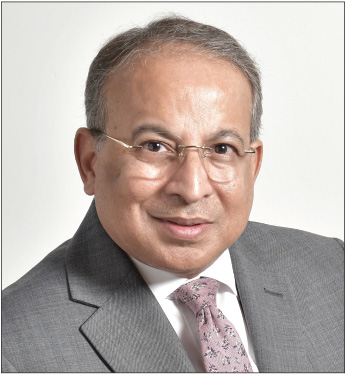
 In a recent interview with Power Line, Dr Praveer Sinha, Managing Director and Chief Executive Officer, Tata Power Company Limited, discussed India’s energy transition, the role of emerging technologies and government support in achieving decarbonisation goals, and the challenges of providing round-the-clock (RTC) clean power. He also highlighted Tata Power’s growth in the renewable energy space. Edited excerpts…
How do you rate India’s energy transition so far? What have been the key hits and misses?
India has made significant strides in its energy transition, positioning itself as a global leader in renewable energy. This transformation has been driven by government initiatives, financial incentives and declining technology costs. In 2021, at COP26, India set ambitious targets to decarbonise energy by 50 per cent and achieve 500 GW of non-fossil fuel generating capacity by 2030. As of August 2024, it has made tangible progress towards these targets. Installed solar capacity has reached almost 90 GW, while total non-fossil fuel capacity has surpassed 207 GW, accounting for 46 per cent of the country’s total energy capacity. Since 2014, renewable energy capacity has grown around 2.5 times, with solar energy expanding nearly 34-fold. These achievements have established India as the fourth-largest country in the world in terms of installed renewable energy capacity.
A crucial success of India’s energy transition is the expansion of energy access, particularly in rural and underserved areas. Initiatives such as the Saubhagya scheme have brought electricity to nearly every household, improving the lives of millions by providing power for education, healthcare and economic activities. The government’s support for manufacturing within the solar value chain through production-linked incentive (PLI) schemes, which incentivise the production of indigenous solar panels and modules, has also been commendable. Through schemes such as the PM Surya Ghar Yojana, rooftop solar installations have become mainstream, further accelerating India’s green energy transition.
Despite these successes, several challenges remain. One of the primary obstacles is the intermittency of renewable energy sources such as solar and wind, which can lead to fluctuations in supply. Addressing this issue requires a focus on developing RTC solutions such as pumped hydro, small modular reactors (SMRs) and large-scale energy storage systems. The expansion of transmission networks and green power corridors is also necessary to accommodate the increasing generation of renewable energy. In this regard, grid stability remains a concern, as the existing infrastructure struggles to keep pace with the rising share of renewables.
What role are new and emerging technologies such as SMRs expected to play in India’s transition to a low-carbon future?
COP28, held in December 2023, saw more than 20 countries commit to tripling their nuclear energy capacity by 2050. This marks a clear global shift toward adopting nuclear power as a clean source of energy. In India, the current nuclear capacity of 8 GW constitutes less than 2 per cent of the total energy mix, but this is set to increase. The government has introduced initiatives to support the growth of nuclear power, recognising its role in achieving India’s energy transition. As per estimates by the Central Electricity Authority, the country is expected to triple its nuclear generation capacity to 22.4 GW by 2032 by adding 18 nuclear reactors.
While nuclear power holds significant promise for providing clean energy, large nuclear plants face challenges such as long construction times, cost overruns and safety concerns. As India works to increase its nuclear power capacity to meet growing energy demands and reduce carbon emissions, SMRs are emerging as a powerful technology. They offer several advantages over traditional large-scale nuclear plants, such as cost efficiency, faster construction timelines and enhanced safety features.
One of the biggest strengths of SMRs is their scalability. Their modular design allows for incremental capacity additions, offering flexibility to scale up based on energy demand without the need for large-scale plants. This is particularly important for India, where energy needs vary greatly across regions. SMRs can be deployed in remote or underserved areas, improving energy access and enhancing energy security. Additionally, their smaller footprint makes them suitable for locations where space or infrastructure constraints limit the feasibility of conventional large nuclear reactors.
The government has introduced initiatives to support Bharat Small Modular Reactor development in this year’s union budget, inviting private sector participation and proposing increased research and development (R&D), which signals a strong commitment to expanding the role of nuclear energy in the country’s overall energy mix.
What are the key bottlenecks in supplying RTC clean power? What are the measures needed to resolve them?
RTC clean power is key to making the energy transition a reality as major renewable power sources such as solar and wind are intermittent and require storage solutions to make them firm and reliable. This can be achieved through a variety of options such as lithium-ion batteries, pumped storage plants (PSPs) and flow batteries.
The increasing number of auctions for hybrid plants and peak tenders that combine solar, wind and storage demonstrate this trend, with projects being awarded at competitive tariffs. The government has also recognised the importance of storage and introduced policies such as viability gap funding for energy storage projects, which can help lower the cost barriers for large-scale battery energy storage systems (BESSs). In addition, it has introduced guidelines to make PSPs more attractive and accessible to various customers. Despite gaining prominence, a significant challenge facing BESS is the dependence on imported raw materials such as lithium. Securing the supply chain will be critical to ensuring energy security. The government has taken a welcome step by introducing the PLI scheme to promote battery manufacturing and allow mining for critical minerals. As a result, the country will see such facilities coming up in the next few years.
How has the hydropower segment, particularly the pumped storage segment, evolved over the past one to two years? What additional measures are needed to accelerate growth in the segment?
Pumped storage has become an essential component of India’s energy infrastructure, driven by rising electricity demand, government support and technological advancements. These facilities store excess energy during off-peak periods and release it during peak demand, making them indispensable to the energy transition. Unlike BESSs, PSPs offer the advantages of longer-duration storage without dependency on critical minerals.
Tata Power is also advancing the development of a 2,800 MW pumped hydro project in Maharashtra, demonstrating how the private sector is stepping up to accelerate progress in this field. Large-scale projects like these, coupled with ongoing innovations in energy efficiency and storage optimisation, are essential for the segment’s continued growth.
However, to sustain this upward trajectory, additional measures are needed. Increased investment in R&D is necessary to improve technological efficiency and reduce costs. Streamlining regulatory processes will also be essential to expedite project approvals and implementation. Finally, enhanced financial support, including easier access to funding for private developers, will make PSPs more economically viable.
What is your perspective on the current state of the power distribution segment? What are the measures needed in the segment?
India’s power distribution sector is making significant strides towards a more sustainable and efficient future, especially as power demand continues to rise by 6-7 per cent annually. Despite ongoing challenges, such as high aggregate technical and commercial (AT&C) losses and financial strains, the sector has made progress. The reduction of AT&C losses to 15.41 per cent (as per government data) highlights the positive impact of efforts to enhance operational efficiency.
Financial health remains a critical focus for discoms. Delayed payments and growing dues to power generators remain key concerns. However, policy reforms and technological advancements are helping to mitigate these issues. The deployment of smart grid infrastructure, including smart meters, alongside artificial intelligence and internet of things technologies, is key to reducing losses, improving billing efficiency and enhancing overall operations.
Tata Power is at the forefront of this transformation. Its initiatives to implement advanced digital solutions across distribution networks have helped in reducing AT&C losses, improving operational efficiency and ensuring reliable power supply in regions such as Delhi and Odisha.
To further support the growth and sustainability of the power distribution sector, continued government support through a conducive policy environment, streamlined regulatory processes, wider adoption of advanced technologies and enhanced private sector participation are essential.
What is your outlook for the power sector going forward, considering energy security requirements and energy transition goals?
The power sector is poised for significant transformation as India strives to balance its energy security needs with its ambitious energy transition goals. India is not only the fastest growing economy in the world, but is also set to witness the fastest growth in energy consumption globally. Currently the third largest energy consumer in the world, it is set to become the second largest energy consumer by 2050. India has added more than 200 GW of capacity in the past decade, with over 60 per cent coming from non-fossil fuel sources. While renewable energy sources such as solar and wind are driving much of this shift, their intermittent nature presents ongoing challenges to grid stability. The rise of energy storage solutions, such as BESSs and PSPs, is crucial for addressing these intermittency issues, although their high costs and scalability limitations remain hurdles that must be overcome.
Energy efficiency will also play a vital role in the sector’s evolution. By reducing overall demand, energy efficiency helps optimise generation, cut emissions and minimise the need for costly new infrastructure investments. At the same time, grid modernisation is essential for managing the integration of renewable energy and other distributed energy resources. This will require substantial investment in smart grids, advanced metering infrastructure and automation technologies to ensure reliable and efficient power distribution.
In an increasingly interconnected world, geopolitical risks, such as trade disruptions and global conflicts, can heavily impact fuel supplies and drive up energy costs. This makes energy security a priority, particularly for developing countries that still rely on fossil fuels for a significant portion of their power generation. To mitigate these risks, India must focus on building a diversified and resilient energy mix. Hybrid energy systems, which combine renewables with conventional power sources, along with decentralised microgrids, offer promising solutions. These approaches support local energy generation, reduce dependence on centralised systems and can stabilise the grid during disruptions, ensuring a reliable energy supply even in volatile circumstances.
India’s energy transition is already showing strong momentum, with robust growth in renewable energy capacity. However, to meet the country’s long-term goals, additional measures are essential. These include increasing financial support, implementing policy reforms and accelerating the adoption of advanced technologies such as green hydrogen and carbon capture. International cooperation, especially in tackling global challenges such as climate change and energy security, will also be crucial in shaping a sustainable and secure energy future.
India stands at a crossroads, where ensuring energy security and meeting decarbonisation goals must go hand in hand. The next phase of its energy journey will depend on how effectively the country navigates this dual challenge, with innovation, investment and strong government backing.
What are Tata Power’s key priorities and plans for the next one to two years?
Tata Power is steadily advancing, with a focus on driving growth across both established and emerging segments in the energy sector over the next one to two years. Renewables are a critical part of our growth strategy, and over the next few decades, we aim to become a leading player in the renewable energy space. We plan to invest up to $9 billion to more than quadruple our renewable energy capacity to over 20 GW within the next five to six years.
A key priority is scaling up our internal renewable energy component supply chain. Our 4 GW solar cell and manufacturing plant in Tirunelveli, Tamil Nadu, is fully operational, and we have plans to further scale up renewable energy manufacturing across the country.
We are also committed to expanding our transmission and distribution businesses. Our ongoing work on transmission projects aims to enhance renewable energy evacuation. Currently, we have a greenfield tariff-based competitive bidding power transmission portfolio, which includes three projects – two interstate and one intra-state. We plan to bid for additional projects in the near future. Our distribution business has been performing exceptionally well in Delhi and Odisha, and we intend to expand our distribution footprint to reach 40 million customers by 2027.
We are also expanding our footprint in more customer-facing businesses. We believe that every individual action counts and we want to empower more consumers to take actions for a greener and better future. In line with this thought, we have ventured into electric vehicle (EV) chargers and we now have more than 8,000 chargers across the country. We also offer rooftop solar solutions to democratise access to renewable energy, along with smart energy solutions to improve energy efficiency and minimise wastage.
Innovation remains at the core of our strategy. We are exploring advanced technologies, including BESS, to improve efficiency and reduce costs. A significant focus is on pumped hydro storage, where we have made substantial investments in 2,800 MW of projects in Maharashtra. With its long lifespan and lower operational costs compared to conventional battery storage, pumped hydro will be critical for our firm and despatchable renewable energy projects. Our ultimate goal is to become the utility of choice for industrial and domestic consumers, providing RTC energy through a hybrid renewable mix with integrated storage. We aim to achieve 100 per cent clean power generation by fiscal year 2045.
We remain dedicated to becoming a customer-centric utility by delivering innovative solutions, enhancing customer experiences and building a more sustainable energy future.