

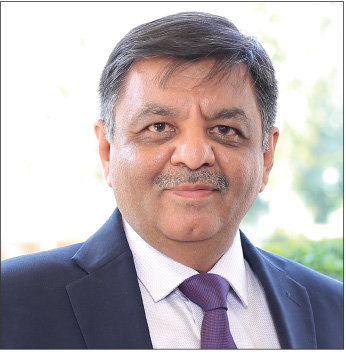
 In a recent interview with Power Line, Sandeep Zanzaria, Chief Executive Officer and Managing Director, GE T&D India Limited, discussed the new and emerging trends in the power transmission and distribution (T&D) segments and the future outlook. He also spoke about GE T&D’s recent business achievements and product portfolio, and how these align with emerging industry trends. Edited excerpts…
What are your views on the current state of the power sector, particularly the T&D segments?
The power sector in India presents an incredible opportunity. Its growth is fundamentally driven by three key pillars. The first is energy transition, the shift towards renewable energy, which forms a strong foundation for future growth. The second pillar is our per capita energy consumption. Currently, India’s consumption is about one-fourth of China’s and one-tenth of the US. However, we have seen a remarkable increase, having doubled our per capita consumption since 2010. Looking ahead, we anticipate another doubling by 2030. This substantial growth potential will create significant opportunities. The third pillar involves the demand drivers within the sector, including electric vehicles (EVs), green hydrogen, data centres and increased private sector investments spurred by initiatives such as Make in India. Collectively, these factors suggest that the ecosystem is not only sustainable but also poised for long-term growth.
The Indian power sector is not just a national story; it is part of a global trend towards energy transition. The integration of renewables into the energy framework is a part of the rapidly evolving global ecosystem.
What are the unresolved issues in these segments?
As more renewables are integrated into the grid, we face several challenges due to variability, particularly on the technology and grid stability fronts. The variability inherent in renewable energy generation affects the overall stability of the grid and requires innovative solutions to manage it effectively.
One of the key challenges is grid management. With the increase in renewable energy sources, primarily concentrated in states like Rajasthan and Gujarat, we will need advanced grid management solutions to efficiently evacuate power and ensure that it reaches consumers across the country. Technologies such as high voltage direct current (HVDC) systems will be critical in this process. HVDC not only facilitates long distance renewable energy transmission, but also stabilises the grid by managing power flows more effectively.
Another significant challenge is the need for robust forecasting technologies. We can now leverage strong forecasting tools that incorporate weather data and historical patterns to predict energy generation more accurately. Accurate forecasting is essential for grid operators to balance supply and demand, especially with the increasing integration of intermittent renewable sources like solar and wind.
As the share of renewables grows, we will need to invest in technologies like STATCOM for voltage and reactive power management. STATCOM helps maintain grid stability, ensuring that voltage levels remain within acceptable limits, especially during peak demand periods or sudden fluctuations in generation.
What are your expectations with regard to equipment orders over the next one to
two years?
The sector has become more bankable due to two key factors. First, we have seen an improvement in the commercial independence of generation and transmission companies. This independence allows them to operate without being excessively reliant on the financial health of discoms, which has historically been a bottleneck for growth in India. The financial health of discoms is stabilising, allowing generation and transmission companies to thrive independently.
The second key aspect on the equipment side is that the government is actively developing the transmission segment in alignment with the national electricity plan. Unlike in the past, when transmission corridors were created only after generators signed agreements, the government is now proactively establishing these corridors. This allows bids under tariff-based competitive bidding (TBCB) to be released and awarded to developers as per the transmission planning. Consequently, generators can strategically plan their next projects.
On the equipment front, the demand will remain sustainable. Many people express concerns about high demand and low supply, but we have reached a point where demand and supply are fairly well balanced. A few years ago, the situation was quite different, with oversupply and insufficient demand leading many OEMs to close or scale back operations. Today, however, there is a healthier equilibrium.
Moreover, on the supply side, capital expenditure for several critical items is being undertaken, indicating that this equilibrium should remain stable for at least the next few years.
What have been GE T&D’s key business highlights in the past year or so?
GE T&D India has undergone a transformative journey over the past year, marked by several key achievements. We have experienced a remarkable growth of 112 per cent in order intake over the last year. Additionally, our order backlog has grown by 70 per cent.
We have shared a very strong partnership with private and PSU developers over the decades. Our engagement has significantly increased, prompting us to make strategic shifts in our approach. We are focusing more on the product side while scaling back projects. Despite this shift, our order intake has grown by more than 100 per cent.
This growth is not limited to one area but extends to multiple fronts. Whether in high voltage products, automation or digital solutions, we are seeing expansion everywhere. We are now well prepared to ride the wave of the next growth cycle.
What are the emerging trends in the T&D segments and how is GEV adapting to them?
The first key technology is HVDC, which includes two types – line commutated converter (LCC) and voltage source converter (VSC). GE Vernova is a strong global player in both. LCC is ideal for transmitting higher amounts of power, up to 6 GW over distances of more than 1,000 km, while VSC, which is more advanced, supports transmissions of 2-2.5 GW. In India, we have ongoing opportunities and an installed base utilising both LCC and VSC technologies.
The government is gradually moving forward, having identified multiple HVDC projects, not only for domestic use but also for cross-border connectivity. These include connections from India to Sri Lanka, Myanmar, and possibly to Singapore in the east and Saudi Arabia on the west. HVDC will play a key role in supporting renewable energy development.
Another trend is the adoption of STATCOM technology. GEV is a global player in STATCOM, and we are collaborating with multiple developers in India to support voltage stability for renewable projects.
I would also like to highlight the importance of digital solutions. With the increasing number of assets in the grid due to renewable energy, managing these assets effectively requires significant digital interventions on two fronts.
First, on the network management side, advanced technologies are essential for managing both transmission and distribution networks. As grids become more complex, optimising power flow will necessitate enhanced digital solutions. GE Vernova is a leading provider of these technologies, not just in India but across the region. For instance, we created the first national load despatch centre in the country, and over 50 per cent of power flow in India is managed through our regional load despatch centres. We have been continuously working with Power Grid Corporation of India Limited (Powergrid) and state utilities to develop renewable energy control centres.
A notable project was the National Transmission Asset Monitoring Centre, where we transformed over 200 substations into unmanned facilities. We have also implemented similar projects for Rajasthan and are currently working on one for Odisha.
Second, at the substation level, effective maintenance and monitoring of assets are critical. Our asset management platforms allow utilities to input online and offline data to assess equipment health. These platforms can predict maintenance needs and potential failures, enabling utilities to define their operational and capital expenditure strategies. Several countries are utilising GE Vernova’s asset management technology, and we are in discussions with many customers in India to implement these platforms.
What are the key challenges facing equipment providers? What interventions are needed to resolve them?
Today, in Europe, which is also undergoing a significant energy transition, many customers have entered into framework contracts with technology providers, which has proven beneficial for the sector. For example, if a provider knows it has 5-10 projects with staggered delivery timelines, it can plan its manufacturing capacity and capital expenditures accordingly. We have been urging the government to adopt a similar approach. Consolidating projects and awarding them with staggered timelines would greatly benefit technology providers and the government alike. Currently, if a project is awarded with just a four-year timeline, it complicates capacity planning. If it takes two years to establish that capacity, it will not be ready in time for the project. When the next project comes along with another four-year timeline, the same issue arises. However, if providers know they have multiple projects, they can strategically plan their capex. Even if the initial investment does not directly benefit the first project, it would support the progressive delivery of subsequent projects. This strategy could significantly mitigate challenges on the HVDC side, where equipment demands are heavily capex and technology driven.
Further, investment in the supply chain is critical. Delivering projects requires essential components, and as capex flows into supply chain development, it should help alleviate some of the current challenges.