
TransTech 2024 featured insightful remarks from various industry leaders representing state and regional transmission companies in the country, namely, Gujarat Electricity Transmission Company Limited (GETCO); Andhra Pradesh Transmission Company Limited (APTRANSCO); Odisha Power Transmission Company Limited (OPTCL); Maharashtra State Transmission Company Limited (MSETCL); Damodar Valley Corporation (DVC); Transmission Corporation of Telangana Limited (TGTRANSCO); and North East Transmission Company Limited (NETC). The State Utility session highlighted the strategies being implemented to overcome challenges in transmission network expansion, the growing adoption of digitalisation, and future expansion plans and focus areas…
A.V.K. Bhaskar, Director of Grid, APTRANSCO
Andhra Pradesh has achieved energy surplus and its per capita consumption has increased from 1,480 kWh in 2019 to 1,797 kWh in 2024. APTRANSCO has maintained one of the lowest transmission losses in the country at 99.82 per cent in 2023-24. The utility’s current network comprises 371 extra high tension substations with a total capacity of 66,638 MVA, and over 32,569 ckt km of transmission lines. Andhra Pradesh’s grid handled around 81,000 MUs in 2023-24, with a peak demand of 13,712 MW this summer.
Further, to address the intermittency of wind and solar generation, APTRANSCO is planning pumped storage projects and battery storage systems, which will support future grid expansion. Smart grid technologies and green energy corridors for renewable energy evacuation are being prioritised, along with data analytics for predictive maintenance. Further, digital skill development programmes for employees are another focus area.
Over the next five years, 71 new substations are planned, along with 4,696.32 ckt km of transmission lines and 16,506.5 MVA of transformation capacity augmentation. Gas-insulated substations (GISs) are being installed at critical locations, including a 400 kV GIS at Thallayapalem, 400 kV and 220 kV GISs at Atchutapuram, and a 132 kV GIS at Kapuluppada (a 132 kV GIS at Moghalrajpuram is operational). However, the utility faces several key challenges, such as rising wind speeds and natural disasters. Highlighting APTRANSCO’s swift response, Bhaskar shared that power was restored within 48 hours after cyclones Hudhud and Titli. Meanwhile, land acquisition and right-of-way (RoW) issues in forest areas have emerged as hurdles, leading to increased costs and project delays.
B.B. Mehta, Director of SLDC, OPTCL
Odisha’s power sector faces unique challenges due to its geographical location and environmental conditions. Being a cyclone-prone state, special designs for towers and transmission networks are crucial. To this end, the state is transitioning to high temperature low sag (HTLS) conductors. Another significant challenge relates to the state’s extensive forest cover, which complicates the process of obtaining state- and national-level clearances for power projects. In addition, the state faces the unique challenge of rerouting transmission lines to protect elephants
from electrocution.
Odisha is focusing on technological advancements. A pilot project for drone-based surveys is currently under way, with plans to scale up and include hilly, forest-heavy and inaccessible areas. Other technologies being deployed in the state include remote accessibility systems, mobile-based tower monitoring systems and SAP-based linear asset management systems. OPTCL has several tenders in the pipeline. It plans to invest over Rs 20 billion in 2024-25, with this amount expected to double in 2025-26. Further, asset monetisation is being considered for the future.
Sanil C. Namboodiripad, MD, NETC
NETC owns and operates the Palatana-Bongaigaon transmission line, spanning 1,327 ckt km at the 400 kV level. The line helps in evacuating power from ONGC Tripura Power Company Limited’s gas-based power project. The project has been instrumental in improving power supply in the North-eastern region, helping it transition from a power-deficit to a power-surplus region. The line not only meets one-third of the region’s power needs but also facilitates power exports to Bangladesh.
One of the key issues for the region is RoW. These challenges are compounded by the region’s difficult terrain, with rivers frequently changing course, heavy rainfall, poor soil quality, high seismic activity and frequent lightning, leading to higher construction costs. Some of the strategies adopted by the company include the use of special earthing methods and transmission line surge resistors to prevent lightning strikes from reaching substations. NETC also employs drone patrolling. Further, it is leveraging artificial intelligence and machine learning to detect faults in transmission lines. This initiative, in collaboration with the Power Grid Corporation of India, involves app-based patrolling to capture and document any damages. In Meghalaya, where lightning strikes are frequent, NETC has installed lightning protection system units.
Avinash Nimbalkar, Director of Projects, MSETCL
MSETCL currently operates 745 substations, 52,000 ckt km of transmission lines and a transformation capacity of 142,000 MVA. The plan for the next 10 years includes the development of 138 new substations, 12,000 ckt km of new transmission lines and 27,000 MVA of transformation capacity. The company also aims to replace approximately 3,700 ckt km of its conductors with high performance conductors.
One of the key challenges in the expansion of transmission line capacity is RoW constraints. The Maharashtra government has introduced a new compensation policy, offering significantly higher compensation for tower foundations and erections, as well as transmission line corridors. This is expected to ease RoW concerns, especially in the Mumbai, Pune and western Maharashtra regions.
Going forward, MSETCL will focus on technological advancements such as deploying undersea transmission cables, converting single-circuit towers to multi circuit towers and using monopole towers and insulated platforms to maximise the efficiency of existing RoW. With these initiatives and the increase in tariff-based competitive bidding to encourage competition, the state’s transmission network will be successfully expanded over the next five years.
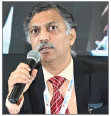
Upendra Pande, Managing Director, GETCO
Gujarat plays a key role in renewable energy integration in India, accounting for 22.4 GW or 12 per cent of the country’s total renewable capacity. The state’s overall installed capacity stands at 45,500 MW, with about 50 per cent coming from renewable energy. By 2030, the state aims to contribute 100 GW towards India’s target of 500 GW. From 2,300 substations as of 2023-24, the state plans to increase this number to over 3,300 by 2029-30. It also plans to add 55,000 ckt km of transmission lines and expand its transmission capacity to 250,000 MVA by 2030. Gujarat is committed to harnessing its immense solar (235 GW) and wind (142 GW) potential through a combination of solar and wind energy projects. This will necessitate the development of 14 GW of additional transmission infrastructure.
A key initiative in Gujarat is the provision of daytime power for agriculture, which would require special infrastructure to deliver solar power during peak solar hours. The state has also launched the Akshay Urja Setu portal, which simplifies the process for renewable energy developers. In addition, the state is investing in advanced transmission infrastructure, including high capacity HTLS conductors, to reduce its land footprint. The introduction of 765 kV systems will facilitate bulk power transmission, particularly to remote regions or urban areas with growing energy demands. The state is also focusing on improving power quality through static synchronous compensators for stable power supply. Further, Gujarat is prioritising sustainability in its transmission network, with the addition of green substations that use environment-friendly materials such as ester oil-filled transformers and SF6-free circuit breakers. Gujarat is also prioritising cybersecurity in its transmission infrastructure.
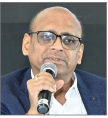
Swapnendu Kumar Panda, Member – Technical, DVC
DVC has a transmission line capacity of 9,300 km, operates 60 substations and supplies power at the 11-400 kV levels. In the future, DVC aims for a comprehensive transformation and upgradation of its transmission system, with a proposed investment of Rs 280 billion. The utility is focusing on increasing its transmission infrastructure capacity by upgrading existing transmission lines, transformers and substations. Significant investments are planned for upgrading transmission lines with HTLS conductors, as well as for the digitalisation and renovation of substations. Regarding digitalisation, DVC is automating its substations, with nearly 10 substations automated in 2023-24.
T. Jagath Reddy, Director, TGTRANSCO
TGTRANSCO is actively working on enhancing transmission capacity through various measures, with a primary focus on constructing new transmission lines and increasing the transmission capacity of existing ones. One of the key challenges in this expansion is RoW issues. However, the Indian government has recently developed guidelines for compensation rates, and a proposal has been submitted to the state government for its implementation. Once approved, this is expected to significantly ease RoW concerns for building transmission lines and substations. Innovative solutions are being employed to address congestion at existing substations, particularly for supplying power to data centres and large consumers.
Further, approximately 10-12 substations are now being operated remotely with minimal on-site staff. The company is well equipped to handle increasing power demands, including those from data centres, without affecting consumers. The deployment of multiple operations and maintenance teams for regular line inspections has resulted in minimal power interruptions across the network. n
Note: TransTech India 2024 also featured technical presentations by Dr Rajesh Arora, Senior Manager Technical, Delhi Transmission Limited; Amar Kirti Saksena, CE Procurement, Madhya Pradesh Power Transmission Company Limited; Dr Prashant Saxena, Engineer, Rajasthan Rajya Vidyut Prasaran Nigam Limited; B.B. Ahir, DE Testing, Gujarat Energy Transmission Corporation Limited; and Keshnath Chauhan, ADE, Technical, Transmission Corporation of Telangana Limited.
Click to read the TransTech Special Section from the October issue.