
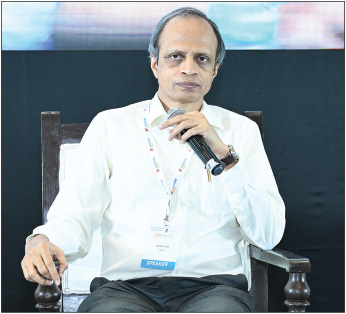
At TransTech 2024, Ashok Pal, Deputy COO, CTUIL, made a presentation on transmission system planning, highlighting the need for robust transmission infrastructure to support the anticipated capacity addition of 500 GW by 2030. Meanwhile, in another session, Samir Saxena, Director, Market Operations, GRID-India, made a presentation on the company’s initiatives aimed at seamlessly integrating renewable energy, with a focus on real-time operational efficiency and effective resource management.
CTUIL’s transmission system plans
Transmission system planning has been carried out for 335 GW of interstate transmission system networks, primarily to support renewable energy transmission. Of this, 42 GW is already completed, 85 GW is under construction, 65 GW is under bidding and 143 GW is awaiting approval. The development of these networks will require a total capital investment of Rs 5,000 billion. The northern region leads with a total capacity of 123 GW, with Rajasthan accounting for the highest share at 110 GW, followed by the southern region at 117 GW (including 65 GW from Andhra Pradesh). The western region is expected to reach 94 GW, while the north-eastern region has a relatively smaller target of 1 GW.

A key challenge is that much of this transmission capacity is concentrated in just two states – Rajasthan and Gujarat. Distributed renewable energy projects across India could help address this by optimising transmission system efficiency and alleviating pressure on the grid. Leveraging the transmission system during non-solar hours with additional renewable energy, storage, and green hydrogen or green ammonia at the source can help manage transmission-related issues.
With the growing integration of variable renewable energy sources, resource adequacy is necessary to manage the fluctuation in generation and address any contingencies that may arise. Resource adequacy must be ensured across all time horizons. It is crucial to undertake reserve estimation, planning and procurement on a day-ahead, week-ahead, month-ahead and year-ahead basis to ensure grid reliability and stability.
GRID-India’s initiatives
GRID-India is actively working on initiatives to facilitate a seamless transition to a renewable energy landscape. India has made impressive strides in renewable energy, with the combined capacity of wind and solar now exceeding 132 GW. This growth has led to unprecedented levels of renewable energy penetration nationwide, with states such as Karnataka achieving remarkable rates. The geographical concentration of renewable energy sources, primarily in western and southern India, has altered power transmission patterns. Seasonal electricity flows are now dynamic, requiring a renewed focus on resource adequacy, influenced by new regulations from the Central Electricity Authority (CEA). To support reliable renewable energy integration, GRID-India has established renewable energy management centres at both state and national levels, focusing on forecasting, scheduling and real-time monitoring.
On July 6, 2024, India recorded its highest level of renewable energy penetration at 33 per cent, as wind and solar capacities peaked. Further, the transmission landscape has also changed, with renewable energy projects coming online faster than traditional transmission infrastructure can be built. There needs to be a faster rate of construction of extra-high voltage and ultra-high voltage transmission lines to meet the challenges of resource adequacy
and forecasting.
Looking ahead, advanced planning for transmission infrastructure is critical, as the timelines for these projects often exceed those for renewable energy installations. As India advances in its renewable energy journey, collaboration among system operators, regulators, and energy producers will
be essential.
Click to read the TransTech Special Section from the October issue.