
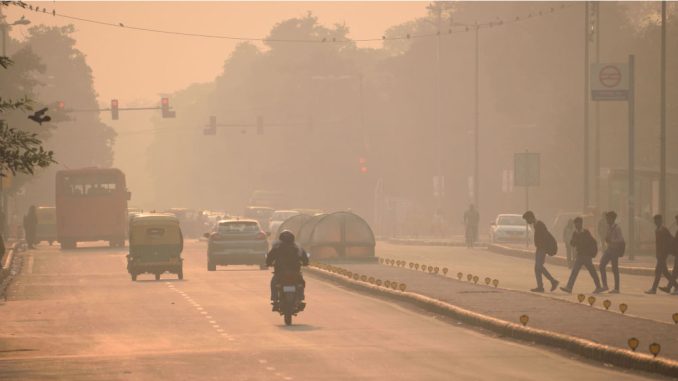
In November 2024, Delhi was once again engulfed in a dense haze of smog, with air quality indices (AQI) breaching hazardous levels, exceeding 400 in several areas. This annual pollution crisis starkly highlights the persistent challenge of crop residue burning in northern India, a practice that continues despite numerous interventions. However, amidst this environmental dilemma lies an untapped and transformative solution–biomass co-firing. This involves substituting a portion of coal with agricultural biomass in thermal power plants (TPPs), which not only mitigates greenhouse gas emissions but also addresses the adverse impacts of stubble burning. Crucially, it offers a dual advantage: monetising an abundant raw material for energy generation while providing farmers with an additional revenue stream. With India producing approximately 750 million tonnes (mt) of biomass annually–including a surplus of 230 mt–biomass co-firing offers a unique convergence of urgency and opportunity.
The Ministry of Power (MoP) mandated that TPPs co-fire 5 per cent of biomass from 2024-25 and 7 per cent from 2025-26. As of June 2024, 814,000 tonnes of cumulative biomass has been co-fired across India, resulting in a reduction of about 0.97 mt of CO2 emissions from TPPs, according to the MoP.
Policy framework
There have been a number of policy directives in the past few years to promote co-firing. The MoP first issued the “Policy for Biomass Utilisation for Power Generation through Co-firing in Pulverised Coal-Fired Boilers” in November 2017. This policy mandated the blending of 5-10 per cent biomass pellets with coal in TPPs.
In October 2021, the MoP mandated biomass co-firing across all TPPs. This was further reinforced by Union Budget 2022, which highlighted the necessity for 5-10 per cent co-firing.
To address logistical challenges and scale implementation, the National Mission on Use of Biomass in Thermal Power Plants, also known as SAMARTH, was established, focusing on biomass pellet procurement, storage and blending.
Subsequently, in 2023, there was a revision of the biomass co-firing policy, which introduced a benchmark price for biomass pellets. Effective January 2024, this pricing mechanism seeks to balance business viability for pellet producers with affordability for TPPs.
In November 2024, the MoP benchmarked the prices of non-torrefied biomass pellets for the northern (excluding the National Capital Region [NCR]) and western regions at Rs 2.27 per 7,000 kcal and Rs 2.24 per 7,000 kcal respectively, excluding GST and transportation costs. This pricing framework is designed to address cost disparities and ensure affordability for industries adopting biomass co-firing.
The National Bioenergy Programme, notified in 2022, also supports the implementation of SAMARTH.
Further, the Commission for Air Quality Management in NCR and adjoining areas has directed all captive TPPs in the region to take immediate steps to co-fire biomass-based pellets, prioritising paddy straw utilisation. The directive mandates a target of at least 10 per cent co-firing by December 31, 2023, supported by a continuous and reliable supply chain.
NTPC’s initiatives
NTPC Limited is actively utilising non-torrefied biomass for co-firing pulverised coal-fired boilers. It has already achieved sustainable biomass co-firing of 7-10 weight percentage using non-torrefied pellets made of agricultural residue without any modifications to the existing system. This initiative began in 2017. However, for firing a higher percentage of non-torrefied biomass, significant modifications in boilers, mills, etc., are required. In May 2024, in a major milestone, NTPC successfully demonstrated the co-firing of 20 per cent torrefied biomass at Unit 4 of its Tanda plant in Uttar Pradesh. The demonstration was led by the Energy Transition and Policy Research Division of NTPC Engineering.
For the production of torrefied biomass pellets, biomass is heated in the absence of oxygen to convert it into a coal-like material. Torrefied biomass has low volatile content and a higher Hargrove Grindability Index, which makes it suitable for use with existing systems for higher co-firing percentages. The gross calorific Value and current cost of torrefied biomass pellets are equivalent to that of imported coal. However, there is significant potential for cost reduction in the long run as the technology and market mature. Recently, NETRA (NTPC’s research and development [R&D] wing) and LWP Biocoal LLP (a start-up registered under the Government of India) developed and set up a 10 tonnes per day of integrated torrefaction and pelletisation plant. This facility aims to demonstrate indigenous technology and promote the manufacturing of torrefied pellets in the country.
NTPC has also carried out the co-firing of torrefied waste sludge and torrefied municipal solid waste in existing coal-fired power plants. This innovative solution enables the utilisation of waste sludge produced from sewage treatment plants (STPs), reduces CO2 emissions from power plants and further contributes to minimising land and water pollution. Torrefied waste sludge firing in existing coal power plants offers a viable solution for utilising STP sludge waste, converting it into energy in an environmentally friendly way.
In 2022, NTPC Limited and GE Power India Limited signed an MoU to collaborate on R&D initiatives for co-firing biomass pellets beyond 20 per cent and up to 100 per cent, while also exploring carbon-neutral fuels such as green methanol and green ammonia.
Challenges and outlook
Unlocking the potential of biomass co-firing requires strategic measures to address existing challenges and ensure sustainable implementation. Building a robust supply chain through direct farmer subsidies, the establishment of rural biomass collection centres and decentralised pellet production units can ensure a consistent supply of agricultural residues while minimising transportation costs. Economic viability also presents a major hurdle, as the high cost of pellet production and operational inefficiencies in co-firing set-ups outweigh the benefits of the benchmark pricing mechanism introduced in 2023. Greater clarity on subsidies and tariff benefits is necessary to bridge this gap. Policy implementation also faces challenges, with weak regulatory oversight and enforcement mechanisms limiting its effectiveness.
Investments in R&D are crucial for resolving storage and efficiency issues while improving pellet quality. Effective monitoring systems, such as those under SAMARTH, can ensure policy compliance and track emission reduction progress. Additionally, educating farmers on the economic and environmental benefits of supplying agricultural residues through targeted awareness campaigns can reduce resistance to stubble collection and encourage broader participation. These measures collectively pave the way for a more efficient and sustainable biomass co-firing framework that addresses both environmental and economic objectives.