
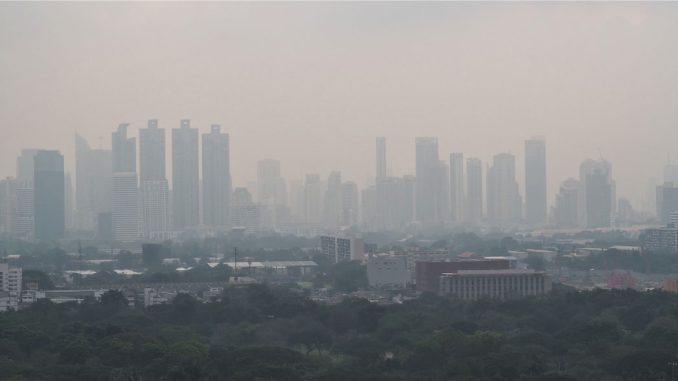
Air pollution is a pressing global issue, with particulate matter (PM) and mercury being among the most harmful pollutants affecting public health and the environment. Effective emission control measures are essential to mitigate these impacts, particularly from major sources such as thermal power plants (TPPs).
Source control represents the first line of defence against emissions, focusing on minimising the generation of pollutants at their origin. This approach incorporates cleaner production practices, optimisation of industrial processes and the adoption of advanced combustion technologies. By curbing emissions at source, industries can achieve significant reductions in pollutant levels, ultimately benefiting both the environment and human health.
Particulate matter, a critical air pollutant, is categorised based on particle diameter. PM with a diameter of 2.5 micrometres (PM 2.5) and lower are particularly hazardous. As such, reducing PM 2.5 concentration is imperative and requires a combination of technological innovations and regulatory measures. Technological solutions to reduce PM emissions include the use of low-sulphur fuels, installation of baghouses or electrostatic precipitators (ESPs), and implementation of dust suppression techniques. These measures, when effectively deployed, can substantially decrease PM concentration, promoting cleaner air and improving public health.
In India, PM emission norms for TPPs vary depending on the commissioning dates of the plants. For plants commissioned before December 31, 2003, the permissible PM emission limit is set at 100 mg per Nm³. For plants commissioned between January 1, 2004 and December 31, 2016, the limit is reduced to 50 mg per Nm³, while those commissioned after January 1, 2017 have to adhere to an even stricter limit of 30 mg per Nm³. Meanwhile, states such as Andhra Pradesh and Delhi have implemented more stringent local standards of 115 mg per Nm³ and 50 mg per Nm³ respectively. These regulatory efforts, enforced by the Ministry of Environment, Forest and Climate Change, aim to ensure compliance and mitigate the environmental footprint of thermal power generation.
Technologies for PM control
Efficient control of particulate emissions depends on advanced technologies capable of capturing fine particles before their release into the atmosphere.
Fabric filters, also known as baghouses, are among the most effective methods for capturing particulate matter. They also include pulse jet bag filters or ceramic filters. These systems operate by drawing flue gas through filter bags that trap dust particles. With a removal efficiency ranging from 99 per cent and 99.99 per cent for particle sizes between 0.01 and 100 micrometres, fabric filters are highly effective in reducing emissions. Periodic cleaning of the filter bags ensures performance efficiency and minimises operational disruptions. Facilities such as the Jhajjar power station in Haryana have successfully deployed fabric filters to reduce emissions from coal-based power generation.
ESPs are widely used in power plants and other industrial applications to control particulate emissions. These devices function by electrically charging ash particles in the flue gas stream and are then collected on oppositely charged plates. ESPs are particularly valued for their high collection efficiency and ability to handle large volumes of flue gas. However, their performance can be affected by the resistivity of fly ash. To this end, enhancements such as improved electrode technologies, modern control algorithms, and operational monitoring can optimise ESP efficiency. Most power plants in the country have already installed ESPs due to their high efficiency. Furthermore, NTPC Limited has successfully retrofitted 13 GW of ESPs. As per the CEA, 57 units (19,794 MW) have upgraded their ESPs, 12 units (1,690 MW) plan to upgrade ESPs by December 2024 and six units (2,005 MW) expect PM compliance post
FGD installation.
Wet scrubbers, including venturi scrubbers, are designed to capture both PM and sulphur dioxide emissions. These systems introduce water into the flue gas stream, creating droplets that interact with particulate matter to form a wet by-product, which is then disposed of. Wet scrubbers are especially effective in applications requiring simultaneous control of multiple pollutants.
Catalytic converters are commonly used in vehicles to control particulate emissions from exhaust gases. They use catalytic materials to promote chemical reactions that convert harmful pollutants into less harmful substances.
Another device that specialises in the application of a centrifugal force for separating suspended particles from the flue gas stream is the cyclone separator. This is used by multiple industries as it offers low costs, smaller space requirement benchmarks, simple structures, and the capability to withstand high temperatures and pressures.
Meanwhile, cartridge dust collectors help overcome space and height constraints. These dust collectors are equipped with cartridge filter bags instead of the conventional round cylindrical filter bags and provide higher filtration surface area vis-a-vis other filter bags.
Solutions for mercury control
Mercury, a toxic pollutant, poses significant risks to both human health and ecosystems. It bioaccumulates in aquatic systems, entering the food chain and leading to harmful concentrations in fish and other organisms. Exposure to mercury can cause severe health problems, including reproductive issues, developmental delays and neurological damage. Mercury control measures often complement the existing technologies for reducing nitrogen oxide, sulphur oxide and particulate matter. Under the current regulations in the country, the mercury emission norm for thermal power plants is set at 0.03 mg/Nm3.
Key solutions include oxidation to ionic mercury. In this process, oxidising metallic mercury to ionic mercury facilitates its removal in flue gas desulphurisation systems. A powdered activated carbon (PAC) injection is introduced into the flue gas stream to adsorb mercury. When combined with spray dry absorption processes, the PAC injection is highly effective in
capturing mercury.
Furthermore, the addition of halogens, such as calcium bromide or sodium iodide, enhances mercury oxidation, making it easier to capture. This cost-effective method helps in the removal of high levels of mercury. Wet flue gas desulphurisation systems also play a crucial role in mercury control. These systems, designed for multi-pollutant removal, effectively capture filterable particulate matter, acid mist and mercury. However, the presence of sulphur trioxide in flue gas can hinder PAC performance. This challenge can be addressed by injecting sorbents or amended silicates before using PAC injections to mitigate sulphur trioxide poisoning.
Globally, initiatives such as the Minamata Convention on Mercury have underscored the importance of international cooperation in managing mercury emissions. Signed by over 101 countries, the treaty aims to reduce mercury pollution through measures such as banning new mercury mines, phasing out existing ones and regulating mercury emissions from industrial sources.
While advanced technologies are critical for emission control, regular monitoring of emissions is equally important. Continuous emission monitoring systems provide real-time data on pollutant levels, enabling industries to ensure compliance with emission standards and take corrective actions when necessary. Routine inspections and maintenance of control systems further enhance their effectiveness and longevity.
Conclusion
Limiting particulate matter and mercury emissions is crucial for protecting public health and mitigating the environmental impact of air pollution. By integrating source control measures, deploying advanced technologies, and enforcing stringent regulatory frameworks, industries can significantly reduce emissions. Consistent research and innovation, coupled with collaborative efforts among governments, industries and individuals, is essential for achieving cleaner air and a sustainable future.