
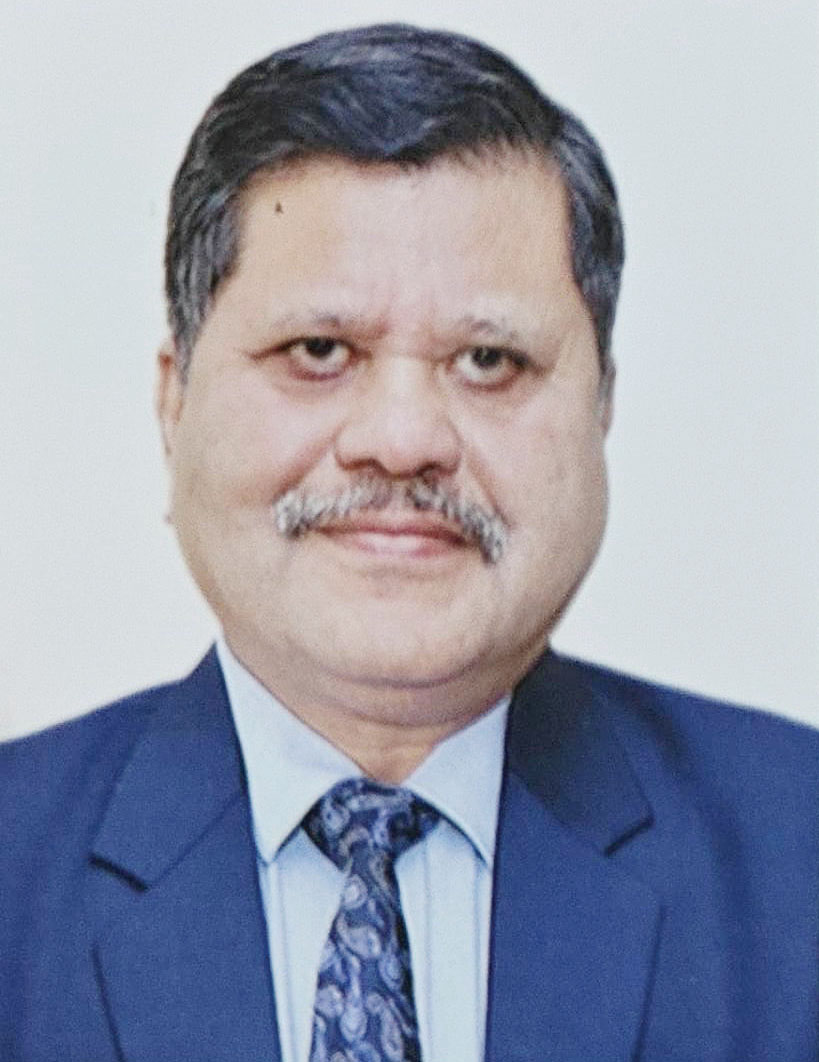
 As India’s power sector is transforming, the focus is shifting to renewables, transmission and storage to meet the growing energy demand and climate goals. Key regulatory advances by the Central Electricity Regulatory Commission (CERC) support this shift by targeted regulatory measures for the energy transition. This decade’s priority is to ensure energy security, affordability and sustainability, where the country will witness concurrent growth in all segments of the power sector, such as renewables, thermal, hydro and transmission. Shri Jishnu Barua, the Chairperson of the Central Electricity Regulatory Commission, has completed a little over one year as the power sector regulator. In a recent interview with Power Line, Shri Barua shared his perspective on the growth of the power sector, the key challenges and opportunities, and the future outlook. Edited excerpts…
What is your assessment of the current state of the power sector?
The Indian power sector is undergoing a profound transformation. The sector is poised for substantial growth in the coming decade and shall remain an attractive destination for investment from all sets of players, including start-ups. To explain this, let me categorise the post-reform growth and development of the power sector. In the first decade post the Electricity Act, 2003, from 2003 to 2013, the country witnessed a huge investment in thermal power generation to meet shortages and increased baseload demand. In the second decade, from 2013 to 2023, investment in renewable generation and associated transmission systems picked up substantially. Now, in the third decade, from 2023 to 2033, there is a demand for renewable energy, thermal power generation, and transmission capacities at the ISTS level. Apart from this, the demand for storage-based generation, such as pumped storage hydro generation and grid-connected battery storage, is increasing. Capacity addition in the nuclear energy segment is also under discussion. This current decade, commencing in 2023, is going to be the most happening phase for investments in the power sector.
Talking about electricity demand, the all-India energy generation growth rate during the past decade was in the range of 5-6 per cent, which indicates a steady resurgence of demand after the pandemic. As per the data, it is observed that there is a real growth in demand, and energy consumption is expected to grow at about 7.18 per cent between 2021-22 and 2026-27, and at 5.79 per cent from 2026-27 to 2031-32.
Investments in the renewable energy space, driven by the theme of clean energy transition, have increased significantly over the past few years. India has made significant investments in renewable energy and ranks fourth globally with an installed capacity of 199 GW.
Growth in the power transmission segment continues, driven especially by the need to expand the transmission network to previously unconnected geographical pockets to connect the upcoming renewable energy generation projects in the areas that were not considered for generation projects in the pre-renewable era. The transmission system has expanded to 486,000 ckt km of transmission lines and 1,251,000 MVA of transformation capacity at the close of financial year 2023-24. An additional investment of about $100 billion-$200 billion per year is expected across various net-zero scenarios, and power transmission, being the network element of the value chain, is the backbone for the growth of renewable power generation capacity.
The retail segment of the power sector, that is, the distribution system, is a crucial link in the value chain, connecting generating stations and the transmission system to end-consumers. The financial health and growth of the power sector rely on the proper functioning of distribution companies. While the CERC does not directly regulate the retail segment and distribution licensees, we keep an eye on the performance of distribution licensees and facilitate reforms through the Forum of Regulators. Distribution loss reduction and improvement in operational efficiency dominate the reform agenda of distribution companies. During the past decade, distribution losses have reduced by 6-7 per cent, and the dues of distribution companies have reduced by 60-65 per cent from the pre-pandemic level.
The short-term power market has also witnessed significant growth in the recent past. The total short-term trading volumes stood at 239.09 billion units, marking a 7.37 per cent increase compared to those in the previous year.
What are the biggest bottlenecks in the growth of the sector?
India’s peak demand, growing year on year to reach 250 GW in 2024, reflects the post-Covid resurgence of economic activity in the country. The power sector is poised for significant capacity addition in the ongoing decade. The capacity addition depends on the power purchase agreement with distribution companies. The financial viability of the distribution companies is a major concern for sectoral growth.
Apart from this, the power sector faces multiple bottlenecks, including slippages in project execution due to factors such as land acquisition, right-of-way issues, clearances and the availability of adequate finance. The delay in addressing challenges in project development will be detrimental to investment.
While the performance of distribution companies has improved in recent years, there are uncertainties associated with timely payments and recovery of costs, as observed in the past. As the recovery of investments in generation and transmission also depends on the efficiency of distribution companies, the performance of the latter has a significant impact on investors’ confidence in the entire sector.
However, it may be noted that despite the gamut of challenges, India has successfully adopted a range of low-carbon technologies critical for the energy transition to consistently move to a decarbonised economy.
What are some of the key orders and regulations passed by the CERC in the past one year and what has been the impact of these on the power sector?
The Indian Electricity Grid Code (IEGC), General Network Access, and sharing of interstate transmission charges and losses are some of the regulations issued by the commission in the recent past, with far-reaching implications for the power sector. The framework interalia of resource adequacy, reserves, security-constrained unit commitment and security-constrained economic despatch (SCED), scheduling and despatch, specific provisions for resources such as energy storage systems (ESSs), and demand response in the IEGC set the tone for future market realities in the power sector.
The commission issued new tariff regulations for coal- and lignite-based thermal generating stations, hydro generating stations, and transmission systems for the control period 2024-29. The commission has also put in place a separate framework for the determination of the price of coal supplied from
an integrated mine allotted to generating companies.
The commission has also issued regulations for the determination of tariffs from renewable energy sources for the control period 2024-27. These regulations aim to provide a structured approach to determining tariffs, ensuring fairness, and encouraging growth in the renewable energy sector.
The commission has adopted a proactive regulatory approach with a range of suo moto orders in the recent past to enhance predictability, certainty and timely implementation of the regulatory framework. Some of these orders provide a self-regulatory framework, such as compensation on account of the emission control system treated
as a change in law for competitive bidding projects.
The commission is also responsible for regulating the electricity market. As a market regulator, the commission introduced several products in the power exchanges and also initiated regulatory interventions for strengthening and enhancing the transparency of
market operations to protect stakeholders’ interests.
What are some of the key regulations that are likely to be notified in the next year or so?
The commission takes a consultative approach in the formulation of new regulations and avoids deciding in advance without due consideration of the inputs received in public consultations. To assess the need for regulatory intervention, the commission issues a consultation paper on the need for regulations on different subjects and undertakes evidence-based and data-driven regulatory research.
Going forward, there are emerging areas for regulatory interventions such as the price discovery of carbon credits in India, regulating and supporting energy storage systems and distributed energy resources, facilitating flexible operations of thermal power plants, strengthening electricity markets and their monitoring and surveillance frameworks, and the regulatory framework for new front-line regulators–such as the central transmission utility. Some regulatory interventions contemplated for power exchanges are being examined and a decision will be taken after considering the scientific research-based evidence and stakeholder inputs.
What is your outlook for the renewable energy market over the next few years? What will be the CERC’s main focus for this segment?
The regulatory and policy frameworks have a strong influence on the renewable energy market. The government has set a target to achieve 500 GW of renewable energy capacity by 2030, which is expected to stimulate a growth spurt in the renewable energy sector in the future. The renewable energy market is segmented by source across wind, solar, hydro, bioenergy and other sources; here, the solar segment has the biggest market share. Going forward, the growing renewable energy market will also encourage the growth of distributed energy resources, microgrids, and other innovative configurations in the renewable energy segment.
Further, increasing investments in the renewable energy sector are expected to boost growth in the forecast period. The renewable energy industry has redefined the business outlook in India; earlier, only large investors were able to enter into the power business, but after the growth of renewable energy projects, it offers the opportunity to start-up businesses as well with lower entry barriers as compared to conventional energy. This has facilitated the creation of a competitive renewable energy market in India.
What are the short- and medium-term priorities for the CERC?
As I mentioned earlier, the commission is focusing on proactively regulating emerging areas from their nascent stages to ensure orderly growth, such as the development of the carbon credit market in India, the introduction of energy storage systems in the power sector, the development of distributed energy resources and regulation of the electricity market to ensure affordability, reliability and sustainability of the power sector.
The regulator’s focus is to ensure the growth of the power sector with the least disruption. The regulator has to resolve emergent issues in a timely manner to curb disruption. The early recognition of challenges in the market is important for the central commission to address the problems before they cause damage to sectoral growth. The Electricity Act, 2003 provides exclusive jurisdiction of the central commission to regulate the electricity market as the market regulator. It enables the central commission to discharge the monitoring of the electricity market in the entire value chain. The central commission, as a part of the market monitoring function, is prepared to take proactive action to ensure the growth of the power sector with the least disruption. The central commission is also strengthening the organisation to meet stakeholders’ expectations. The power minister also recognises the critical role of the regulator and supports the strengthening of the central commission. So, in the coming year, the sector will witness more proactive regulatory actions conducive to the growth of the power sector, addressing critical challenges and headwinds to growth.
 What is your outlook for the power sector for the next few years?
Looking at the future outlook for the sector, India’s power sector will undergo a profound transformation as we seek to achieve energy independence by 2047. This transformation is driven by factors such as the clean energy transition, sustainability and technological advancements in the power sector. As explained earlier, the decade starting from 2023 is set to witness concurrent growth of all the segments of the power sector. This decade’s priority is to ensure energy security, affordability and sustainability.
The power sector is redefining its outlook and is headed towards witnessing robust and consistent growth. Power demand is expected to grow in the range of 6-8 per cent per annum with increasing economic activities, growing electrification of end uses, and other factors. Investments in renewable energy are expected to increase significantly in the coming years to achieve the 500 GW capacity target by 2030. Coal- and lignite-based thermal power generation will still remain relevant for the power sector as a correction of the energy mix and investments in this segment may also be seen in the next few years. At present, estimates indicate that close to 260 GW of coal- and lignite-based capacity is required in the country by 2032 as against the present installed capacity of 217.5 GW.
We may also note that the expansion of renewable energy has shifted the business outlook in India. Earlier, power projects were considered very risky, with a large capital requirement and a long construction period, and were dominated only by large incumbent market players. But now, this space is increasingly occupied by medium-sized projects, including distributed renewable energy projects with small ticket sizes, which have attracted start-up businesses to the sector.
Hydropower capacity assumes strategic importance in the context of the energy transition, with rapid ramping rates and low operational costs, which are critical for providing greater inertia and balancing power to the grid.
On the retail front, there is a substantial reduction in pending dues and distribution losses, which indicates an improvement in the financial health of the distribution companies in India. The long-standing challenges of the distribution licensees have been streamlined and reduced to a great extent.
The short-term and spot market is developing gradually with an increasing share in the power exchanges. The long-term electricity market is also competitive, with the increase in the number of market players, commercial and technical awareness of the industry, and the increasing ability of developers for
risk mitigation.
It is observed that the centrally-owned public sector enterprises are ahead of the curve. Similarly, I wish some of the distribution companies can soon emerge as outperformers in the coming years and stay ahead of the curve.