

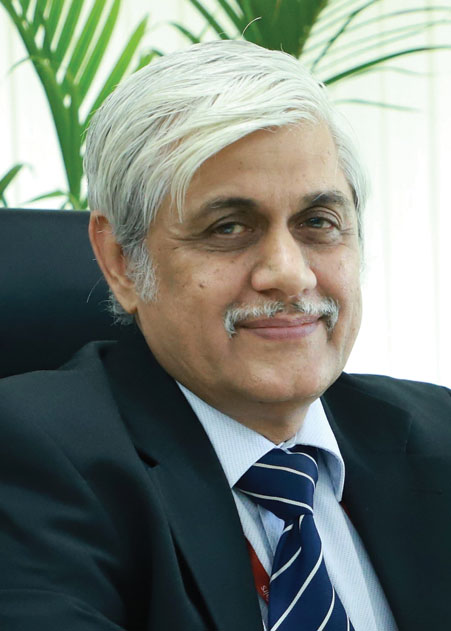
 Pankaj Batra, Senior Adviser, IRADe, and Ex-Chairperson and Member (Planning), Central Electricity Authority
It has been seen that trade between countries, in general, is good, since it transfers resources or commodities from a place of surplus to a place of deficit, from a place that is rich in those resources/commodities (or a country that is good at creating them). In the case of finished goods, trade results when a country realises that it would rather import the goods to utilise their benefits than take time to create its own goods, because it is more economical to do so. Such is also the case for electricity.
In South Asia, Nepal and Bhutan are hilly countries and have a lot of potential for hydroelectric power generation, which they would not be able to fully utilise during the monsoon season, but could export. On the other hand, these countries fall short of power during the dry season (which is mostly during winter, December to March), requiring them to import power from other countries. Meanwhile, India and Bangladesh need more power during the summer and humid seasons, that is, May to August, especially when rain is interrupted. These countries can export power during the winter season to Nepal and Bhutan, when their own power demand is relatively lower, and that of Nepal and Bhutan higher.
Therefore, cross-border electricity trade (CBET) in the South Asian region is a win-win situation for all these countries. In January 2024, India agreed to buy 10,000 MW of power from Nepal over the next 10 years. Should there be a surplus that the adjacent country does not require, this can be transferred to a third country through the grid of the adjacent country. In this context, since Nepal and Bangladesh do not share common borders, India is facilitating the transfer of 40 MW of power from Nepal to Bangladesh through the Indian grid, as a pilot project, to firm up the modalities of the first-ever trilateral trade in South Asia. Sri Lanka, seeing the benefits of CBET, is likely to interconnect its grid with the Indian grid to enable trade with India and the rest of South Asia. Sri Lanka could harness the vast wind resources in its northern part, in the Mannar region, to sell power to countries in South Asia during the high wind season, when it is not able to utilise the entire quantity of wind generation.
Similarly, it would do a world of good to the Bay of Bengal Initiative for Multi-Sectoral Technical and Economic Cooperation (BIMSTEC) countries, namely India, Nepal, Bhutan, Bangladesh, Sri Lanka, Myanmar and Thailand, to interconnect their grids. Interconnection and trade in electricity are particularly beneficial, since we cannot store electricity in large quantities to be utilised later, like we can grain or other physical commodities or finished goods. Storage of electricity is possible to a small extent in storage-based hydroelectric plants, which, in India, constitute a small percentage (just about 1 per cent) of the total electricity generating capacity. Grid interconnections would reduce the requirement of electricity storage, because of the diversity in electricity demand across the various interconnecting countries. Grid interconnections are also the fastest and cheapest way of universal energy access.
But, what does it take to implement grid interconnections and power trade on the ground? Do the countries just interconnect, and does the electricity start flowing seamlessly? No, a lot of preparation is required to operationalise power trade across countries. The electricity grid is a complicated machine, a set of distributed generators and loads, interconnected through transmission and distribution systems operating under a set of rules called the grid code, without which we would have frequent interruptions as well as risk to life and equipment. Grid operation must be planned in advance through the day-ahead scheduling of power flows to maintain load and generation balance at each point of time, or else the grid could go down in a matter of milliseconds.
We would also need uniform market rules across countries, so as to ensure that electricity trade takes place methodically and in accordance with set procedures. Once Nepal and Bhutan became aware of its rules, they began trading in the power exchange in India, with extensive benefits for both countries. Nepal sold more than 1.361 BUs of power during the monsoon season in 2023, that is, from mid-July to mid-November, compared to 983.8 MUs in the previous year – a growth rate of 38 per cent – earning a revenue of NPR 12.5 billion (or about Rs 7.8 billion). It bought 1,036 MUs, mostly during the dry season, during financial year 2022-23, as compared to 786 MUs in the previous year – a growth rate of 32 per cent. Similarly, Bhutan imported a little over 240 MUs of electricity from India through the energy exchange at a cost of BTN 798 million, when they had to put its largest hydropower plant, the Tala hydroelectric plant, under shutdown to carry out repair work, from January 1, 2022, to March 16, 2022. This could not have happened had they not
been aware of the market rules of the power exchange.
 India’s Grid Code consists of rules, guidelines and standards to be followed by various persons and participants in the system to plan, develop, maintain and operate the power system, in the most secure, reliable, economical and efficient manner, while facilitating healthy competition in the generation and supply of electricity. It comprises the Planning Code, the Connection Code, the Operating Code, the Scheduling and Despatch Code, the Compliance Oversight and the Administration of the Grid Code. Every country has its grid code, almost along the same lines. However, there could be some differences in the connectivity standards, the grid operating frequency and voltage tolerance levels, the granularity of time intervals of scheduling and despatch, and the reporting mechanism and frequency of reporting, besides the mode of action taken to ensure that the grid operates safely and securely. These provisions need to be harmonised for CBET, and a Common Minimum Grid Code should be made to interconnect countries in South Asia or BIMSTEC countries for trade. The grid codes of individual countries need not be amended. For example, the voltage limits within the country can remain the same, so long as they have no impact on CBET. However, the standards at the interconnection point need to be harmonised in the Common Minimum Grid Code. This should come after detailed consultations with all concerned South Asian countries, and be housed in the South Asia Forum for Infrastructure Regulation (SAFIR). Although electricity trade is taking place between India and the three aforementioned countries – Bhutan, Nepal and Bangladesh – in the bilateral mode, these provisions have been upheld through interim measures on a bilateral basis between the joint technical teams of each pair of transacting countries. However, when the interconnections and transactions increase and trilateral trade is established, a common set of rules will be needed. The Common Minimum Grid Code would fulfil this need.
There are a lot of benefits to creating a power market to increase efficiency in trade. But this would again necessitate a set of common market rules, which all participants would have to abide by. A market includes contracts of different durations. The power exchange is also a part of the market. Day-ahead and real-time are the most common standardised contracts used in power exchanges around the world. Common rules include the timelines of bidding, matching and delivery of power; the bid matching mechanism; and an oversight mechanism.
Both the Common Minimum Grid Code and common market rules in South Asia are being coordinated by SAFIR, with support from the World Bank and the United States Agency for International Development. It is expected that this will facilitate increased trade between the South Asian countries in a safe, secure and efficient manner, eventually expanding to the BIMSTEC region, the Southeast Asian nations and the Middle East, and ultimately helping achieve
the vision of One Sun, One World, One Grid as proclaimed by the Indian prime minister, as well as the Green Grid Initiative, jointly launched by the Indian and British prime ministers.