
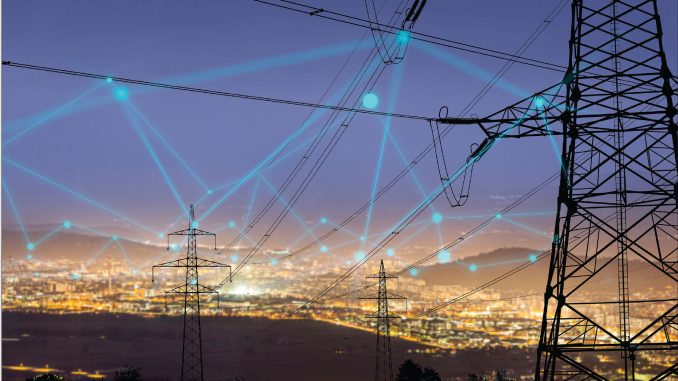
The smart grid is revolutionising power systems by enhancing efficiency through advanced technologies such as smart meters, grid management solutions and data analytics. A key focus is on prepaid smart metering for consumers and system metering at the feeder and distribution transformer levels, enabling automatic energy accounting and auditing, while reducing power supply costs. Emerging technologies such as artificial intelligence (AI), internet of things (IoT), blockchain, RT-DAS and energy storage are reshaping grid operations, driving a seamless transition. This shift is fuelled by increasing energy demand, stringent regulations and infrastructure modernisation, with a strong emphasis on renewable energy integration.
Progress under RDSS and NSGM
In line with the government’s commitment to providing 24×7 access to quality, reliable and affordable power, smart grids have become increasingly crucial. The Revamped Distribution Sector Scheme (RDSS) and the National Smart Grid Mission (NSGM) have been instrumental in promoting their adoption by fostering ecosystem development and facilitating knowledge dissemination.
According to the Ministry of Power (MoP), under the RDSS, aggregate technical and commercial (AT&C) losses of distribution utilities at the national level reduced from 22.32 per cent in FY2021 to 15.37 per cent in FY2023. The average cost of supply and average revenue realised gap also narrowed from Re 0.69 per kWh in FY2021 to Re 0.45 per kWh in FY2023, with further improvements in FY2024.
Most utilities are now publishing their annual accounts on time, while the timely payment of subsidies and government department dues by states has also improved. Additionally, the process of publishing tariff and true-up orders by utilities has been significantly streamlined, and no new regulatory assets are being created for
distribution companies.
Further, loss reduction works worth Rs 1.48 trillion have been sanctioned for 32 states/union territories. So far, works worth Rs 1.12 trillion have been awarded, which are at different stages of implementation. Smart meters have significantly improved utility operations in Assam and Bihar. An analysis shows that around 44 per cent of consumers in Assam saved approximately 50 units per month post-installation, by tracking consumption and benefiting from accurate billing. These meters have also helped distribution companies reduce losses, ultimately
benefiting consumers.
Additionally, under the RDSS, Varanasi is a pilot city to assess smart distribution investments, with expected benefits such as self-healing grids, enhanced reliability, asset optimisation and consumer empowerment. More cities are set to follow, highlighting India’s advancing urban infrastructure.
As per the NSGM portal, smart metering works covering 222 million smart consumer meters, 5.3 million distribution transformer (DT) meters and 0.21 million feeder meters have been sanctioned as of February 2025. So far, almost 22 million smart consumer meters, 0.4 million DT meters and 93,034 feeder meters have been installed.
Currently, two smart grid projects are being implemented under the NSGM, to cater to around 180,000 consumers at a cost of Rs 1.16 billion. These projects are being implemented at Subdivision 5 of the Chandigarh Electricity Division (CED) and six urban towns of Baran, Bharatpur, Bundi, Dholpur, Jhalawar and Karauli under Jaipur Vidyut Vitran Nigam Limited (JVVNL). As of January 2025, a total of 169,557 smart meters have been installed under these projects, including 24,214 at CED’s Subdivision 5 and 145,343 under JVVNL.
Around 11 smart grid pilot projects sanctioned by the MoP have been completed across Assam, Gujarat, Himachal Pradesh, Haryana, Karnataka, Rajasthan, Telangana, Tripura, Puducherry, Uttar Pradesh and West Bengal, at a total cost of Rs 2.54 billion. Overall, around 156,000 smart meters have been installed under the pilot smart grid projects.
The NSGM has developed a smart grid readiness self-assessment tool to evaluate utilities’ preparedness for adopting smart grid technologies and support them in their smart grid road maps. Additionally, it has created a cost-benefit analysis tool to assess the advantages of smart meters and grid modernisation projects.
Technology trends
By integrating advanced hardware, software and communications technologies, smart grids enable utilities to monitor, control and optimise electricity flows in real time, improving grid performance and resilience.
A distribution management system (DMS) serves as the central hub for monitoring and controlling medium voltage electricity networks. It helps utilities detect outages, optimise voltage levels and manage network configurations for efficient power delivery. Advanced functionalities such as fault management, system restoration and load balancing further strengthen
grid performance.
Complementing DMS, supervisory control and data acquisition (SCADA) provides real-time monitoring of grid conditions, enabling seamless communication with other smart grid technologies such as advanced metering infrastructure (AMI) and energy management systems. AMI enables real-time monitoring of energy consumption through smart meters. By utilising communications networks, utilities can track energy usage patterns, implement time-of-day pricing and ensure
accurate billing.
Energy storage systems, particularly battery energy storage systems (BESSs), play a critical role in stabilising grid operations. By storing energy during off-peak hours and supplying it during peak demand, BESSs help reduce costs and manage renewable energy intermittency. Further, microgrids enhance grid resilience by integrating distributed energy resources such as solar panels, wind turbines and fuel cells. These decentralised grids can operate independently or in coordination with the main grid, ensuring reliable electricity supply and reducing dependence on large-scale transmission networks.
RT-DAS provides utilities with precise measurements to evaluate reliability indices such as System Average Interruption Frequency Index (SAIFI) and System Average Interruption Duration Index (SAIDI) in non-SCADA towns. By analysing outage data and diagnosing system inefficiencies, RT-DAS supports targeted improvements in power distribution. Meanwhile, an outage management system automates outage detection, alerts field crews and streamlines
power restoration.
Additionally, IoT is transforming the power sector by enabling real-time monitoring, theft detection and predictive maintenance. Smart meters, solar farm monitoring and IoT-based EV charging solutions are driving efficiency and security across the grid.
Cybersecurity
The increasing integration of smart solutions, real-time data and cloud technologies in India’s power sector has heightened cybersecurity risks, including cyberattacks, hacking and system malfunctions. With growing IT adoption, ensuring grid security is a priority, as attacks can disrupt power supply and compromise security of critical infrastructure. Hackers exploit IT and operational vulnerabilities, necessitating a dynamic, multilayered cybersecurity strategy incorporating threat detection, risk assessment and adaptive defences. Continuous monitoring and automation can enhance response efficiency, while skilled professionals play a vital role in mitigating risks.
Government initiatives have strengthened cybersecurity frameworks. The Central Electricity Authority (CEA) introduced cybersecurity guidelines in 2021, emphasising awareness, vulnerability management and cyber assurance. The Indian Electricity Grid Code (IEGC) 2023 further reinforced security regulations, establishing a Cybersecurity Coordination Forum for real-time threat intelligence and incident response. Additionally, the MoP established CSIRT-Power to assist utilities, while sectoral CERT-In teams oversee cybersecurity compliance across power segments. An Information Sharing and Analysis Centre (ISAC-Power) was also created to enhance coordinated response mechanisms.
Further, security measures such as firewalls, intrusion detection and prevention systems, virtual private networks and hardware security modules play a substantial role. Public key infrastructure ensures secure communication through authentication and encryption, protecting data integrity and preventing unauthorised access. Incident management strategies help contain and resolve cyber incidents through structured response plans, backup recovery and
forensic analysis.
Moving forward, integrating AI-driven threat detection, blockchain for data security and quantum-resistant cryptography can enhance grid security. Standardised security protocols, international collaboration, regulatory updates and skill development are crucial for addressing evolving threats. Strengthening supply chain security and integrating physical and cyber defences will further safeguard India’s power sector against any future cyber risks.
Challenges and the way forward
The implementation of the RDSS and smart grids had faced significant challenges, including delays in contract awards and disagreements over smart metering deployment across states, causing initial setbacks. Complex bidding processes with state-specific conditions further hindered progress. Supply chain vulnerabilities in infrastructure projects underscored the need for resilience. Variations in state-level tendering, project execution and subsidy accounting added another layer of complexity. Additionally, the large volume of simultaneous tenders has led to cost escalation, impacting the scheme’s overall budget and efficiency.
To mitigate these challenges, stakeholder alignment and robust monitoring is being done. Further, nodal agencies are enhancing the bidding process with transparency, non-restrictive practices and continuous stakeholder engagement. Further, steps are being taken to strengthen supply chain resilience through proactive planning and industry collaboration. Standardisation of bidding documents and accounting procedures is being done to minimise ambiguity and promotes uniformity across states. Further, at the state level, repackaging of tenders is helping to encourage broader participation and foster competition, leading to improved outcomes. Another strategy has been the roll-out of smart prepaid meters with government support.
Aastha Sharma