
The distribution segment is likely to witness another round of privatisation. Recently, Uttar Pradesh initiated the process of privatisation for two of its state discoms. Although the move has been welcomed for its potential to enhance efficiency, investment and managerial expertise, concerns remain about the resistance from employees, legal complexities involved in the process and inherent weaknesses in the state’s power sector owing to its fragile health. Industry experts discuss the implications of the privatisation for the state’s power sector, key considerations and lessons from past experiences that could help ensure the success of this initiative. Excerpts…
Do you think that the recent privatisation initiative is a step in the right direction for addressing the state’s power sector issues?
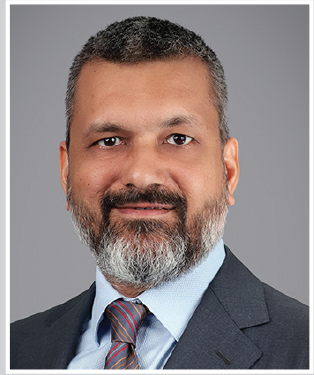
Sachin Gupta
Uttar Pradesh was one of the first states in India to introduce sectoral reforms in line with the provisions of the Electricity Act, 2003. These include the creation of an independent regulatory commission, the Uttar Pradesh Electricity Regulatory Commission, and the functional unbundling of the erstwhile UPSEB into separate generation companies, a transmission company and five discoms. In addition, distribution franchisees were set up. Despite these initiatives, the operating and financial performance of the state discoms has remained poor over a prolonged period, characterised by high aggregate technical and commercial (AT&C) losses and cash gaps, leading to very high debt levels at the consolidated level. Given these circumstances, the recent attempt at privatisation appears to be a step in the right direction.
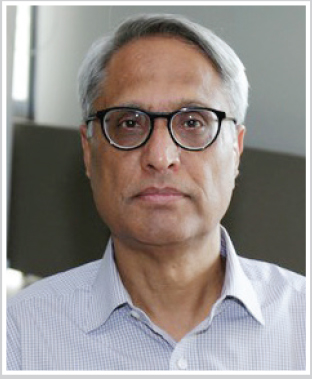
Daljit Singh
Yes, I think it is a step in the right direction. Generally, regulating and improving the performance of private companies is easier for two reasons. First, incentives for performance enhancement are better aligned when discoms are privately owned. Private discoms are singularly focused on profit maximisation, subject to regulatory oversight. In contrast, publicly owned discoms often grapple with multiple vaguely defined objectives that can sometimes be in conflict. Second, private companies operate under hard budget constraints, facing the threat of bankruptcy if their performance is poor. Publicly owned companies have soft budget constraints and do not need to pay the same attention to financial performance. Consequently, publicly owned discoms are less responsive to financial incentives and penalties, the primary instruments available to regulators.
The Uttar Pradesh government’s objectives for privatisation are reduction of financial losses, higher efficiency and improved service quality. The two main sources of financial losses are AT&C losses and enduring revenue under-recoveries by discoms because tariffs are often set too low. Privately owned discoms have demonstrated consistently superior operational performance, leading to much lower AT&C losses, improved efficiency and better quality of service. For example, the three privately owned discoms in Delhi have cut AT&C losses from 48-57 per cent at the time of privatisation to 6.98-7.25 per cent in 2022-23, while the all-India average is still above 15 per cent. A comparison of the improvement plans of Delhi’s three private companies in 2002 with the most recent scheme of the central government, the Revamped Distribution Sector Scheme (RDSS), shows several similarities. All the plans focus on three aspects – metering, billing and collection; upgradation of the distribution network; and training and capacity building. What the three private discoms did 22 years back, the RDSS is planning to do now. Furthermore, the private companies have succeeded in accomplishing their goals without much financial support from, or oversight by, the central government. Meanwhile, state-owned discoms in the country have required three bailouts and four schemes for loss reduction and performance improvement, with very poor results. The stark difference between the private companies in Delhi and the state-owned discoms in the rest of the country highlights the potential benefits of discom privatisation in improving operational performance. This does not reflect the capabilities of engineers and other employees in state-owned discoms. A large fraction of them are retained by private discoms and they perform well.
The second round of privatisation in Odisha also demonstrates the potential of private discoms to improve operational performance. Since Odisha privatised its four discoms in the second round of privatisation starting around 2020, all reduced their AT&C losses significantly in three years and their loss levels in 2022-23 were lower than the trajectory set by the Odisha Electricity Regulatory Commission.
While privatisation generally improves operational performance, its impact on the reduction of financial losses due to low tariffs is mixed. We discuss the issue of revenue under-recoveries in more detail in the next question.
Major reforms in the power sector such as privatisation should not just consider current problems but also the future demands from discoms. The power sector is undergoing major changes with new loads such as electric vehicles a greater contribution from rooftop solar installations, an increased presence of prosumers and two-way flow of power in the distribution network. In addition to their traditional roles of providing full service to some consumers, discoms will need to play the role of distribution system operators. In addition, the greater contribution from renewable energy at all levels will make long-term planning while minimising costs and ensuring reliability much more challenging. Therefore, discoms will need to be much more agile with a higher level of expertise. Private companies are better positioned in terms of technical and managerial capacity. In addition, they are likely to adopt new technologies faster.
What are some of the expected challenges or roadblocks in the process?
Sachin Gupta
One of the major challenges in the privatisation process would be resistance from existing stakeholders, especially employees who are apprehensive about change in their status of employment from being public sector employees to private sector employees. In addition, there may be resistance from customers concerned that privatisation could lead to tariff increases. Consequently, legal challenges to privatisation cannot be ruled out. This can substantially delay the privatisation process and/or weaken interest on the part of potential bidders. In addition, the discoms being privatised may have substantial liabilities and contingent liabilities, including unfunded pension obligations. Further, the discoms have huge financial losses and they may continue to face losses until operational improvements and tariff measures bring them to a break even position.
Daljit Singh
Privatisation will not automatically solve all the problems of discoms. One persistent problem is the under-recovery of revenue by discoms because of very low tariffs, and this problem is unlikely to be solved by privatisation. Given that electricity tariffs are an electoral issue, raising tariffs for full recovery of costs may be difficult. It is a political issue that is best resolved by political means, and change of ownership or other legislative or regulatory fixes are unlikely to work.
The issue of insufficiently high tariffs raises concerns about the financial viability of discoms for potential bidders. This, in turn, may lead to a lack of interest by private players to take over the discoms. This low level of interest in taking over state-owned discoms was seen in Odisha. Limited interest is likely to lead to a very small number of bids for the discoms, making the sale process non-competitive.
Another stumbling block for the privatisation process is opposition from employees and their unions, and consumer advocates. These groups raise concerns about large-scale layoffs, high electricity tariffs, and a decline in service quality for smaller consumers.
Additional challenges post-privatisation include the need for stricter monitoring of transactions between the private discom and its affiliates. Potential bidders for discoms often own power generation assets, creating an incentive for the private discom to procure power from its generation affiliate. It is also possible that private discoms respond more aggressively to cost-plus regulation by inflating costs to increase their profits. Therefore, much sharper regulatory oversight will be required to ensure that consumer interests are not
being compromised.
What steps should be taken to ensure that the privatisation process and its outcomes are successful?
Sachin Gupta
The experience of private sector operations in the distribution segment, both where private operators were already incumbents (such as Kolkata and Mumbai) and where private sector discoms were created by privatising existing state-run electricity boards/discoms (such as Delhi and Odisha), suggests that mere privatisation is not a panacea for financially sustainable discom operations. In addition to privatisation, the following steps need to be taken by the Uttar Pradesh government to ensure the viability of the newly privatised discoms:
- Cleaning up the balance sheet of the discoms, with the bulk of liabilities and contingent liabilities being taken over by the state government to the extent possible.
- Providing a fair and realistic estimate of circle-wise AT&C losses so that the new incumbent is able to accurately strategise for future loss reduction.
- Offering transitional support to discoms if feasible.
- Providing full support to the discom in loss reduction measures such as smart metering, prepaid metering and monitoring of power.
- Ensuring autonomy to the SERC to ensure fair and rational tariff determination, including timely pass-through of power purchase costs, as per applicable principles of the Electricity Act and the National Tariff Policy.
Daljit Singh
Ideally, in a privatisation effort, multiple bids from private parties ensure strong competition. Therefore, it is relatively easy to pick the most competitive bid and transfer the assets. However, because we expect limited interest in the discoms by private parties, resulting in insufficient competition in the bidding process, this will not be a typical privatisation. The terms of the sale will need to carefully balance consumer interests against the legitimate concerns of private players regarding the commercial viability of the discom post-privatisation. In particular, the sale agreement will need to provide some assurance to the private party that there will not be persistent under-recoveries of revenue for the discom after privatisation. One way this could be done is through the provision of direct subsidy over a transition period to cover under-recoveries that are not due to negligence or poor performance by the discom. In addition, for the privatisation effort to succeed, the regulatory process will need to be strengthened to ensure that unnecessary and imprudent expenses are excluded while allowing regular tariff increases so that the discoms can recover all their prudent costs.
The sale and purchase agreement will need to include an appropriate framework for improving operational performance, particularly reducing AT&C losses. This will require a reasonably ambitious but achievable loss reduction trajectory. In addition, there should be some provision for sharing of improvements beyond the specified trajectory of loss reductions.
Employees of the discoms will be important stakeholders in the privatisation effort. Therefore, it is essential that their concerns are addressed. This could be done through meetings with them to allay their concerns to the extent possible. Delhi and Odisha 2.0 have successfully integrated staff from the state-owned discom era and they could serve as models.
What are some of the privatisation models and lessons that can be taken into account?
Sachin Gupta
The privatisation of discoms has been undertaken in states/UTs such as Delhi and Odisha. In addition, distribution franchises have been created across several states in India. The experience of privatisation has been mixed. The key learning from these experiences is that post distribution, the state government, the regulator and the discoms must act in harmony to protect the interests of all stakeholders, including employees, customers and the discoms themselves. The key to that would be the handover of a clean balance sheet, transitional support, support to the discoms in ensuring loss reduction, and a conducive regulatory environment.
Daljit Singh
Except for discoms that have always been privately owned, three privatisation efforts provide key lessons for the Uttar Pradesh privatisation initiative – the first round of privatisation in Odisha (Odisha 1.0); Delhi privatisation; and the second round of privatisation in Odisha (Odisha 2.0).
Odisha 1.0 was a failure but the experience provides lessons. First, there was no transition period and losses were expected to be reduced almost immediately after privatisation. Second, the assets were marked up before sale to private entities, which increased the cost of electricity.
Delhi learned the lessons from Odisha 1.0 and improved the process. The discom assets were transferred to the private companies at book value. Loss reduction was the bidding parameter. There was subsidy support from the Government of the National Capital Territory of Delhi for a transition period of five years. Unfortunately, after the transition period was over, tariffs were not increased sufficiently, leading to underrecoveries for many years. These underrecoveries accumulated in the form of regulatory assets.
The Odisha 2.0 privatisation effort provides an example of how to balance consumer interests and the concerns of private players. The reserve price for assets was set at a discount from the book value to make it easier for bidders to participate and to reduce the required upfront investment. It also helped keep the retail tariffs low. Meanwhile, the sale agreement specified minimum capital investment by the private discoms in the first five years. Additionally, it outlined an ambitious but reasonable
loss reduction trajectory, with incentives exceeding loss reduction targets. Power is provided by Odisha Gridco at a reasonable rate under a bulk power supply agreement.
(Mr Daljit Singh’s comments represent his personal views.)