
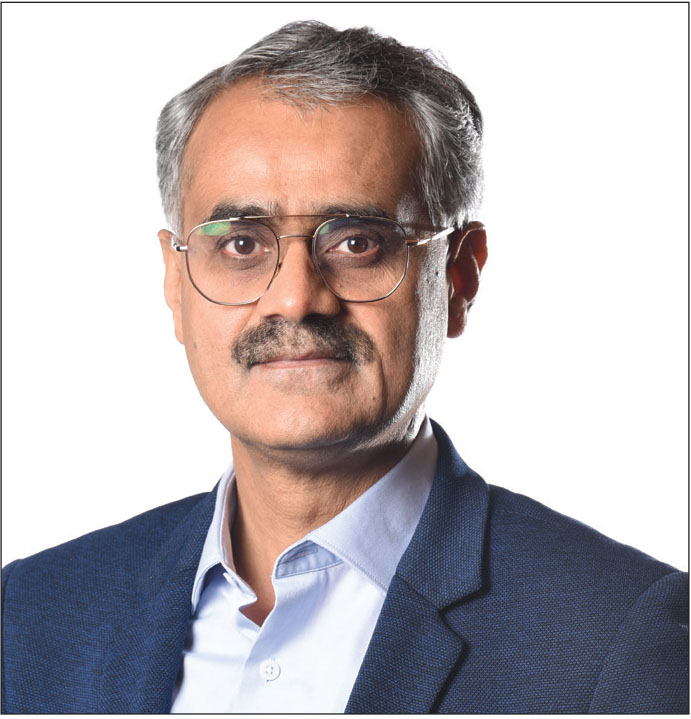
 In a recent interview with Power Line, Arun Sharma, Chief Executive Officer, Resonia Limited, shared insights on the current state of India’s power sector, emerging opportunities for private players and key policy reforms needed to accelerate power infrastructure development. He also outlined Resonia’s strategic priorities, recent milestones and future growth plans. Excerpts…
What is your view on the current state of power infrastructure in India? How has the sector performed in the past one to two years?
India’s power infrastructure has undergone significant transformation over the past years to support its ambitious energy transition goals. The per capita electricity consumption has surged by 46 per cent over the past decade, going from 957 kWh in 2013-14 to 1,395 kWh in 2023-24. To meet this rising demand, the total power generation capacity has also registered a growth of 84 per cent from 249 GW to 452.69 GW over the corresponding period. With power demand forecasted to reach 4,000 TWh by 2033, there is an urgent need to modernise legacy systems and integrate renewable energy.
India is a leading proponent for the use of clean energy and has set an ambitious target to achieve 500 GW of renewable energy capacity by 2030 and a net zero carbon footprint target by 2070. As of January 2025, India’s total non-fossil fuel energy capacity has reached 217.62 GW, representing over 47 per cent of the nation’s total installed capacity and marking a significant leap in the clean energy transition. The next phase of India’s energy evolution will inculcate the optimisation of current infrastructure with smart grid technologies, the integration of renewable energy and the development of adequate infrastructure to meet the increasing demand, especially in rapidly growing industrial and urban regions.
The rapid strengthening of power transmission infrastructure will continue to be critical for achieving the goal of sustainable development, along with power access for everyone. The Indian government has finalised the National Electricity Plan 2023-32 for central and state transmission systems to meet a peak demand of 458 GW by 2032. Under the previous plan (2017-22), about 17,700 ckt km of transmission lines were added annually. Under the new plan, the transmission network in the country will be expanded from 491,000 ckt km of transmission lines in 2024 to 648,000 ckt km in 2032.
What are the biggest challenges facing the segment?
India’s grid infrastructure is witnessing a major overhaul to meet challenges posed by the fast growing electricity demand and distribution, as well as the integration of variable power sources. In this respect, Resonia Limited has implemented major initiatives to reduce technical transmission losses and enhance the reliability of electricity distribution. These include using high-performance power conductors, constructing modern geographic information system-based substations and adopting pioneering drone and helicrane-based project execution methodologies. These technologies help reduce line losses and significantly improve transmission efficiency, volume and grid reliability.
However, challenges persist, which could hinder the energy transition. Right-of -way constraints and land acquisition issues are among the primary hurdles, often delaying project execution and escalating costs. These are further compounded by environmental clearances and resistance from local communities, which create additional bottlenecks in expanding grid capacity.
Another significant concern is the mismatch in gestation periods – renewable energy projects are typically completed within a shorter time frame compared to transmission infrastructure. This disconnect results in evacuation bottlenecks, especially in renewable-rich states where power must be transferred across long distances through ultra high and extra high voltage lines.
The intermittency of renewable energy sources also poses technical challenges. Integrating advanced technologies such as voltage source converter-based high voltage direct current systems, flexible AC transmission systems, synchronous condensers, and large-scale energy storage solutions (such as battery systems and pumped hydro) is essential to ensure grid stability and flexibility. Looking ahead, the expected 70.5 GW additional load from green hydrogen and ammonia production by 2031-32 underscores the need for comprehensive and forward-looking grid planning. Recognising this, the government has released an updated Transmission Planning Criteria Manual through the Central Electricity Authority and announced an investment of over Rs 9 trillion in transmission infrastructure by 2032.
What are the key opportunities in the segment for private developers?
The rapid expansion of renewable energy capacity in the country, driven by the government’s ambitious clean energy targets, requires an extensive upgrade in transmission infrastructure. Private developers, along with engineering, procurement and construction contractors, original equipment manufacturers and other stakeholders, can play a pivotal role in building green energy corridors (GECs) that enable the efficient and reliable transmission of renewable energy from generation hubs to urban demand centres.
Further, the continued rapid industrialisation of the country requires enhanced transmission capacity to support industrial growth, urban expansion and electrification of remote areas. Projects focused on the development of high voltage transmission lines, grid modernisation and the integration of smart grid technologies present key areas where private players across industries can immediately contribute.
The potential for cross-border transmission projects, which can connect India with neighbouring countries, offers new avenues of growth in the transmission sector. With the increasing demand for cleaner energy, the role of private developers and other industry players is expanding, driving innovation in grid solutions and technology integration.
What is your policy wish list for the power infrastructure segment?
While a lot has been done for the segment, continuous improvement and evolution of the sector are required. To accelerate the growth of India’s power infrastructure, key policy reforms are required:
First, there is a need to simplify land acquisition processes and reduce delays related to environmental clearances, which are often major roadblocks in the timely completion of projects.
Second, there is a need to create a more accommodating financial environment, including providing incentives for participation by private players in the form of tax breaks, green bonds or subsidies for renewable energy transmission projects. These would encourage enhanced investment. Additionally, there is a need for greater clarity in guidelines for financing large-scale projects that could mitigate the risks faced by private developers. For instance, during construction, infrastructure projects continue to be funded at 9-10 per cent interest rates. This needs to be addressed by strengthening financial frameworks and institutions.
Further, there is a need for the adoption of more collaborative frameworks between the public and private sectors to drive the development of GECs, which are essential for integrating renewable energy into the national grid.
Additionally, policies that encourage the adoption of modern digital technologies, such as smart grids and predictive analytics for grid management, are required to improve the overall efficiency and reliability of power infrastructure. There should also be a focus on the manufacturing of subsea cables, providing capital subsidies, and implementing other initiatives to facilitate the setting up of factories, as infrastructure projects and transmission lines are planned.
Please provide an overview of Resonia Limited’s operations and project portfolio. What have been its key recent initiatives and achievements?
Resonia Limited is the new name of Sterlite Power’s infrastructure business. It continues to have the same core purpose and values, playing a crucial role in climate change by providing renewable energy to consumers. At present, Resonia has 23 projects, of which 11 have been sold. The remaining 12 projects across India are operated by us.
As a focused power transmission infrastructure company, Resonia is developing large-scale power projects to serve India’s growing energy needs. With a singular focus on strengthening the national grid and enabling the creation of GECs, we are developing high-capacity transmission networks that support reliable, efficient and future-ready
power delivery.
One of our most significant achievements is the Lakadia-Vadodara Transmission Project Limited (LVTPL), a 350 km transmission corridor that connects renewable energy zones in Gujarat to the national grid. The project has a capacity to transmit 8,000 MW of clean energy and plays a vital role in evacuating green power while significantly reducing carbon emissions. Since its commissioning, LVTPL has been supplying 5,000 MW to the grid, substantially bolstering energy access and sustainability targets. We have also successfully delivered projects in Rajasthan and Gujarat, reinforcing our commitment to creating a robust transmission network across regions.
Another major achievement is the Nangalbibra-Bongaigaon transmission line, commissioned in November 2024. Spanning 300 km across the challenging north-eastern terrain, it facilitates over 1,000 MW of electricity transfer between Meghalaya and Assam. The project includes a 300 MVA substation at Nangalbibra, Meghalaya, a 123 km 400 kV D/C line, and additional intra-state lines, ensuring seamless integration and improved power access in the region.
We have also made substantial progress on other key projects, including the Mumbai Urja Marg Limited and Goa Tamnar Transmission Project Limited, further reinforcing our presence in the transmission sector.
Our portfolio is aligned with the national GEC initiative, which is central to India’s renewable energy integration goals. As part of this, we are developing high voltage transmission lines (400 kV and 765 kV) that facilitate long-distance power transfer with minimal losses, ensuring the seamless delivery of renewable power from generation hubs to high-demand centres.
We have also recently acquired a new project in Ananthapur, Andhra Pradesh, marking a significant step forward in our growth strategy. This project is a major milestone in our renewable energy efforts and will enhance the integration of green power in southern India, facilitating a cleaner and more sustainable energy supply.
Technology and innovation are at the heart of our operations. We are deploying smart grid solutions such as real-time monitoring systems, artificial intelligence (AI)-based predictive maintenance and internet of things (IoT)-enabled sensors for intelligent grid diagnostics. These tools enable us to proactively resolve issues and reduce downtime, enhancing the overall efficiency of our infrastructure. Additionally, we are leveraging dynamic line rating to optimise the transmission capacity based on live weather data, ensuring greater operational flexibility.
To overcome on-ground challenges, particularly in difficult terrains, we are adopting advanced construction techniques such as helicopter stringing and light detection and ranging-based route surveys. These innovations allow us to fast-track execution while minimising environmental disruption and ensuring safety.
Sustainability remains a core driver of our project design and execution. We are integrating green substations, compact tower footprints and advanced insulation materials to reduce land usage and ecological impact. Our hybrid grid solutions ensure the seamless integration of renewables into conventional networks, contributing to a greener and more resilient energy future.
What are some of the latest technologies being deployed by Resonia?
As India accelerates its renewable energy transition, we are leveraging next-generation technologies to drive efficiency, reliability and speed in the deployment of power transmission infrastructure. A key focus area is the integration of IoT and AI to enhance substation operations. By deploying IoT sensors across substations, we enable real-time monitoring of critical parameters such as voltage, temperature and current, ensuring immediate detection of any abnormalities. These data points feed into AI systems, which not only predict potential equipment malfunctions before they occur but also enable proactive maintenance, reducing downtime and optimising repair costs.
Further, we are employing AI-driven load analysis to optimise the flow of energy across the grid, particularly during peak renewable generation periods. This intelligent load balancing is critical for the integration of renewable energy and supports the National Smart Grid Mission’s goals of enhancing grid reliability, reducing transmission losses and ensuring efficient energy delivery.
In terms of infrastructure development, we are embracing cutting-edge construction methods in projects in Rajasthan to expedite project execution. These include drone-based route surveys, helicopter stringing for line installations and automated construction techniques. These innovative approaches enable faster project timelines and reduce costs while ensuring that infrastructure can be deployed in difficult terrains with minimal environmental disruption.
We are also modernising right-of-way processes across projects by introducing IT-enabled escalation systems at the district and tehsil levels. This streamlined approach improves transparency and facilitates the quicker resolution of land-related issues, ensuring the smoother execution of projects. By deploying these advanced technologies, we are not only transforming India’s power transmission infrastructure but also ensuring its readiness to support the country’s growing renewable
energy capacity.
India has a wealth of experience in transmission line development. What key lessons can other countries take from India’s experience in this area?
India’s journey offers several lessons for countries expanding their energy infrastructure.
Transmission planning aligned with renewable growth is key: India’s dedicated transmission corridors, connecting regions from Kashmir to Kochi and Bhuj to Assam, demonstrate how to ensure grid readiness in the face of increasing renewable energy capacity.
A large talent pool across various fields: Due to its diversity and a vast pool of skilled professionals, India serves as an inspiration for nations looking to leverage human capital for infrastructure growth.
Public-private partnerships to accelerate execution and mobilise capital: India’s experience demonstrates how strong government facilitation and a robust payment network can drive the success of large-scale infrastructure projects.
Advanced technology deployment: India has successfully utilised innovations such as smart grids, dynamic line ratings and aerial surveys to overcome challenging terrains, providing valuable lessons for countries facing similar issues.
Sustainability practices: Green substations, compact towers and other environmentally responsible designs in India set a model for sustainable infrastructure development.
India as a global exporter: With its capacity to produce and export a wide range of equipment, from machinery and transport to electronics and telecom goods, India’s experience in scaling manufacturing for energy infrastructure can serve as a model for other countries.
These strategies make India’s experience a valuable reference for countries seeking to scale their energy networks sustainably and efficiently.