
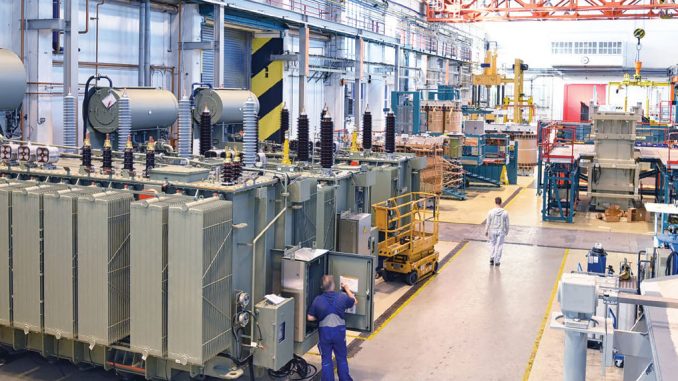
The transformer industry in India is undergoing a remarkable transformation, with strong growth and increasing momentum across the sector. Currently, the industry is witnessing heightened demand from utilities and data centres, propelled by increased government capex, large-scale capacity additions in power generation and rapid infrastructure development. Renewable-rich and industrially advanced states such as Maharashtra, Gujarat, Rajasthan, Tamil Nadu and Karnataka are focusing on upgrading ageing networks, integrating renewable energy and implementing smart grid initiatives under government programmes. This shift is creating strong demand for transformers.
Power Line examines the key government schemes and programmes driving the demand for transformers…
RDSS
Launched in 2021 with an outlay of Rs 3 trillion, the Revamped Distribution Sector Scheme (RDSS) aims to transform India’s power distribution sector by enhancing reliability, efficiency and financial sustainability. Since its inception, the scheme has made notable progress.
One of the core components of RDSS is the modernisation and strengthening of distribution infrastructure, which includes feeder segregation, replacement of old and overloaded distribution transformers, and augmentation of existing substations. Discoms are being encouraged to replace end-of-life or underperforming transformers with higher-efficiency units, directly boosting demand for both standard and smart distribution transformers. As of March 2025, loss reduction infrastructure works worth Rs 1,480 billion have been sanctioned. Further, smart metering works have been sanctioned for 5.23 million distribution transformers as part of developing advanced metering infrastructure.
Electrification schemes
Before RDSS, the Deendayal Upadhyay Gram Jyoti Yojana (DDUGJY) laid the foundation for rural electrification and infrastructure enhancement. With a focus on feeder separation for agriculture and non-agriculture loads, system strengthening and village electrification, the scheme catalysed massive investments in rural power infrastructure. Even though DDUGJY has now been subsumed under RDSS, its impact on transformer demand in the past decade has been significant, setting the groundwork for continued investment in rural networks.
Launched in 2017, the Saubhagya scheme aimed to achieve universal household electrification across India. By targeting around 280 million unelectrified households, it generated significant transformer demand, especially in regions where last-mile connectivity was poor. The completion of the Saubhagya scheme not only enhanced the load profile of discoms but also served as a catalyst for future transformer upgrades to handle rising electricity demand, especially with the increasing penetration of rural appliances and agricultural pumps.
Under the RDSS, the Indian government is now working to electrify all households that were left out during the Saubhagya initiative. To this end, distribution utilities have conducted surveys to identify unelectrified households. As a result, works amounting to Rs 46.43 billion have been sanctioned for the grid electrification of 1,019,030 households. This includes those left out during the implementation of the Saubhagya scheme, those belonging to particularly vulnerable tribal groups identified under the Pradhan Mantri Janjati Adivasi Nyaya Maha Abhiyan, tribal households, and public places identified under the Dharti Aaba Janjatiya Gram Utkarsh Abhiyan.
Renewable energy and thermal integration
India’s ambitious target of achieving 500 GW of non-fossil fuel capacity by 2030 (the earlier target was 175 GW by 2022) has created strong demand for transformers suitable for renewable energy applications. Solar parks, wind farms and hybrid projects require evacuation infrastructure and pooling substations, all of which rely on high-capacity power transformers. Moreover, with the increasing deployment of distributed solar systems under the Pradhan Mantri Kisan Urja Suraksha evam Utthaan Mahabhiyan scheme and rooftop solar initiatives, transformers at the distribution level need to be upgraded to accommodate bidirectional power flows. This calls for smarter, more efficient transformers that can handle intermittency and voltage fluctuations.
Apart from renewable energy, the Ministry of Power has announced that India plans to add nearly 80 GW of thermal capacity to avoid deficits during non-solar hours by 2031-32. This will create significant demand for transformers in the next few years. The sector has already seen a substantial uptick in thermal power project equipment orders over the past one to two years. Recently, power major NTPC Limited announced plans to expand its coal-based power capacity to 30 GW by FY2032, exceeding its previous goal of adding 26 GW by 2031 to meet rising base load demand.
Green energy corridors initiative
The Green Energy Corridor (GEC) project, implemented by Power Grid Corporation of India Limited (Powergrid) and state utilities, aims to facilitate the transmission of renewable power from generation-rich states such as Rajasthan, Gujarat, Tamil Nadu and Andhra Pradesh to consumption centres. The development of new substations and strengthening of the grid under this initiative has led to increased procurement of 132 kV, 220 kV and 400 kV transformers.
Phase I of the GEC (GEC-I) targets the evacuation of 24 GW of renewable energy across eight states – Andhra Pradesh, Gujarat, Himachal Pradesh, Karnataka, Madhya Pradesh, Maharashtra, Rajasthan and Tamil Nadu. To date, 9,136 ckt km of lines and 21,413 MVA of substations have been commissioned under this phase. Phase II, currently under way, aims to evacuate 20 GW of power across seven states – Gujarat, Himachal Pradesh, Karnataka, Kerala, Rajasthan, Tamil Nadu and Uttar Pradesh. It includes the development of 7,574 ckt km of transmission lines and 29,737 MVA of substation capacity.
Additionally, under GEC-II, a major interstate transmission project was approved in 2024 to support a 13 GW renewable energy initiative in Ladakh. Executed by Powergrid, the project includes 713 km (1,268 ckt km) of transmission lines and two 5 GW high-voltage direct current (HVDC) terminals in Pang (Ladakh) and Kaithal (Haryana), along with a 12 GWh battery energy storage system.
Reportedly, the Indian government is set to advance Phase III of the GEC to further strengthen intra-state transmission infrastructure for renewable energy. The estimated budget for this phase is approximately Rs 560 billion, with the union government expected to contribute around Rs 224 billion, which is about 40 per cent of the total. The remaining funds will be mobilised by state governments and other stakeholders.
HVDC lines
HVDC lines enable efficient bulk power transfer over long distances and are primarily planned to transmit renewable energy from generation-rich regions to major load centres. These projects require specialised converter transformers at both ends for AC-DC conversion, making them critical to HVDC infrastructure. As HVDC development scales up for renewable integration and grid stability, the demand for both converter and conventional power transformers will grow. As per the National Electricity Plan, during 2027-32, an additional 32,250 MW of HVDC bi-pole capacity is planned. Overall, HVDC bi-pole and back-to-back capacity will increase to 66,750 MW by 2031-32.
Electric mobility push
India’s electric mobility push, driven by the National Electric Mobility Mission Plan and the Faster Adoption and Manufacturing of Hybrid and Electric Vehicles II scheme, is set to place significant demand on urban power infrastructure. Fast-charging stations, particularly for fleet operations, require dedicated transformers to manage high loads and rapid load fluctuations. With targets of 30 per cent electric vehicle (EV) penetration in private cars, 70 per cent in commercial vehicles, 40 per cent in buses, and 80 per cent in two- and three-wheelers by 2030, the country aims to have around 80 million EVs on the road.
This surge in EV adoption will substantially raise electricity demand, especially across fast-charging networks and fleet depots. To support this, utilities will need to expand and modernise the distribution network by deploying transformers capable of handling higher, more variable loads. Urban and semi-urban charging infrastructure will further drive demand for both distribution and power transformers, ensuring grid stability and efficient power delivery.
Outlook
Overall, the focus on urbanisation, electrification and digital automation is expected to drive power demand growth of 6-7 per cent over this decade. These factors collectively underscore the need for more power generation and transmission capacity, thereby driving transformer demand.
According to industry estimates, the Indian transformer market is valued at approximately $5.1 billion as of 2024 and is poised for robust growth. It is projected to reach $7.44 billion by 2029, expanding at a compound annual growth rate of 7.9 per cent, outpacing the global average. This reflects India’s developmental stage, with strong demand driven by ongoing electrification, capacity expansion and replacement needs. If the current momentum persists, the market could reach or surpass $9 billion-$10 billion annually by 2032.
Government schemes and programmes have played a crucial role in boosting transformer demand, facilitating rural electrification, grid modernisation and renewable energy integration. As India advances its power sector, in alignment with sustainability and digitalisation goals, transformers will remain central to this evolution, in transitioning from traditional grid assets to intelligent, data-enabled components that will shape the future of the country’s energy landscape.
Aastha Sharma