

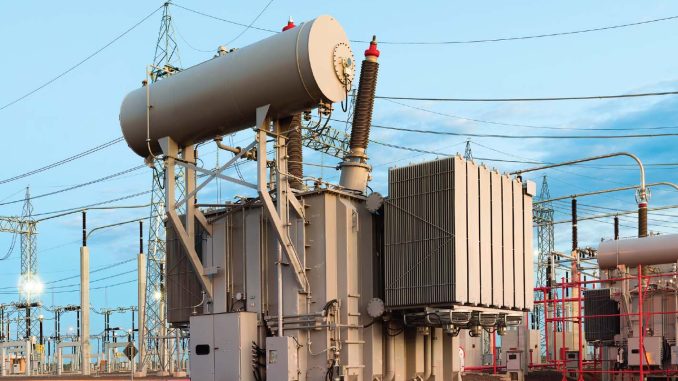
New and emerging transformer technologies are gaining significant traction in the power transmission and distribution segment, aimed at reducing energy losses, enhancing efficiency and improving overall system reliability. These include digital transformer solutions, green transformers and internet of things (IoT)-enabled monitoring systems. These technologies enhance the adaptability and intelligence of electricity grids, and ensure environmental sustainability and operational safety. These also enable real-time condition monitoring and predictive maintenance, ensuring a more reliable power supply.
Step-up transformers for solar power
Step-up transformers play a critical role in solar power systems by increasing the voltage of electricity generated by solar panels. While solar panels produce low voltage direct current (DC), inverters convert it into alternating current (AC), which is too low for efficient long-distance transmission. A step-up transformer raises this voltage to medium or high levels (for example, from 400 V to 11 kV or higher), making it suitable for transmission to substations or directly to the power grid. This voltage transformation reduces energy loss and ensures compatibility with grid standards. Step-up transformers are typically installed after the inverter in both small-and large-scale solar installations, and are essential for efficient and reliable solar energy distribution.
Ester-oil-filled transformers
Unlike traditional transformers that use mineral oil for cooling and insulation, ester-oil-filled transformers utilise a liquid dielectric, typically a natural or synthetic ester. Natural esters, derived from renewable vegetable sources, offer significant advantages in terms of safety and environmental impact. They have a high fire point of approximately 360 °C, more than double that of conventional mineral oil, and a flashpoint of around 320°C, making them inherently fire-resistant. The enhanced thermal stability not only improves operational safety but also allows for greater loading capacity. The shift from mineral oils to ester-based fluids reflects growing environmental awareness and a move towards more sustainable and eco-friendly transformer technologies.
Dry-type transformers
A dry-type transformer utilises air or gas, instead of liquid, as the medium of insulation and cooling for its core and windings. Polyester varnish or epoxy is employed as the insulating medium, along with sealed coils to prevent moisture. Cooling fans serve as a key mechanism, managing transformer temperatures through natural convection and forced air circulation to prevent overheating under thermal stress. There are two main types of these transformers – the cast resin dry-type transformer, which uses epoxy resin and the vacuum pressure impregnated transformer, which uses Class H polyester resin. Dry-type transformers offer a range of advantages. They eliminate the use of flammable or toxic liquids, significantly lowering the risk of leaks and fire hazards. They require no oil changes, testing, cleanup, or special disposal methods. Their robust construction is resistant to vibrations and seismic shocks. These transformers are also self-extinguishing and do not emit smoke or flames during faults. Additionally, they manage overloads effectively due to better heat dissipation and thermal endurance compared to oil-filled units.
However, dry-type transformers are more expensive than oil-filled ones with similar power and voltage ratings, due to higher material and manufacturing costs. They are also bulkier and heavier because of the added air gaps and thicker insulation. Furthermore, they tend to be sensitive to dust and dirt due to open ventilation, and noisier due to vibrations. Therefore, dry-type transformers are appropriate for applications requiring high safety and environmental compatibility, such as the chemical, oil and gas industries, environmentally sensitive areas, and high-fire-risk zones.
Green transformers
Green transformers are designed to minimise environmental impact and enhance energy efficiency. They feature minimal no-load losses, low noise radiation and non-flammable or flame-retardant insulation, making them highly safe and reliable. Additionally, they emit little to no toxic gases and are moisture-proof, ensuring long-term operational stability in challenging environments. Green transformers also exhibit low partial discharge, reducing electrical stress and the risk of insulation failure.
These features make green transformers particularly suitable for applications in rail transit and tunnel systems, where safety, reliability and low environmental impact are paramount. As a cost-effective and environmentally conscious solution, green transformers offer improved performance, reduced maintenance requirements and an extended service life compared to conventional models. By integrating green transformers into power transmission and distribution networks, utilities can not only optimise their energy efficiency but also contribute to broader sustainability goals.
Mobile transformers
Mobile transformers are portable, fully integrated units designed for rapid deployment in various situations such as planned maintenance, emergencies, or peak demand periods. Mobile transformers are factory-assembled and can be quickly installed on site, ensuring minimal downtime and restoring power in a matter of hours during emergency or planned events. These transformers come in various configurations to suit different voltage requirements and operational conditions.
Mounted on trailers, semi-trailers, or enclosed in containers, mobile transformers are easy to transport by road, rail, or sea. Their mobility enables quick relocation to areas where they are needed most. They are ideal for restoring power in areas affected by outages, natural disasters, or technical failures. They can also provide temporary power during substation maintenance or grid expansion activities. In addition, these transformers help meet power demand during peak usage periods, such as during industrial operations, festivals, or sudden surges in electricity consumption. Mobile transformers are particularly useful in areas with limited infrastructure or difficult access, providing essential power to remote or challenging environments.
Digital and IoT-enabled transformers
Digital and IoT-enabled solutions for distribution transformers allow real-time monitoring of key variables such as voltage, current and temperature, significantly reducing the risk of failure. These solutions are useful for adaptive load management, which involves real-time adjustments to transformer operations based on changing load demands. This helps improve energy distribution efficiency and minimise power losses. Adaptive control is particularly useful for integrating renewable energy sources, which are often intermittent and lack round-the-clock generation.
Digital transformers are also equipped with fault detection and diagnostics capabilities. The self-diagnostic systems in transformers are constantly assessing transformer condition and health. These transformers can detect early signs of insulation deterioration or thermal stress, allowing utilities to remedy problems before failures occur.
For remote control and automation of operations, supervisory control and data acquisition (SCADA) systems are being deployed in transformers. These systems enable real-time monitoring, data logging and analysis of transformer performance. By continuously collecting data on parameters such as load, temperature, oil levels and voltage fluctuations, SCADA systems enable operators to assess the health and remaining life of transformers. This facilitates the scheduling of regular, predictive and corrective maintenance activities, thereby improving reliability, reducing downtime and optimising operational efficiency.
IoT-based distribution transformer condition monitoring systems enable real-time tracking of key transformer parameters and send this data to control centres via communication networks. They continuously monitor oil temperature, moisture, etc., to identify early signs of possible faults, helping utilities take preventive action and safeguard assets. These units are easy to retrofit or install on new systems, offering a cost-effective and efficient monitoring solution. One of IoT’s applications is smart temperature-based automation to activate cooling fans when heat levels cross predefined thresholds. The algorithm in the controller can trigger the first fan at 65°C and the second at 70°C, ensuring timely cooling. All temperature data is stored locally, and alerts are generated upon abnormal fluctuations.
Overall, advancements in transformer technologies are making power systems more efficient, reliable and flexible. As renewable energy capacity continues to scale, modernising transmission and distribution infrastructure will be essential. Incorporating intelligent, data-driven technologies will help in effectively managing variable and bidirectional electricity flows, ensuring long-term grid stability and performance.