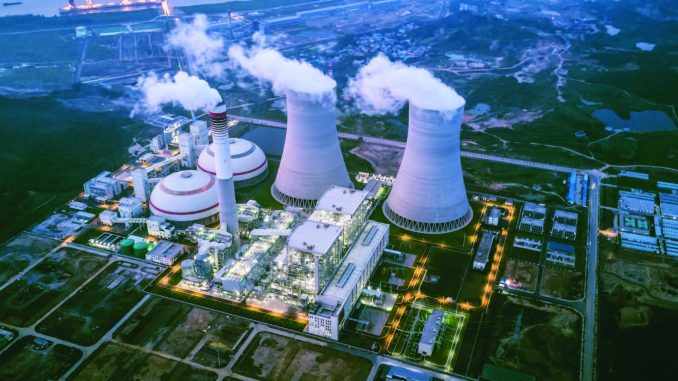
Power plants and electricity producers face a range of operational and regulatory challenges. Many facilities continue to rely on outdated systems, making it difficult to maintain efficiency and comply with increasingly stringent environmental and safety regulations. A common issue is the lack of visibility and access to real-time data, which limits the ability of operators to make informed decisions. As a result, staying competitive in a fast-evolving energy market has become increasingly difficult. To address these issues, energy producers are turning to smart generation solutions like power plant automation. This helps streamline processes, eliminate inefficiencies and ensure compliance with regulatory standards while improving overall competitiveness.
Power plant automation involves the use of advanced technologies and digital systems to manage and operate power plants more efficiently and safely. It involves automating various operational processes and utilising real-time data to make strategic decisions. This level of automation offers comprehensive visibility into plant operations, allowing producers to respond swiftly to changes and maintain optimal performance.
Benefits of plant automation
Several power plant processes can benefit significantly from automation. One primary area is monitoring and control. Automation enables the deployment of sensors and control systems that continuously track critical parameters such as temperature, pressure and flow rates. These systems can adjust parameters automatically in real time to maintain stable and efficient operations. Another key area is data acquisition and analysis. Automation allows for the collection of data from across the plant, which can be analysed to support predictive maintenance, improve efficiency and identify potential problems before they escalate.
Remote operation is another important capability offered by power plant automation. It enables operators to manage and control plant functions from a distance, which is especially useful for facilities located in remote or hazardous environments, or for producers managing multiple plants. Automation also enhances safety by implementing automatic responses to emergencies, such as system shutdowns or fire suppression, reducing risks to personnel and equipment. Additionally, advanced automation systems use technologies like machine learning (ML) to optimise plant performance, reduce fuel consumption and minimise emissions, which supports environmental compliance.
Another major benefit of automation is its ability to integrate with smart grid systems. This integration allows power plants to balance supply and demand more effectively, incorporate renewable energy sources and enhance overall grid reliability. With the energy sector moving toward decentralisation and sustainability, such capabilities are increasingly essential.
Moreover, increased efficiency is one of the most significant advantages, as automated systems help optimise operations, reduce human error and ensure equipment is used effectively. Automation also enhances reliability by maintaining consistent performance through precise and consistent control. Real-time monitoring and control capabilities give operators the flexibility to make timely adjustments and eliminate inefficiencies.
Further, automation provides scalability. As demand fluctuates, automated systems can be easily scaled up or down, and legacy systems can be replaced with newer technologies that offer better performance and sustainability. Environmental benefits also result from improved efficiency and visibility, leading to reduced emissions and minimised waste. Additionally, cost savings are a major outcome of automation. With better efficiency, improved control and reduced reliance on manual intervention, operational and maintenance expenses can be significantly lowered.
Emerging technologies
A wide range of digital technologies, such as the industrial internet of things (IIoT), big data, analytics, artificial intelligence (AI), digital twins, cloud computing and mobile platforms, are being increasingly adopted across power plants to enhance operational efficiency and reliability. IIoT forms the foundation of a digital power plant, enabling the continuous collection, transmission, analysis and management of data related to plant operations, systems and assets. Tools like artificial neural networks and simulation models are used to identify or anticipate issues and determine appropriate, real-time responses, helping operators prevent disruptions and resolve problems quickly. These systems also work to optimise asset performance and profitability, ensuring power plants and their fleets operate at peak potential.
By using intelligent software that compares a machine’s real-world performance to its theoretical capabilities, operators can detect deviations from expected operating conditions and adjust parameters in real time. This leads to improved operational and environmental outcomes and helps lower production costs. One practical application of these digital tools is in achieving optimal steam temperatures in boilers without exceeding material thresholds. Advanced temperature optimisation solutions, equipped with adaptive state space controllers, are easy to configure and can operate effectively throughout the full load range, including during start-ups and shutdowns. These systems can also be used to control reheat steam temperatures.
Digital technologies also contribute to optimising merit order dispatch in multi-unit power plants. By dynamically allocating more load to higher-efficiency machines and reducing the load on less efficient units, producers can achieve better capacity utilisation and meet power and steam demands more cost-effectively.
The digital twin concept is gaining momentum in the power sector. It provides a virtual representation of equipment, processes or entire plants, enabling operators to simulate, visualise and monitor performance in real time. Digital twins help track operational and maintenance needs, improving asset reliability and planning. Cloud computing complements this by offering scalable, on-demand access to computing resources, allowing power producers to innovate faster and manage resources more flexibly and cost-effectively.
Data is the main driver in the digitalisation of power plants. When AI and ML ork for assessing the preparedness of utilities. This framework includes the appointment of chief information security officer are combined with big data, power plants can move beyond traditional preventive maintenance toward predictive and condition-based approaches. These technologies can detect anomalies and potential failures, identify root causes and suggest rapid corrective actions. As a result, forced outages are reduced, equipment uptime is improved and the lifespan of assets is extended. This leads to lower maintenance costs and higher economic returns. Advanced analytics, big data and AI also give power producers deeper insights into the condition and performance of individual assets, plant processes and system-wide operations. This enables faster, better-informed decisions, allowing plants to maximise operational efficiency and adapt more effectively to evolving grid demands and market conditions.
Industry initiatives
NTPC Limited is actively accelerating the adoption of digitalisation across its various functions and business verticals to enhance operational efficiency and transparency. Among its key digital initiatives is PRADIP, a platform aimed at facilitating paperless business processes, including the digital management of supplier bill payments. Another important platform is the Contractor Labour Information Management System, which enables online payments for labour, promoting timely and transparent wage disbursement. In the renewable energy segment, NTPC has developed the RE Assets Monitoring System, a centralised platform for the real-time monitoring of all its solar and wind energy assets, ensuring optimal performance and early detection of anomalies. Additionally, NTPC is working on integrating advanced technologies such as robotic process automation, AI and ML into its business processes. These technologies are expected to drive automation, improve decision-making and enhance overall productivity across the organisation.
Tata Power is adopting advanced technologies to boost the efficiency, safety and reliability of its operations. Key initiatives include voice-assisted switchgear for ring main units, the SPINe network management system and IoT-enabled low voltage automation with high-speed fuses for quicker fault isolation. The company is also using drones and AI image analytics for feeder monitoring, along with thermal scanning and robotic maintenance for switchyard equipment. AI-based robotic systems are being deployed for remote condition monitoring. In February 2025, Tata Power partnered with Amazon Web Services to modernise its digital infrastructure using cloud computing, AI and IoT, supporting predictive maintenance, real-time analytics and supply chain optimisation.
Strengthening cybersecurity
The Computer Security Incident Response Team-Power (CSIRT-Power), established by the Ministry of Power, is undertaking efforts to enhance cybersecurity resilience within India’s power sector. CSIRT-Power has adopted a comprehensive framework for assessing the preparedness of utilities. This framework includes the appointment of chief information security officers (CISOs) or alternate CISOs, the establishment of dedicated information security divisions, and the onboarding of utilities to the Cyber Swachhta Kendra. It also involves the implementation of the Cyber Crisis Management Plan, identification and protection of Critical Information Infrastructure, formulation of cybersecurity policies and attainment of ISO 27001 certification. Additionally, power utilities are required to conduct regular cybersecurity audits, provide mandatory cybersecurity training to staff and ensure proper retention of system logs.
CSIRT-Power actively responds to cybersecurity incidents by collecting and analysing logs to identify compromised endpoints. Once an infected system is located, forensic analysis is carried out using advanced tools to determine the root cause of the breach. Following each incident, CSIRT-Power prepares a detailed report that includes recommendations to address identified vulnerabilities. Their sector-specific expertise ensures a more targeted and effective response to threats.
The Central Electricity Authority’s Cyber Security Regulations, 2025, have also been successfully drafted with support from CSIRT-Power. These regulations are broader in scope than previous guidelines, incorporating new areas of cybersecurity concern.
In December 2024, CSIRT-Power released guidelines outlining the scope of cybersecurity audits in the power sector. This document serves as a template to guide utilities in conducting audits based on established standards, baselines and requirements, using auditors empanelled by CERT-In. Through these initiatives, CSIRT-Power continues to play a crucial role in enhancing the resilience and preparedness of the Indian power sector against cyber threats.
Issues and challenges
Implementing automation in power plants offers numerous benefits. However, the transition to automated systems presents several challenges that need careful consideration. One significant challenge is the integration of new automation technologies into existing infrastructure. Many power plants operate with legacy systems that may not be compatible with modern automation solutions, necessitating extensive retrofitting and careful planning to ensure seamless integration without disrupting ongoing operations. Data access and interoperability remain significant hurdles, as AI relies on real-time, high-quality data.
Cybersecurity is another critical concern. As power plants become more interconnected through automation, they become more vulnerable to cyberattacks. Protecting against these threats requires robust cybersecurity measures, including network segmentation, encryption, intrusion detection systems and regular security audits.
The shortage of skilled personnel poses an additional challenge. Operating and maintaining advanced automation systems require specialised knowledge and expertise. However, there is a growing skills gap in the workforce, with many existing employees lacking the necessary technical skills and a significant portion of the workforce nearing retirement. Financial constraints also impact the adoption of automation. The high initial investment required for automation technologies can be prohibitive, especially for smaller power generation companies. Budget constraints may limit the ability to upgrade infrastructure and invest in necessary training programmes. Furthermore, power quality issues can arise with automation. Poor power quality can lead to equipment malfunctions, data errors and system failures, all of which can be catastrophic in highly automated environments. Ensuring a stable and high-quality power supply is essential to prevent such issues.
Conclusion
Power plant automation represents a forward-looking approach to energy production. It enables producers to modernise operations, enhance safety and compliance, reduce environmental impact and remain competitive in an increasingly complex and demanding energy landscape.