
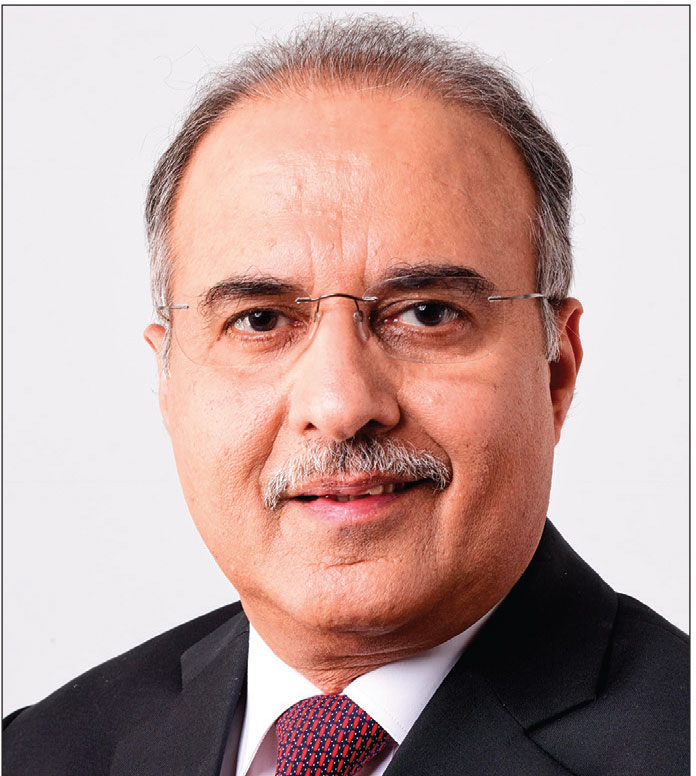
 In a recent interview with Power Line, Anil Sardana, Managing Director, Adani Energy Solutions Limited and Adani Power Limited, shared his views on the current state of the Indian power sector. He spoke about the key strengths of the sector as well as the challenges and measures needed to address them. He also discussed the emerging opportunities and future outlook for the sector, and the Adani Group’s priorities and initiatives in this space. Edited excerpts…
What are the bright spots in the Indian power sector?
India’s power sector has demonstrated significant progress and has come a long way in the past decade, driven by strong policy support, large investments and solid execution. Scale has clearly been the north star. Installed capacity is now close to 500 GW, with about half of it, about 242 GW, coming from non-fossil sources. Renewables remain the biggest success story. Solar capacity has crossed 120 GW and wind is above 50 GW, with nearly 30 GW of green capacity added in the last financial year alone.
The next bright spot is planning and intent of execution. Despite peak demand touching 250 GW, the country maintained zero demand deficit thanks to robust planning and adequate fuel availability. Transmission expansion has clear visibility through the National Electricity Plan, with about Rs 9.15 lakh crore of investment planned to integrate renewables and deliver power to new demand hubs.
The country has also doubled down on integrating technological innovations like smart grids and high-voltage direct current (HVDC) transmission links, which improve grid stability and reduce transmission losses. Progress on smart metering has picked up, with implementation underway in all major cities, improving billing and collections. Government initiatives such as the Revamped Distribution Sector Scheme (RDSS) and the PM Surya Ghar Muft Bijli Yojana have enhanced both access and affordability.
Third, the market is maturing. We see a deepening of renewable energy tenders with innovative structuring to suit discom needs. Battery and pumped storage systems have been mainstreamed, along with the introduction of a live carbon market framework.
In a nutshell, the power sector is firmly on track to deliver reliable, affordable and cleaner energy for India’s economic development.
What are the challenges and concerns?
While the sector’s progress is impressive, challenges persist. Despite gains under the RDSS, the financial health of several utilities remains a concern. Sector-wide aggregate technical and commercial (AT&C) losses are still in the mid-teens, and delayed cost recovery continues to constrain new investment and weaken the credit profile for long-term financing. This financial instability hampers the signing of new power purchase agreements (PPAs), stalling renewable energy projects despite ambitious national targets.
Simultaneously, grid integration is becoming more difficult in the short to medium term, as the growth in renewables outpaces the addition of storage, flexible generation and transmission capacity. Thermal power generation, primarily from coal, remains the backbone of electricity supply. Coal currently plays a dual role of serving the critical base load and meeting evening peaks; however, flexible operations with indigenous coal remains a constraint.
Despite advances in round-the-clock tenders, renewables combined with storage are still not the most reliable or affordable solution.
On the supply chain side, dependence on imports for critical minerals such as lithium and rare earths could impact future manufacturing of clean technologies.
Finally, land availability, permitting delays and fragmented regulatory frameworks in certain states continue to create implementation challenges. Addressing these through steady reforms, domestic capability building, disciplined resource adequacy and faster decision-making in states can pave the way forward.
What are the steps that are needed to address these challenges?
Overcoming the sector’s constraints requires a multi-pronged and collaborative approach. Financial discipline at the distribution level must be deepened. Smart metering roll-outs, performance-linked support and competition through parallel licences can improve collections, reduce losses and give consumers a choice.
The priority should be to hard-wire resource adequacy, ensuring every discom contracts firm, flexible capacity on time. The framework has been notified and preliminary studies are nearly complete; it now needs rigorous enforcement in the states. This will also require rapid scaling-up of energy storage – both battery and pumped hydro – to at least 74 GW by 2032, as per the National Electricity Plan. The battery viability gap funding programme and Solar Energy Corporation of India’s (SECI) storage tenders should lead to timely awards, low tariffs and bankable contracts, while pumped storage needs continued fast-track concurrences and streamlined clearances.
Second, modernise the grid and markets. The National Electricity Plan provides the transmission blueprint. Implementation must stay ahead of renewables build, with aggressive efforts to develop planned corridors and HVDC links for renewable hubs such as Khavda in Gujarat and in Rajasthan. This should include ancillary services and time-of-day pricing.
In the near and medium terms, the thermal fleet should be upgraded to improve cycling. On the supply side, backward integration into the value chain of modules, batteries and transmission equipment through production-linked incentives should continue expanding to reduce import reliance.
What key trends, in your opinion, can we expect in the future?
India’s power sector is poised for transformative growth, driven by rapid renewable energy expansion targeting 500 GW by 2030. This will entail increased investments in power transmission, with over Rs 9 lakh crore planned by 2032 to connect large renewable energy hubs and move power across states and even across countries.
The next decade is expected to be the decade of storage, with batteries and pumped storage systems scaling up sharply to manage grid balancing and long-duration supply, enabling renewables to deliver round-the-clock power more economically each year. There will also be a stronger case for the adoption of green hydrogen to unlock industrial decarbonisation, with recent bids in India painting a very optimistic narrative globally.
Smart grid technologies including smart metering, artificial intelligence (AI)-based grid management, internet of things-enabled infrastructure and decentralised energy solutions such as rooftop solar (PM Surya Ghar Muft Bijli Yojana) will drive efficiency, resilience, better forecasting as well as improved access to power.
Demand will also shift shape. Data centres and AI workloads will add steady, high-quality load, while additional loads like cooling and transport electrification will contribute to peak demand. This will require the addition of high-quality, affordable and reliable generation technologies such as nuclear.
Together, these trends will redefine the power landscape and open new business models, ushering the way for a smarter, flexible and diversified power system.
Based on the above, what should be the sector priorities?
Based on the current performance and future outlook, the sector’s priorities should focus on scaling renewable energy, strengthening infrastructure and enhancing system resilience.
The foremost priority is augmenting renewable and storage capacity in order to achieve the 500 GW target by 2030 and maintain supply reliability as demand surges with economic growth. Transmission investment under the National Electricity Plan must stay on track to expand corridors linking renewable hubs such as Khavda in Gujarat and Rajasthan to consumption centres, integrate renewables and serve emerging industrial clusters.
Financial reforms in discoms are essential, as losses and debt remain high; only 19 of 28 states have issued tariff orders for FY 2026. Distribution reforms should accelerate through the RDSS and competition, with smart metering improving billing and collection efficiency, and consumers getting more reliable services and choices.
Domestic manufacturing under the PLI schemes must be accelerated to reduce import dependence for solar polysilicon, battery active materials and transmission equipment. Data centres and electric mobility will reshape load profiles, creating round-the-clock renewable and storage opportunities. The nuclear mission opens a long runway for clean baseload, supply chains and high-skill jobs through 2047.
With electricity demand expected to grow at 5-5.5 per cent annually, and peak demand already hitting 250 GW, these priorities are vital to ensure reliable, affordable and sustainable power for India’s future.
What are the big opportunities that are likely to present themselves over the medium and long terms?
India’s power sector presents significant medium- and long-term opportunities, driven by rising demand, clean energy transition and infrastructure modernisation. Over the next decade, the sector is expected to attract Rs 40 trillion (over $460 billion) in investments, with the major growth areas including renewable energy, transmission, energy storage and green hydrogen.
The push for 500 GW of renewable capacity by 2030, combined with a plan to invest Rs 9.15 lakh crore in transmission infrastructure by 2032, will strengthen the availability of affordable power to the remotest corners of the country and beyond.
Battery and pumped storage projects, with government-backed viability gap funding, will also emerge as major growth avenues. Further, the deepening of the electricity markets along with ancillary and carbon markets, will entail additional revenue streams and new frameworks for financing of these projects.
Emerging demand drivers such as electric vehicles and data centres are expected to contribute significantly to power demand growth by 2035, creating new load profiles and investment avenues. Additionally, the rise of open access and power/energy trading platforms will enhance competition and efficiency in the sector.
With the country’s energy consumption growing at a compound annual growth rate of 6-7 per cent, and peak demand projected to reach 458 GW by 2032, the sector offers robust opportunities for utilities, investors and technology providers alike.
What are the Adani Group’s priorities and focus areas in the power sector? What are Adani Energy Solutions’ initiatives?
The Adani Group has laid out a bold and diversified strategy for India’s power sector, committing over $60 billion in investments by FY 2032 across renewable energy, thermal generation, and transmission infrastructure. Adani Green Energy Limited (AGEL) plans to scale its capacity from 16.6 GW to 50 GW by 2030, focusing on utility-scale solar and wind projects, supported by a $21 billion investment. In thermal power, Adani Power aims to expand its capacity from 17.6 GW to 41.9 GW, ensuring baseload reliability amid rising demand and renewable variability.
Adani Energy Solutions Limited (AESL) is investing $17 billion to grow its transmission network from 19,200 km to 30,000 km. It is also leading initiatives in parallel licensing, smart metering, cooling-as-a-service and digital grid solutions. The group’s integrated energy vision aligns with India’s projected growth to 1,000 GW of installed capacity by FY 2035, supporting national goals for energy security, sustainability and infrastructure modernisation.
What, in your view, is the most promising technology of the future?
Several emerging technologies will serve as key building blocks for India’s energy system over the next decade. First, storage. Battery energy storage systems (BESS) and pumped storage projects (PSPs) are essential for managing the intermittency of renewables, especially as India targets 500 GW of renewable capacity by 2030. With peak demand already crossing 250 GW, these technologies will support load balancing, peak shaving and grid stability. Policy support and a strong project pipeline are already in place.
While coal will continue to play the primary role in meeting India’s baseload needs, nuclear is set to play a growing support role. With the government targeting 100 GW of nuclear capacity by 2047 and opening the sector to private participation, nuclear offers affordable, clean, and firm power. India currently has around 8 GW of nuclear power capacity, with plans to expand to 22 GW by 2035 and eventually 100 GW by 2047, providing a stable, low-carbon alternative to coal.
Green hydrogen will be critical for hard-to-abate sectors, enabled by low-cost renewables and domestic manufacturing. It offers a long-term decarbonisation pathway for industry and heavy transport, with India aiming to produce 5 million metric tonnes annually by 2030 under the National Green Hydrogen Mission.
Smart grids will tie these elements together, using metering, automation and market mechanisms to maintain reliability at the lowest cost. These are pragmatic, scalable levers for India’s energy transition and growth story.