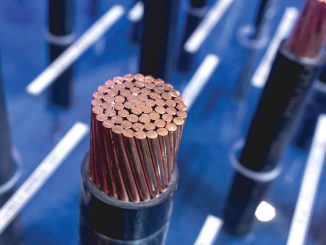
Electrical cables and conductors are essential elements of the power system, facilitating the secure and effective transmission and distribution of electricity from its points of origin to the end users. Cables and conductors have been instrumental in reducing transmission losses, maximising power flow efficiency, integrating variable renewable energy sources and improving overall system stability.
Power Line takes a look at the key trends and outlook shaping the cables and conductors market in India…
Market overview
Capacity addition in terms of transmission lines has displayed a growth in the utilisation of cables and conductors in India. As per the Central Electricity Authority (CEA), as of October 2025, the total length of transmission lines at the 220 kV level and above stood at 497,552 ckt km, comprising 57,323 ckt km (11.52 per cent) at the 765 kV level, 207,970 ckt km (41.79 per cent) at the 400 kV level and 212,884 ckt km (42.78 per cent) at the 230/220 kV level. At the high-voltage direct current (HVDC) level, the line length stood at 9,655 ckt km at the ±800 kV level, 9,432 ckt km at the ±500 kV level and 288 ckt km at the ±320 kV level. In 2025-26 (up to October 2025), the total transmission line addition was 3,178 ckt km. Between 2019-20 and 2024-25, the overall length of transmission lines grew at a CAGR of 3.07 per cent.
As India accelerates its efforts towards achieving the goal of 500 GW of renewable energy generation capacity by 2030 and a net-zero carbon footprint by 2070, the requirement for robust power transmission infrastructure is expected to propel the utilisation of cables and conductors in the coming years.
Increasing investments in renewable energy projects and corridors, the rise of digital infrastructure and data centres, the growing adoption of electric vehicles (EVs) and electronics, and expanding real estate have increased competitiveness among cables and conductor manufacturers in the Indian market. As per Motilal Oswal Financial Services Limited, major players in the cables and conductors market with the highest share in terms of values as of FY 2024-25 were Polycab India Limited (21 per cent), KEI Industries Limited (11 per cent), Havells India Limited (8 per cent), RR Kabel Limited (7 per cent), Finolex Cables Limited (6 per cent), Apar Industries Limited (5 per cent), Universal Cables Limited (3 per cent), Paramount Communications Limited (2 per cent), and others (37 per cent).
Drivers
Power sector
As per the National Electricity Plan, transmission lines of more than 191,000 ckt km and transformation capacity of 1,270 GVA at the 220 kV and above voltage levels is expected to be added by FY 2031-32. Further, the transmission network is projected to grow from 497,552 ckt km in 2025 (as of October 2025) to 648,000 ckt km by 2032. During this period, the transformation capacity is projected to grow from 1,390 GVA to 2,342 GVA.
Likewise, in October 2025, the CEA notified a master plan for the evacuation of power from hydroelectric plants in the Brahmaputra basin, with plans to develop a transmission network to evacuate approximately 76 GW of potential hydropower in the Brahmaputra basin. The development is scheduled to be carried out in two phases – by 2035 and beyond 2035 – costing about Rs 6,429.4 billion. Such a market scenario emphasises the growing demand for cables and conductors for upcoming transmission projects in India.
In the power distribution segment, the government’s emphasis on constructing new transmission lines to modernise and upgrade the ageing transmission network under the Revamped Distribution Sector Scheme will drive the growth of the cables and conductors industry. As of August 2025, the government has sanctioned about Rs 2,823.2 billion for 32 states/union territories to strengthen the Indian distribution system. The sanctioned works encompass the installation and upgradation of high tension and low tension lines, household electrification and smart metering, where cables and conductors will play a prominent role.
Electric vehicles
An EV charging station is a hub that enables communication between the grid, charging hardware and EVs, and cables and conductors play a significant role in the overall charging infrastructure ecosystem. In recent years, different charging cable specifications have been introduced in the market. For instance, the prevalent cable configurations used at EV charging stations are Type 1, Type 2, CHAdeMO and CCS (combined charging system). Such cables are engineered on the basis of charging speed, power handling, compatibility, connector pins and use cases.
In India, central- and state-level initiatives and public-private partnerships are spurring the adoption of EVs as well as the deployment of EV charging infrastructure. According to the e-Amrit portal, as of November 2025, about 934 EV charging stations are active in India, and the country is witnessing their development on a mega scale. For instance, the government’s National Highways for Electric Vehicles is an initiative that aims to transform 5,500 km of highways into e-highways by 2027 on Bharatmala and Sagarmala corridors, in order to develop compatible routes for EVs with charging infrastructure.
Further, initiatives such as the PM Electric Drive Revolution in Innovative Vehicle Enhancement scheme, the EV Mitra scheme, the Scheme to Promote Manufacturing of Electric Passenger Cars, the Ministry of Power’s guidelines for EV charging infrastructure, and Energy Efficiency Services Limited-led initiatives have enabled the expansion of EVs and their charging infrastructure in the country. Thus, with the growth of the EV industry, the demand for cables and conductors is anticipated to rise in the future.
Data centres
Data centres rely extensively on various types of cables and conductors to guarantee high-speed, dependable data transmission and effective power distribution throughout their associated infrastructure. Fibre optic cables and copper cables are primarily used for data transmission, while medium and low voltage cables cater to power distribution. Likewise, control and instrumentation cables are utilised within the data centre electrical network for monitoring, protection and automation systems.
While the data centre industry in India is at an infant stage, it is poised for swift growth, propelled by escalating data usage, increased adoption of cloud technologies and regulatory focus on data localisation. Significant digital advancement through enabling policy frameworks is likely to revolutionise the data centre segment in the country. The Indian government, through the draft National Data Centre Policy 2025, encourages the development of data centre infrastructure by proposing a tax exemption of 20 years for operators on fulfilment of specific capacity, efficiency and employment milestones. The draft policy extends input tax credits under the GST framework for capital assets, including construction, heating, ventilation and air conditioning (HVAC) systems and IT equipment, thus reducing capex for investors in the data centre ecosystem.
Recently, market giants have announced plans to scale investments and operations in the Indian data centre market. For instance, in November 2025, Reliance Industries Limited announced plans to establish a 1 GW data centre in Andhra Pradesh. Likewise, in October 2025, Google announced an investment of over $15 billion for upcoming data centre projects in Andhra Pradesh. Such market trends could propel the growth of the data centre segment in India, which is likely to benefit the cables and conductors market as well.
Railways
The electrification of Indian Railways represents a significant infrastructural and environmental accomplishment and establishes novel benchmarks for sustainable mobility. As of August 2025, the electrification of Indian Railways, which has been ongoing since 2014, witnessed 99 per cent completion for the broad-gauge network, where around 46,900 km of railway route has been electrified. Although the completion of the remaining railway network is subject to statutory clearances from multiple authorities and geological and topological conditions, the unelectrified sections present a short-term opportunity for the cables and conductors market. In addition, works related to the upgradation of communication systems in Indian Railways is likely to drive the cables and conductors market. For instance, in September 2025, the Central Railway incorporated the novel optical ground wire system on the Mumbai division to upgrade communication systems for safe train operations.
The accelerated expansion of metro rail initiatives throughout India has substantially driven the demand for cables and conductors. From 2014 to 2025, the operational metro network has grown from 248 km to 763 km. The annual budget for metro railways for FY 2025-26 has been pegged at Rs 348 billion, an increase from Rs 58 billion since FY 2013-14. Hence, the scale of metro rail project development in India is likely to propel the cables and conductors market in the coming years.
Technology trends
The selection of cables and conductors depends on several key criteria, including electrical properties, mechanical strength, environmental conditions, safety standards and cost. In this regard, technological advancements in recent years have ensured optimal performance, reliability and safety for cables and conductors for specific power or signal transmission needs.
Superconducting cables, or high-temperature superconductors (HTS), demonstrate zero electrical resistance at extremely low temperatures, significantly minimising energy losses. They are well-suited for high-power applications such as urban grid installations, long-distance transmission lines and magnetic resonance imaging (MRI) systems.
High-temperature low-sag (HTLS) conductors operate safely at elevated temperatures (up to around 250 °C), thereby allowing enhanced current carrying capacity without notable sagging, ideal for upgrading existing transmission lines. HTLS conductors are made of high-strength, high-resistance aluminium alloys and composite cores to withstand high degrees of currents and exhibit less sag at high temperatures. This makes them ideal for urban areas, long-river crossing areas, valleys and major highway crossings where conventional conductors may sag more and result in higher tower and foundation costs.
Gas-insulated transmission line (GIL) systems are sealed metal pipes filled with nitrogen and sulfur hexafluoride to insulate conductors. They are reliable and efficient for overhead line-level high-power transmission and best-suited for urban, tunnel and underground locations with scarce and expensive land. GIL technology can replace overhead wires for scenarios where right of way is unavailable for electricity transmission lines. Further, GIL exhibits high operational safety and high transmission capacity. However, the implementation of GIL has been relatively slower than its counterparts, and it is yet to be widely adopted in the Indian market.
Cross-linked polyethylene (XLPE)-insulated cable can be functional at 90°C and can withstand 140°C or greater for brief periods. Compared to other insulations, the cross-linked structure of XLPE cables has exhibited significant tensile strength, elongation and impact resistance. Their resistance to chemicals, oils, moisture and ultraviolet radiation makes them well-suited for harsh environments. XLPE cables are prominently deployed for power transmission and distribution networks, HVAC systems, the automobile sector, etc.
Aluminium conductor steel reinforced (ACSR) cables have steel cores wrapped with aluminium wires, which bolster their weight, while the aluminium strands conduct electricity. Based on current capacity, ACSR cables can contain varying numbers of aluminium wires, and their diameters can differ depending on the required strength and weight. Owing to its cost-effectiveness, it is often used in overhead power transmission for long distances.
Conclusion
The market for cables and conductors faces a number of challenges that affect manufacturers, utilities and project developers worldwide, particularly in India. The prices of copper, aluminium and other important materials are volatile, reducing profit margins and raising production costs. In addition, fuel price hikes and inflation drive up logistics and manufacturing costs. This makes the cables and conductors market less competitive.
Counterfeit and low-quality cables continue to be a major concern, which undermines manufacturers’ reputations and market shares. This often results in cheaper and substandard products. In addition, their noncompliance with BIS/CEA norms raises safety and dependability concerns.
On the technology front, adoption of modern cable technologies, such as HTLS, is hindered by high upfront costs, particularly for smaller businesses. Also, smaller manufacturers often face challenges in obtaining a trained workforce and securing the capex needed to transition to automation, robots and artificial intelligence-driven quality control in cables and conductors manufacturing.
Nevertheless, with the help of policy initiatives like Make in India and supply chain diversification, India is expected to emerge as a key hub for design, manufacturing and innovation. With its large skilled workforce and rapidly advancing manufacturing capabilities, the country has emerged as a key player in the global cables and conductors market. This is expected to create significant opportunities in the near future.