
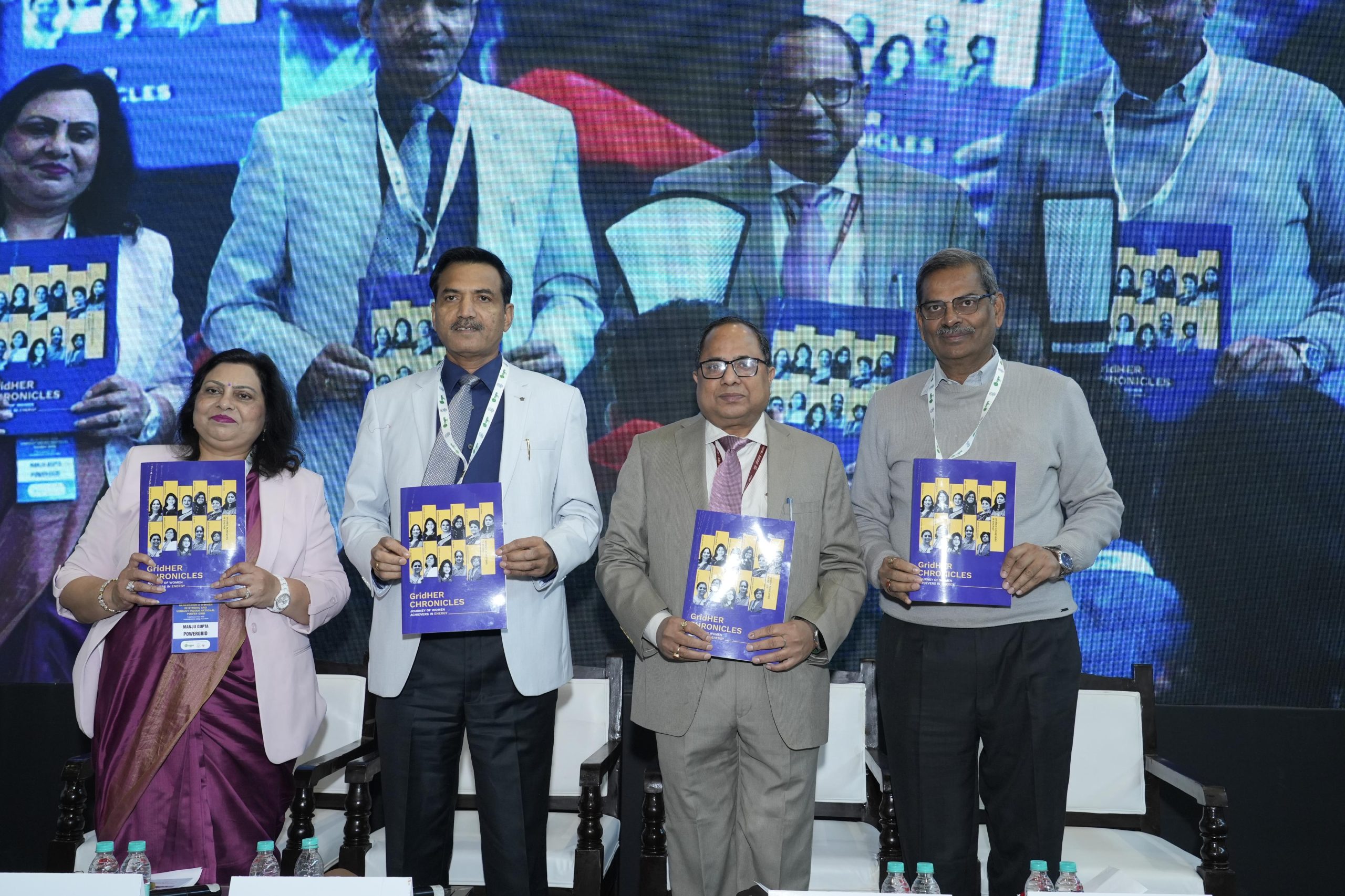
 New Delhi, December 11, 2025: Day 1 of the National Conference on “Role of Young Generation & Women in Strong and Vibrant Indian National Power Grid”, held at Yashobhoomi (India International Convention & Expo Centre), Dwarka, concluded with strong messages of empowerment, inclusion and future-readiness, highlighting the sector’s collective commitment to sustainability, digitalisation and gender inclusivity.
The conference also witnessed the unveiling of GridHER Chronicles, published by Power Line, which celebrates women leaders and achievers who have redefined the Indian energy landscape.
Addressing the gathering, Ghanshyam Prasad, Chairperson, Central Electricity Authority, underscored the need for future-oriented capabilities. He noted: “The young generation should focus on advanced skill sets – be it research and development, innovations or management leadership. These areas present huge career opportunities. They should not be shy to take leadership roles based on their strengths. It is key for them to dream big and think about new ways to contribute to the Indian power sector.”
Reflecting on the sector’s transformation, R.K. Tyagi, President, CIGRE-India and Chairman & Managing Director, POWERGRID, stated: “Our young engineers are entering the power sector at a very defining juncture, where traditional engineering intersects with digital intelligence. The energy transition will be achieved by bold ideas, rapid experimentation and cross-disciplinary innovation, and this is where our youth is excelling. I urge young professionals to challenge legacy processes, embrace digital tools, lead with ownership and view every assignment as a national responsibility.”
Manju Gupta, Executive Director, POWERGRID, highlighted the critical role of women engineers and young professionals in the energy transition. She remarked, “India is successfully balancing the twin goals of meeting rising electricity demand and promoting sustainability. The role of women engineers and young professionals in this energy transition is critical. With several technological advancements taking place in India’s energy sector, it is their duty to lead this transition.”
Sanjeev Singh, Director, Central Board of Irrigation & Power (CBIP), called upon young engineers and women leaders to broaden their vision. “Young engineers and women leaders should look at the big picture and consider themselves as the architects of India’s power sector,” he emphasised. “They should embrace innovation, strengthen technical capabilities, engage in research, and actively participate in national forums.”
Key highlights
- Gender inclusion is a core driver of India’s green and digital grid transition.
- Women are now leading real-time grid operations, transmission planning and key corporate functions across the sector.
- Digitalisation, AI and data analytics emerged as major new opportunities which women and young professionals can tap into.
- Despite progress, women’s leadership remains limited at senior levels, highlighting the need to strengthen the talent pipeline.
- The sector emphasised the importance of tapping women’s skills across technical, regulatory, financial and project roles.
- A cultural shift toward more inclusive norms and workplace identities is underway across the power ecosystem.
About CIGRE
CIGRE is a global, non-profit organisation headquartered in Paris, dedicated to advancing the technical, economic and environmental performance of power systems worldwide. With more than 14,000 members across 100 countries, it is the leading knowledge platform for high-voltage transmission and electrical networks.
CIGRE-India, administered by CBIP, represents India in the global CIGRE community and coordinates national participation, knowledge-sharing and study committee activities. CBIP supports capacity building, technical training and sectoral knowledge exchange across the power and water industries.
Media Partners: Power Line Magazine