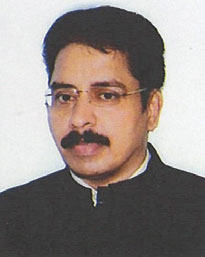
 By Dr P.B. Salim, IAS, CMD, The West Bengal Power Development Corporation Limited
The West Bengal Power Development Corporation Limited (WBPDCL) has undertaken an integrated digital transformation initiative at the Santaldih thermal power station (TPS) through the deployment of digital twin technology combined with artificial intelligence (AI) and machine learning (ML)-powered prescriptive analytics. The objective is to enhance operational decision-making, improve asset reliability and modernise operations and maintenance (O&M) practices in line with evolving power sector requirements. Thermal power plants continue to face challenges such as efficiency loss, unscheduled outages and increased maintenance costs, necessitating a structured, data-driven operational environment. The initiative at Santaldih aims to address these gaps by creating a unified digital framework that supports predictive maintenance, process optimisation and real-time performance monitoring.
WBPDCL’s motivation for this programme stemmed from the need to capture operational deviations early, reduce forced outages and build a scalable digital platform that could be extended across its generation fleet. The digital twin allows the plant to replicate its operational dynamics and run scenario-based evaluations. Alongside this, AI/ML models analyse multi-source datasets to detect incipient faults and support faster and more accurate operational interventions. Together, these tools represent a shift from reactive decision-making to proactive and prescriptive analytics.
Methodology
The implementation involved a structured methodology focused on data integration, model building and user enablement. Live sensor data from the turbine, boiler and balance-of-plant equipment was consolidated and modelled within the digital twin.
Historical and real-time datasets were used to train predictive models, enabling the system to identify anomalies and performance deviations. The prescriptive analytics layer was designed to generate actionable advisories so that operators could intervene before an abnormal condition evolved into a critical failure.
User training and cross-functional workshops ensured adoption across engineering and O&M teams. This was essential for transitioning from traditional monitoring practices to a digitalised O&M environment where decisions rely heavily on predictive and prescriptive analytics.
AI/ML interventions and digital use cases
AI/ML-powered prescriptive analytics is being used to detect incipient faults in equipment such as boiler feed pumps, primary air fans, induced draft fans and steam turbines. Predictive models continuously compare actual sensor behaviour with expected operating profiles. Even small deviations from normal patterns are flagged, allowing early intervention.
Boiler metal temperature monitoring has benefited from ML-driven analysis of parameters such as fuel type, air-fuel ratio, temperature and load. This has supported better heat rate management and reduced fuel consumption. Intelligent dispatch and load forecasting is being positioned for future deployment, which will support optimal unit commitment, fuel economy and grid stability. Intelligent soot blowing optimisation is under development, combining digital twin simulation and ML analysis to determine the optimal timing of soot cleaning cycles. This will help avoid over-cleaning, minimise erosion and improve boiler efficiency.
Condenser performance optimisation models analyse vacuum trends, cooling water temperatures, pump power consumption and ambient conditions to detect early signs of fouling or air ingress. This enables timely intervention, improving turbine efficiency and reducing auxiliary power consumption.
Exception-based reporting has also contributed significantly by allowing operators to focus only on abnormal or out-of-threshold parameters. With hundreds of dashboards across WBPDCL units, the reporting structure highlights deviations in heat rate, environmental parameters, water and steam cycle behaviour and auxiliary consumption. Automated email and SMS notifications further support quick mobilisation during abnormal conditions, improving operational responsiveness.
Strengthening data visibility
A major component of the digital programme at Santaldih has been the strengthening of data visibility and reporting across all operating units. The digital layer integrates information from 16 unit-level distributed control systems (DCS), the availability-based tariff platform, SAP, environmental management systems and the energy management system, creating a single source of operational truth. This unified view has made it possible for plant managers and senior leadership to observe real-time performance trends from any point on the intranet, compare unit behaviour and track long-term patterns over months or years. The availability of continuous, historical trend data has improved the quality of technical assessments and enabled quicker identification of systemic inefficiencies that may not be visible during daily operations.
Another area where significant progress has been achieved is in the development of dashboard-driven monitoring. More than 400 dashboards have been configured to support online performance calculation, start-up monitoring, auxiliary consumption tracking, network health checks and compliance observations. These dashboards allow different teams to view the plant through their specific operational lens while still working from the same underlying data. Work is also under way to develop a consolidated management dashboard that presents a plant-wide snapshot of reliability, performance, emissions and asset health for strategic oversight.
The initiative has also improved the way the plant responds to environmental and chemistry-related deviations. Automated alerts are generated for changes in SOx, NOx and particulate matter concentrations, and for abnormalities in water chemistry parameters that may lead to condenser fouling, drum level instability or corrosion risk.
This structured reporting mechanism reduces information overload and ensures that operators focus only on parameters that require intervention. The early-warning framework has also strengthened compliance readiness, enabling the plant to respond quickly during regulatory inspections or adverse operating conditions.
The broader value of the programme lies in its ability to create a common digital infrastructure that can be extended beyond thermal units. The platform’s underlying architecture is suited for real-time monitoring of mining operations and solar assets as well, giving WBPDCL a pathway to integrate all its business segments into a single enterprise-wide data and analytics ecosystem. This positions the organisation to benchmark performance more effectively, adopt best practices uniformly and build a long-term digital culture across its generation portfolio.
Key results
The initiative at Santaldih has demonstrated significant benefits across plant performance indicators. Heat rate improvement has been one of the notable outcomes, supported by better process optimisation and tighter control over combustion and heat transfer conditions. Early detection of operational anomalies has also reduced the frequency of forced outages. Reliability indices have shown measurable improvement through higher mean time between failures of critical equipment.
Operators now utilise digital twin-based predictive scenarios to assess “what-if” conditions before making actual process changes. This supports more informed operational decisions and reduces the risk associated with manual judgment. Continuous monitoring of environmental, chemical and operating parameters enables faster intervention and strengthens compliance.
One notable example includes the early detection of primary air fan bearing degradation, where predictive analytics indicated rising bearing temperature and vibration trends well before the issue became severe. This allowed the plant team to plan maintenance during a suitable window, avoiding unplanned shutdowns and preventing significant loss of generation.
A similar instance involved early identification of vibration deviation in Steam Turbine Bearing 2 immediately after start-up, which would otherwise have gone unnoticed under traditional monitoring thresholds.
These early-warning “catches” validate the value of deploying predictive and prescriptive analytics in a live power plant environment by offering lead time for corrective action, reducing maintenance costs and preventing equipment failures.
The way forward
WBPDCL intends to extend this digital platform across other plants, guided by the successful proof of concept at Santaldih. The next steps include wider deployment of predictive analytics and the plant management and automation system, along with plans to integrate mining and solar operations into the same digital ecosystem. The platform’s flexibility allows it to support diverse asset classes, making it suitable for both conventional generation and renewable operations.
The initiative positions WBPDCL at the forefront of digital change in the state power sector. By building a strong digital foundation, the utility is preparing its operating units for long-term sustainability, improved reliability and enhanced competitiveness. For the thermal generation segment, which must operate efficiently while managing cost pressures and regulatory compliance, digital twin technologies and AI/ML analytics are emerging as essential tools rather than optional enhancements.
Conclusion
The digital twin and AI/ML-driven prescriptive analytics programme at Santaldih demonstrates how digitally enabled O&M can deliver measurable improvements in reliability, operational efficiency and plant performance. The experience shows that data-driven models, combined with real-time monitoring, can identify equipment health issues long before conventional systems raise alarms. This strengthens planning, reduces outages and improves asset utilisation. The initiative has created a replicable digital framework that can be extended across WBPDCL’s portfolio, supporting the organisation’s long-term vision for modern, efficient and resilient power generation.