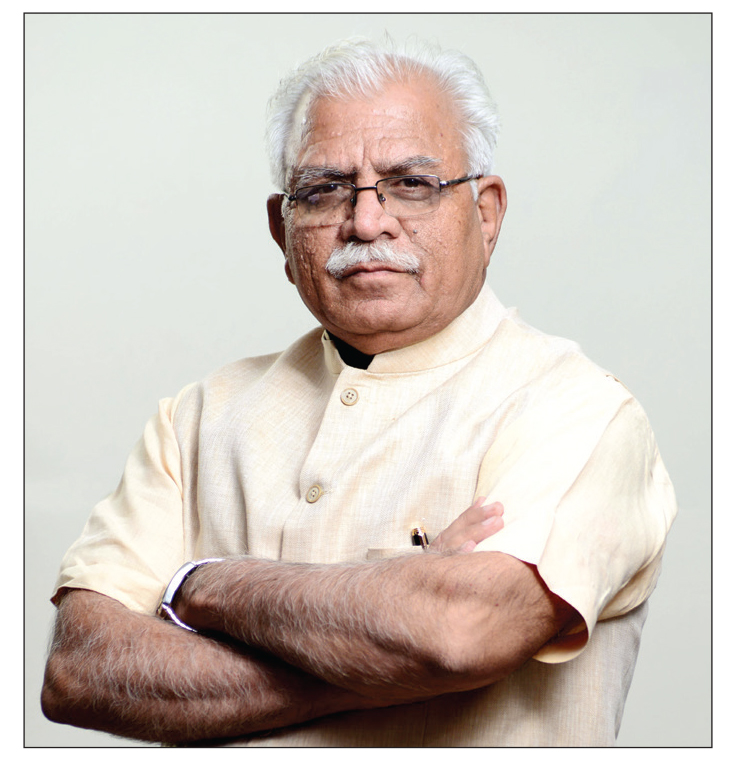
 Addressing the 1st Annual Electricity Distribution Industry Conference organised by the All India Discom Association, Union Minister for Power, Manohar Lal emphasised that a rapidly expanding economy requires a power sector that is far stronger and more resilient than previously imagined. He noted that discoms must be financially sound, operationally efficient and consumer-centric. Essentially, strong discoms translate into improved service delivery and greater sensitivity to consumer needs. Edited excerpts…
The power sector, though it appears simple to consumers at the point of use, is inherently complex. Electricity generation, transmission and distribution must function in coordination to ensure uninterrupted supply. Among these, discoms represent the most visible interface of the sector. Discoms are responsible for delivering quality power round the clock and remain the primary point of contact for consumers. Any complaint from consumers is directed at the distribution utility, irrespective of whether the issue originates at the generation or the transmission level. Serving 1.4 billion people places a significant operational and accountability burden on discoms, making them central to the sector’s performance and public perception.
Historically, electricity supply was viewed largely as a social responsibility of the government, with the state electricity boards tasked with expanding access. As electrification progressed and the sector evolved, electricity emerged not only as a social necessity but also as a critical driver of economic development. The transition from boards to corporatised entities was aimed at enabling operational autonomy and financial discipline under a no-profit, no-loss framework. Regulatory oversight was introduced to ensure balance, preventing excessive profits while safeguarding utilities from financial deterioration. At the same time, a calibrated regulatory approach is necessary to ensure that compliance requirements do not constrain operational recovery.
Strengthening discom finances remains central to advancing the power sector and positioning India as a global leader in energy infrastructure. Recent reforms have yielded measurable improvements. Initiatives such as the late payment surcharge rules, stricter payment discipline, recovery of prudential power procurement costs and the move toward cost-reflective tariffs have strengthened financial sustainability. Exemptions on interstate transmission system charges for renewable energy and energy storage projects, along with viability gap funding for large-scale battery energy storage systems, have accelerated capacity addition and the integration of renewables.
The impact of sustained reforms is visible in improved operational metrics. Aggregate technical and commercial losses have declined significantly to 15 per cent in FY 2025. Financial performance has also improved. The combined losses of discoms, which stood at approximately Rs 680 billion in 2014, narrowed substantially in subsequent years. After losses of around Rs 240 billion-Rs 250 billion in recent periods, the sector has now reported a consolidated profit of over Rs 27 billion. This marks the first instance of overall profitability since the current framework of distribution utilities was established.
The timely disbursement of government tariff subsidies has played a key role in improving utility finances. Enhanced recovery of government dues has further strengthened cash flows, with collection efficiency improving significantly. Several states/union territories have recorded notable improvements in performance, including Bihar, Delhi, Himachal Pradesh, Maharashtra, Rajasthan, Punjab, Tamil Nadu and Madhya Pradesh.
Operational efficiency measures continue to gain momentum. The roll-out of smart meters, particularly prepaid meters for government offices, colonies and residential premises, is expected to improve billing and collection efficiency. The proposal to begin installations from the residences of constitutional functionaries symbolises the importance of accountability and financial discipline. As efficiency improves and the average cost of supply (ACS) declines, there is greater scope to rationalise tariffs and reduce losses further.
The Indian electricity grid has emerged as one of the largest integrated grids globally and currently has over 500 GW of installed capacity. By 2030, the aim is to achieve 500 GW of renewable energy capacity. The broader goal of ensuring that 50 per cent of the total installed capacity comes from non-fossil fuel sources has already been achieved ahead of schedule. Sustained reforms in distribution, combined with renewable integration and financial strengthening, will be central to supporting the country’s long-term growth trajectory.
Although the ACS has increased over much of the past decade, it has declined in recent years. This reversal signals that improvements in operational efficiency are beginning to translate into tangible cost reductions. Further progress in this direction remains critical, as a lower ACS supports better tariff management, reduces overall system costs and limits financial losses. To sustain these gains, it is also essential to enhance billing and collection efficiency and strengthen the long-term financial viability of discoms. The financial performance of discoms has also improved, with profit after tax turning into a surplus this year. However, maintaining this performance will be challenging. States that have delivered strong results must maintain their standards, while those that are lagging need to accelerate reforms. Continued improvement in discom profitability is essential to reduce debt burdens, stabilise tariffs and ease regulatory pressures.
Smart metering is expected to play a pivotal role in driving efficiency gains. So far, approximately 50 million smart meters have been installed against a target of around 200 million, underscoring the need for faster implementation. States must prioritise timely execution and address operational bottlenecks. Given public resistance to prepaid metering in certain areas, initial deployment can focus on government departments, public institutions and high-load consumers, including commercial, industrial and large domestic users. For smaller consumers, targeted incentives can encourage voluntary adoption. For instance, Haryana has offered a 5 per cent incentive for prepaid smart meters, demonstrating how financial incentives can promote broader acceptance even among low-consumption households.
Reducing the legacy debt of discoms remains another critical priority. The proposed amendments to the Electricity Act include provisions for cost-reflective tariffs, intended to ensure that tariffs adequately cover legitimate costs, including debt servicing requirements. Once implemented, these measures should help prevent the accumulation of fresh losses. States will need to align their performance targets with these statutory provisions and move steadily toward financial sustainability.
At the same time, the growing political trend of offering free or heavily subsidised electricity has significant implications for discom finances. Subsidies are not inherently problematic if state governments fully and promptly compensate utilities for the resulting revenue gap. Transparent accounting and timely reimbursement ensure that utilities do not bear the burden. Problems arise when electricity is declared free or tariffs are suppressed without adequate budgetary support. In such cases, revenue shortfalls directly weaken discom finances and contribute to the mounting losses. A related concern is the gap between the ACS and the average revenue realised. While this gap is often discussed at an aggregate level, sector-wise disparities warrant closer attention. Certain categories, particularly agriculture, receive substantial concessions and are politically sensitive, limiting the scope for tariff rationalisation. Extending similar concessions to additional segments without a clearly defined funding mechanism intensifies cross-subsidisation pressures and undermines financial stability.
Therefore, tariffs must remain broadly cost-reflective to enable recovery of legitimate costs. Where cross-subsidies are necessary, they should operate within defined regulatory limits rather than through ad hoc reductions that compromise cost recovery. Support measures should be transparently financed through government budgets rather than absorbed as implicit losses within utility accounts, as persistent under-recovery affects not only discoms but also state finances and consumers.
India has made substantial progress in eliminating power shortages. In 2014-15, the country faced an energy deficit of approximately 4-5 per cent. Over time, this deficit has narrowed significantly, and the system is now operating in a position of surplus. This turnaround has been supported by targeted government interventions. Initiatives such as the Revamped Distribution Sector Scheme aim to reduce losses, modernise infrastructure and improve operational efficiency in distribution. The objective is to ensure that measurable improvements in governance, cost recovery and service delivery are accompanied by targeted policy support. At the same time, discoms are expected to maintain financial discipline. Government support, whether through schemes or subsidies across generation, transmission or distribution, is intended for exceptional circumstances rather than as a substitute for operational discipline.
The proposed amendments to the Electricity Act are under consideration to further strengthen the sector’s resilience. A revised National Electricity Policy has also been placed in the public domain for stakeholder consultation. The overarching goal remains the provision of clean, reliable, round-the-clock electricity that is both cost-reflective and affordable. Achieving this balance will depend on sustained reforms, financial accountability and close coordination between governments and distribution utilities.