

Greenko has steadily built one of India’s most diversified renewable energy portfolios, anchored in a multi-technology mix and spread across a wide geographic footprint. Established in 2004, the company today operates about 9.4 GW of renewable capacity, comprising around 4.2 GW of solar, 3.2 GW of wind and 2 GW of hydropower, deployed across more than 130 projects in over a dozen states.
The asset base is supported by extensive evacuation and grid infrastructure, including high voltage transmission lines and multiple substations, enabling large-scale integration with the national grid.
Over time, Greenko has moved beyond a conventional generation-led approach to focus on system-level value, particularly reliability and flexibility. This transition is most visibly reflected in the company’s growing emphasis on pumped storage, integrated renewable energy projects and green molecule hubs (through AM Green).
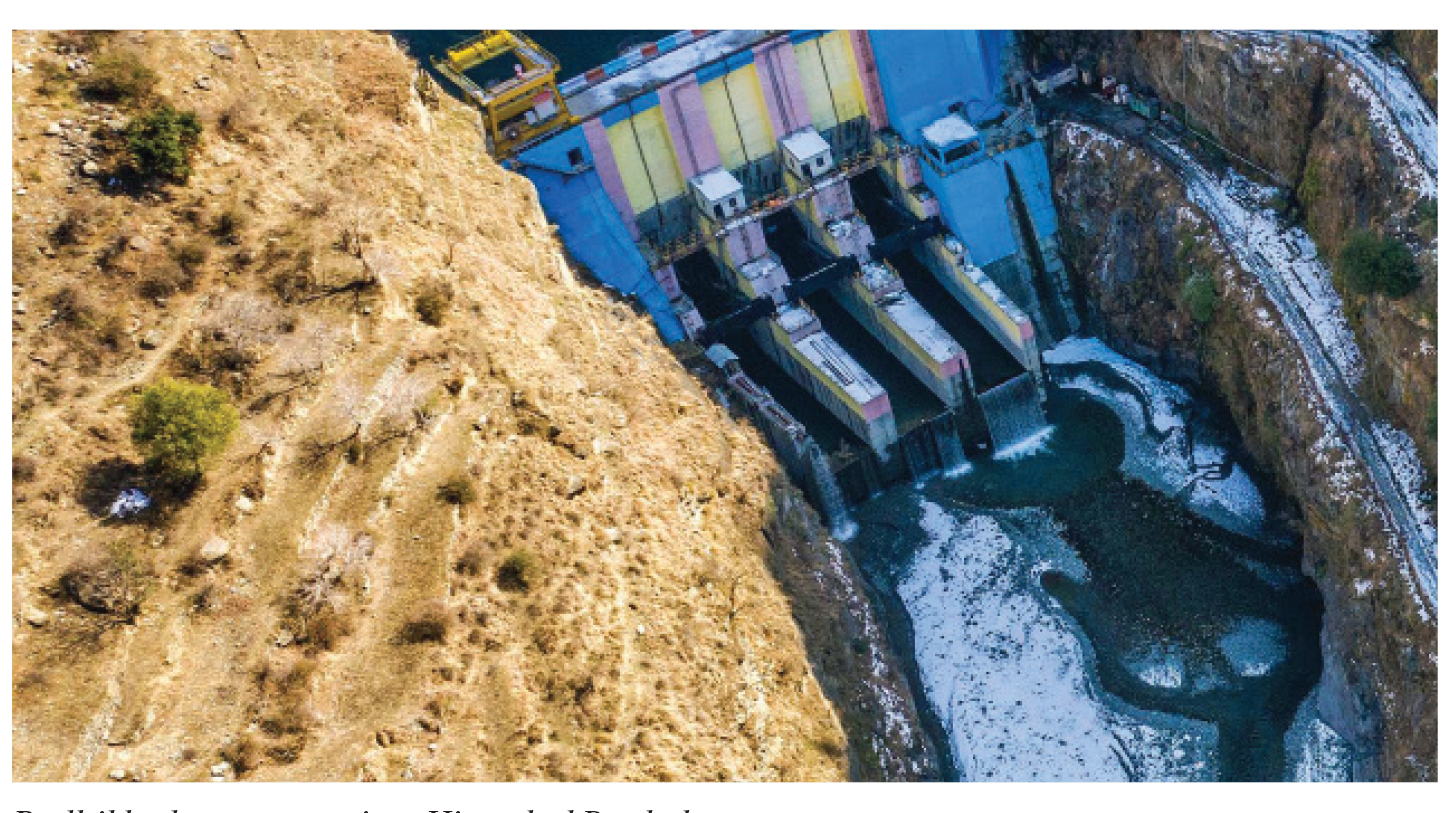
Pinnapuram Integrated Renewable Energy Project
Greenko’s Integrated Renewable Energy Project at Pinnapuram in Andhra Pradesh brings together approximately 3.5 GW of solar and wind capacity with a 1,680 MW closed-loop pumped storage plant. The pumped storage facility offers over 11,000 MWh of storage capacity and has been designed for multi-hour operation, enabling energy to be stored during periods of excess renewable generation and released during peak demand. The closed-loop configuration reduces dependence on river inflows and allows greater operational predictability, making it particularly suited to large-scale grid support.
What distinguishes Pinnapuram is not just its scale, but also the speed and complexity of execution. Greenko completed the associated large hydro and storage infrastructure in a record construction time frame. The project is supported by high voltage grid connectivity, allowing power to be evacuated efficiently and integrated into the national network.
Beyond grid balancing, Pinnapuram has strategic relevance for industrial decarbonisation. The availability of firm, carbon-free power makes it suitable for supporting energy-intensive industries such as green hydrogen, green aluminium and green steel.
Apart from Andhra Pradesh, Greenko is developing GW-scale integrated renewable energy storage projects in Karnataka
and Madhya Pradesh. The combined capacity of these projects is 5.2 GW.
Recent developments of AM Green
Over the past year, Greenko’s clean energy platform has expanded beyond power generation into green fuels, industrial decarbonisation and digital infrastructure, primarily through AM Green, the green molecule arm founded by the promoters of Greenko.
In February 2025, AM Green entered into an MoU with Honeywell to assess the techno-economic feasibility of producing sustainable aviation fuel from ethanol, green methanol using carbon dioxide from multiple emission sources and green hydrogen. The collaboration marked an early move towards diversifying the company’s green molecule portfolio beyond ammonia, with a focus on downstream applications in aviation and industrial fuels.
This was followed in May 2025 by a non-binding MoU between AM Green and Coal India Limited for the supply of 4.5 GW of renewable energy for green hydrogen and ammonia production. In the same month, AM Green signed another MoU with the Port of Rotterdam Authority to jointly develop a green energy supply chain between India and north-western Europe. The proposed collaboration covers the export of green ammonia as well as bunkering
fuels and sustainable aviation fuels through the Rotterdam port ecosystem.
In July 2025, AM Green BV acquired a 17.5 per cent stake in Greenko Energy from ORIX. Following this transaction, AM Green’s total shareholding in Greenko increased to 25 per cent.
The company’s green industrial ambitions expanded further in November 2025, when AM Green signed an MoU with the Andhra Pradesh government to set up a 1 million tonne per annum (mtpa) green aluminium complex in the state. The project is expected to rely on renewable power and storage-backed carbon-free energy solutions.
In January 2026, AM Green signed a long-term offtake agreement with Uniper for the supply of up to 500,000 tonnes per year of renewable ammonia from India. Under the agreement, Uniper will offtake ammonia from AM Green’s projects, with the first shipment expected as early as 2028 from the company’s first 1 mtpa green ammonia plant currently under construction at Kakinada in Andhra Pradesh.
During the same month, the AM Group entered into an Mou with Invest UP, the investment promotion agency of the Uttar Pradesh government, to establish a 1 GW high-performance compute hub in Greater Noida. The proposed facility, with a planned investment of $25 billion, will be developed in phases, with initial capacity expected by 2028 and full capacity by 2030. The data centre is planned to be powered by round-the-clock carbon-free energy, including wind, solar and pumped storage.
Green industrial hub at Kakinada
The green industrial hub being developed at Kakinada in Andhra Pradesh, anchored by AM Green, involves converting an existing ammonia-urea facility into a large-scale green ammonia complex with a planned capacity of 1.5 mtpa. The project is being implemented in phases, with initial production targeted by the latter part of the decade and full capacity expected by 2030. Once operational, it is expected to enable India’s large-scale exports of green ammonia, supplying clean fuel to markets such as Europe and East Asia. The facility has secured CertifHy EU RFNBO pre-certification, marking the first such recognition for an India-based project and strengthening its positioning in the EU fuels market.
The port-based location allows the seamless integration of renewable power, production facilities and export logistics.For the Kakinada hub, power for electrolysis and downstream processes is expected to be sourced from Greenko’s wind, solar and pumped storage assets, ensuring round-the-clock carbon-free operation. This integrated approach addresses one of the key challenges in green molecule production, namely, the mismatch between intermittent renewable generation and continuous industrial demand.
Strategy and the way forward
Greenko’s core business strategy has been built around three pillars: decarbonisation, digitalisation and decentralisation of the energy sector. These priorities have evolved through distinct phases of the company’s development.
Under its first business model, GKO 1.0, Greenko focused on energisation by deploying proven renewable technologies and building core execution capabilities within the existing regulatory framework. This phase laid the foundation for scale and operational discipline. Between 2015 and 2018, during GKO 2.0, the company
moved to GW-scale project development, achieving cost competitiveness and
establishing itself as a large renewable power producer. The next phase, GKO 3.0, between 2018 and 2020, marked a strategic shift towards digitalisation. Greenko invested in forecasting, analytics and digital control systems to improve reliability and flexibility across its portfolio, recognising that variability management would become critical as renewable penetration increased.
Currently, under GKO 4.0, the company’s focus has shifted towards decentralisation. As the energy value chain moves closer to consumers, Greenko is positioning itself as a provider of flexible, storage-backed energy solutions rather than a pure generator. Central to this vision is the development of a large-scale energy storage cloud, aggregating pumped storage assets across states and managing them through a digitally enabled platform.
Greenko’s strategy extends beyond conventional wind and solar capacity additions to building an integrated energy ecosystem centred on storage and emerging green molecule opportunities. This approach strengthens Greenko’s competitive differentiation within the market.
As per the Central Electricity Authority’s recent report “Roadmap to 100 GW of Hydro Pumped Storage Projects (PSPs) by 2035-36”, the company has 3,520 MW of capacity under construction, comprising the 1,920 MW Gandhi Sagar off-stream PSP in Madhya Pradesh and the 1,600 MW Saundatti PSP in Karnataka. In addition, the company has 11,620 MW under survey and investigation across Gujarat, Maharashtra, Rajasthan and Uttar Pradesh, including Ukai, Nayagaon, Shahpur, Sukhpura and other identified sites. The portfolio reflects Greenko’s belief on pumped storage as a critical enabler of round-the-clock renewable supply, particularly as variable renewable penetration and peak demand management requirements continue to rise. Looking ahead, Greenko plans to scale the cloud storage platform to around 100 GWh of storage capacity by the end of the decade.
As India’s energy transition enters a phase defined by integration and reliability, Greenko’s strategy reflects a shift from adding renewable capacity to building system-level solutions. As it continues to diversify its portfolio, Greenko is expected to retain its strong position in the Indian renewable energy market going forward.
Based on insights shared by P.M. Nanda, Executive Vice President, Greenko Group, at the 23rd edition of Power Line’s “Hydro Power in India” conference.


