
Digitalisation is steadily redefining operations and maintenance (O&M) practices across the power generation landscape, enabling a shift from reactive and schedule-based approaches to predictive, data-driven decision-making. As generation portfolios become more diverse with the increasing penetration of renewables alongside conventional thermal assets, the need for smarter, more agile O&M strategies has become critical.
Digital solutions leverage technologies such as artificial intelligence (AI), internet of things (IoT), advanced analytics and cloud-based platforms to improve operational visibility and automate decision-making. The focus is moving beyond basic monitoring to integrated asset lifecycle management, where performance, maintenance and risk are managed through unified digital platforms. This transition is supporting power plants in improving reliability, reducing operational costs and enhancing service quality.
Data-driven O&M
Power plants generate vast volumes of operational data through distributed control systems, sensors and monitoring devices. Advanced analytics, supported by AI and machine learning (ML), is enabling the transition from descriptive to prescriptive insights. Plants can now identify efficiency losses, diagnose root causes and recommend corrective actions in near real time. The data, when effectively harnessed, can significantly improve plant availability and reduce forced outages by enabling the early detection of performance deviations and incipient faults.
For thermal plants, this translates into improvements in heat rate, auxiliary power consumption and fuel efficiency. In renewable plants, data analytics helps optimise generation by identifying underperforming modules, inverter issues or environmental impacts on output.
Digital O&M platforms that consolidate data across equipment, systems and historical records are better positioned to deliver actionable insights, compared to fragmented or siloed data environments that limit analytical depth.
Predictive maintenance and advanced diagnostics
The transition from reactive and time-based maintenance to predictive and condition-based maintenance is a key development in digital O&M. Traditional approaches, based on fixed maintenance schedules or post-failure interventions, often result in either unnecessary maintenance or delayed fault response. Digital technologies address this gap by enabling the continuous monitoring and real-time analysis of asset condition.
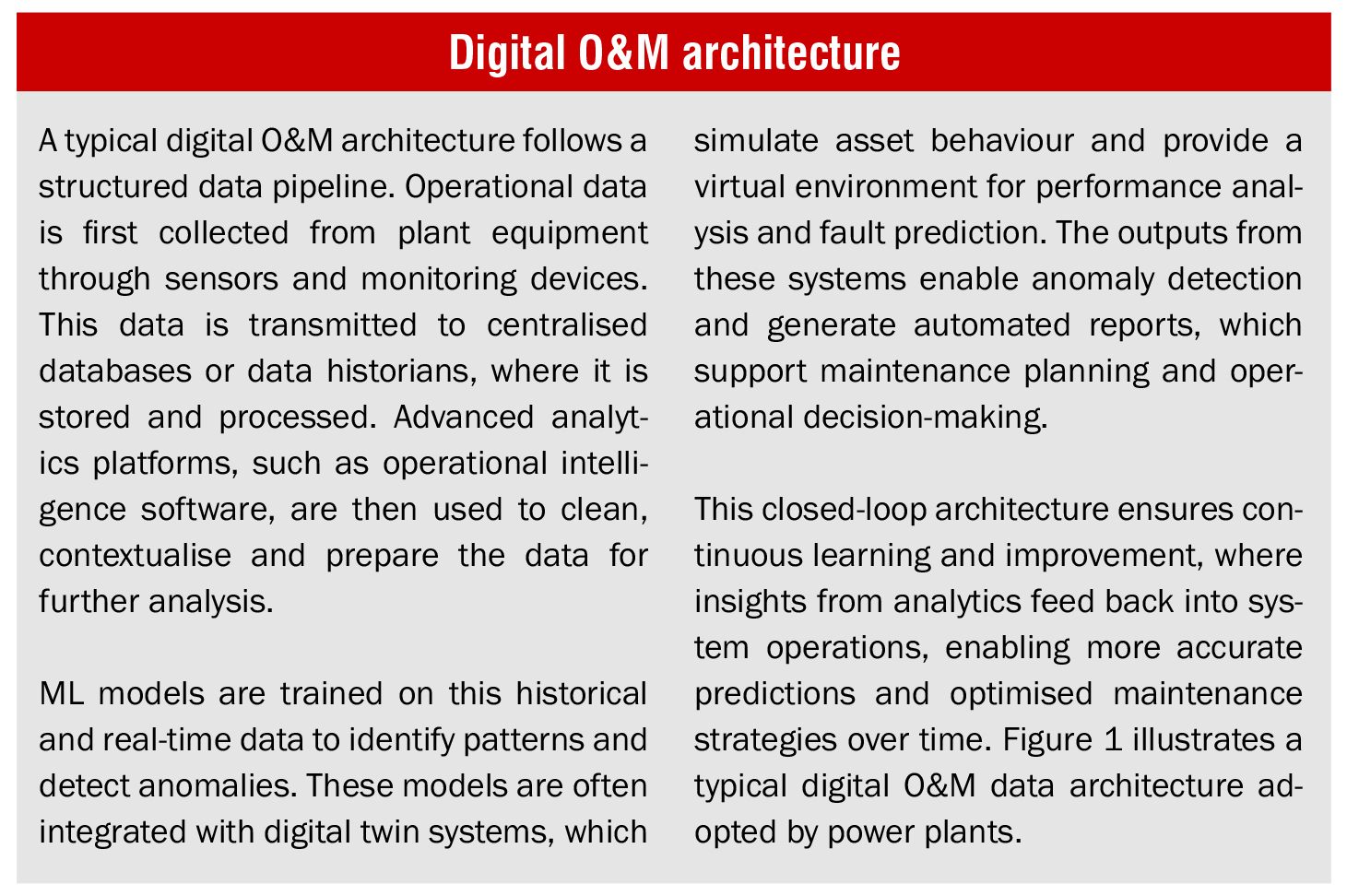
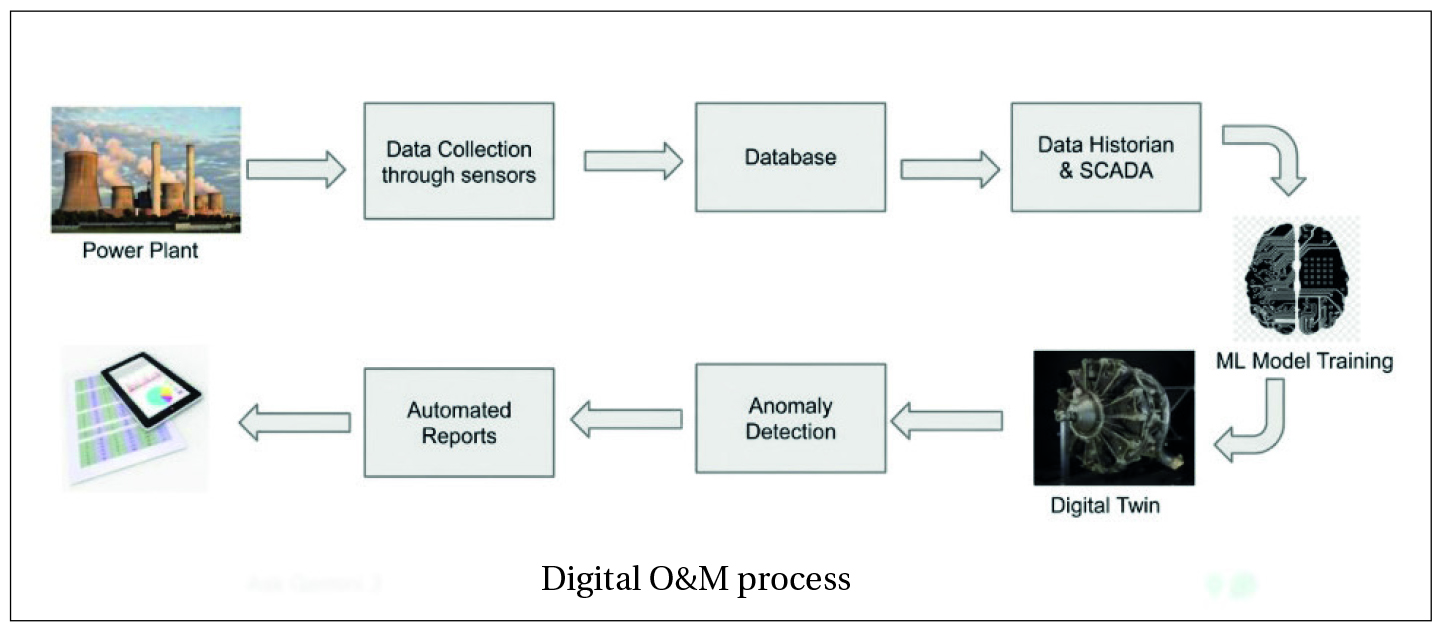 IoT-enabled sensors and condition monitoring systems capture critical parameters such as temperature, vibration, load and insulation condition across equipment. This data is analysed using AI and ML algorithms to detect anomalies and predict potential failures. Advanced diagnostics techniques such as partial discharge monitoring, dissolved gas analysis for transformers and infrared thermography are being integrated into digital platforms to enhance fault detection capabilities.
In thermal power plants, predictive maintenance has reduced unnecessary maintenance interventions while minimising the risk of unplanned outages. For instance, predictive models for pump systems and rotating equipment can detect subtle changes in operating behaviour that precede mechanical failures. In gas turbine plants, analytics-driven maintenance frameworks have demonstrated improvements in availability by enabling timely interventions before faults escalate.
Digital twin technology is emerging as a key enabler of advanced O&M in power plants, creating virtual replicas of physical assets that combine real-time data with physics-based and analytical models. These models allow operators to simulate plant behaviour under different conditions, supporting scenario analysis and performance optimisation without affecting actual operations.
They are particularly useful for evaluating the impact of load variations, fuel quality changes and equipment degradation, helping plants operate more flexibly. In maintenance, digital twins enhance predictive capabilities by providing continuous insights into asset health and enabling more accurate fault diagnosis and root cause analysis.
Over time, they support better lifecycle management decisions, including maintenance planning and asset replacement. However, effective deployment depends on robust data systems, accurate modelling and ongoing validation to ensure reliability.
Workforce digitisation and automation technologies
Emerging technologies such as augmented reality and virtual reality are being used for training and remote assistance, allowing technicians to perform complex maintenance tasks with guided support. Wearable devices are also being deployed to enhance worker safety and provide hands-free access to operational data. Process automation is enabling end-to-end digital workflows, where system-generated alerts trigger work orders, assign tasks and track execution without manual intervention. Knowledge management platforms are being developed to capture operational insights and best practices, supporting standardisation and reducing dependency on individual expertise.
Key challenges and future outlook
Despite the benefits, the implementation of digital O&M solutions presents several challenges. Integration with legacy infrastructure remains a key constraint, as many power plants operate with ageing systems that are not designed for digital interoperability. Upgrading these systems requires significant investment and careful planning.
Data management is another critical issue. Digital O&M relies on large volumes of accurate and consistent data. Inadequate data quality, lack of standardisation and fragmented data systems can limit the effectiveness of analytics and AI-based solutions. Utilities need to establish robust data governance frameworks to address these challenges.
 Cybersecurity is becoming increasingly important as digitalisation expands. Digital systems are vulnerable to cyber threats, making it essential for power plants to implement strong security measures, including encryption, network segmentation and real-time threat monitoring. Cloud computing, while enabling scalable data storage and processing, also requires stringent security and compliance mechanisms.
Emerging technologies such as blockchain are being explored for secure data sharing and transaction management in decentralised energy systems. Although still at an early stage, blockchain has potential applications in asset tracking and energy transactions.
Going forward, thermal plants are likely to increase investments in advanced technologies such as edge computing, autonomous inspection systems and AI-driven decision-making platforms. In the long term, digital technologies will become embedded across the asset lifecycle, from planning and commissioning to operation and decommissioning. Additionally, the standardisation of data architectures, interoperability of systems and collaboration between technology providers and plant operators will be critical. Plants that adopt integrated and scalable digital solutions will be better positioned to improve operational efficiency, enhance reliability and meet evolving regulatory and consumer requirements.