
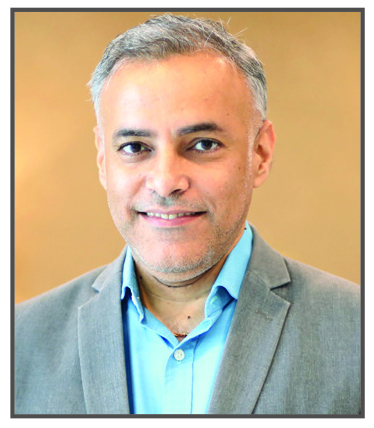
 Sandeep Narang, Partner – Strategy and Transactions, EY, brings with him deep experience in advisory, project finance and infrastructure consulting, with a strong focus on the power and renewables sector. Narang began his career with CARE Ratings in advisory before moving to EY’s transaction advisory practice, focusing on project finance, public-private partnerships and government advisory.
He initially led engagement delivery and later moved into leadership roles, managing teams and complex assignments. In recent years, his focus has shifted to practice building, expanding services and strengthening EY’s presence in the power and renewable sectors.
Commenting on recent sector performance, Narang highlights progressive regulatory reforms by the Central Electricity Regulatory Commission, state regulators and the central government, particularly in areas such as the deviation settlement mechanism and power market development. These measures, he notes, are enabling a smoother transition to renewables and enhancing market liquidity.
Renewable capacity addition continues to gain momentum, backed by strong investor confidence and a maturing ecosystem. While demand growth has moderated from FY 2024 highs, he expects a recovery supported by robust economic fundamentals.
On the distribution front, he notes improvements in efficiency, driven by schemes such as the Revamped Distribution Sector Scheme and the growing adoption of smart meters, though challenges remain in segments with manual billing.
Narang identifies the energy transition as the power sector’s biggest challenge, requiring enhanced capabilities in planning, operations and regulatory design.
Looking ahead, he remains optimistic, expecting electricity demand to grow at about 5.5 per cent annually. He sees the energy transition as a catalyst for opportunities across manufacturing, transmission and distribution and emerging segments like nuclear energy.
Among his most memorable assignments, Narang recalls managing a large smart metering deployment programme early in his career, which strengthened his leadership skills and offered valuable exposure to diverse socio-economic contexts.
He describes his management style as outcome-oriented, with a strong emphasis on empowering teams within a defined governance framework.