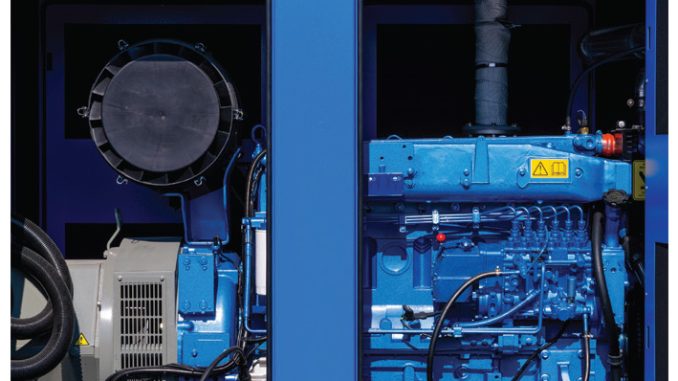
The market for diesel generator sets (gensets) is undergoing rapid technological transformation, driven by stricter emission regulations, evolving customer requirements and the need for greater fuel efficiency, reliability and operational performance. Digitalisation is enabling remote monitoring, predictive maintenance and improved asset management. Meanwhile, hybrid systems, natural gas-powered gensets and compact, modular designs are expanding the range of cleaner and more efficient backup power solutions.
In India, the implementation of the Central Pollution Control Board’s (CPCB’s) IV+ emission norms for diesel gensets up to 800 kW has accelerated this transition. The norms mandate significantly lower emissions of particulate matter (PM), nitrogen oxides (NOx), hydrocarbons and carbon monoxide (CO), prompting manufacturers to adopt advanced engine technologies and exhaust after-treatment systems.
Power Line takes a look at some of the key technologies shaping the evolution of diesel engines and gensets…
Cleaner alternatives
Natural gas gensets: Compared to diesel gensets, natural gas gensets produce significantly lower emissions of PM, sulphur oxides and carbon dioxide, while operating at lower noise levels, making them suitable for urban and environmentally sensitive locations. Natural gas gensets also offer lower operating costs due to relatively cheaper fuel and reduced maintenance requirements, resulting in a lower total cost of ownership over their life cycle. Another key advantage is their ability to comply with tight emission standards without requiring complex exhaust after-treatment systems. Their adoption is increasing in states with well-developed natural gas pipeline networks, such as Delhi, Gujarat and Maharashtra, and is expected to grow further as gas infrastructure expands and cleaner distributed power solutions gain traction.
Hybrid gensets: Hybrid gensets are emerging as an efficient and flexible backup power solution by integrating diesel generators with battery energy storage systems (BESS). These systems supply power during periods of low demand, allowing diesel engines to operate only when required or at their optimal load, thereby reducing inefficient low-load operation. This can lower diesel runtime, resulting in significant fuel savings, reduced emissions, lower operating costs and longer engine life. Beyond improving operational efficiency, hybrid gensets can be deployed as part of hybrid power systems alongside renewable energy sources such as solar PV and wind. In such configurations, renewable energy meets a portion of the load, excess power is stored in the BESS, and the diesel genset operates only when renewable generation and battery storage are insufficient.
Post-emission technologies: Post-emission or exhaust after-treatment technologies play a key role in reducing emissions from modern diesel gensets. These systems treat exhaust gases after combustion to meet increasingly stringent emission standards. Diesel oxidation catalysts reduce carbon monoxide and hydrocarbon emissions, while diesel particulate filters capture and remove soot and PM from the exhaust stream. Selective catalytic reduction systems further reduce NOx emissions by injecting a urea-based diesel exhaust fluid into the exhaust.
Electronic fuel injection: Electronic fuel injection systems, particularly common rail direct injection (CRDI), have become a key feature of modern diesel gensets. Unlike conventional mechanical fuel injection systems, CRDI uses electronically controlled high-pressure injectors to precisely regulate the timing, pressure and quantity of fuel injected into the combustion chamber. This enables more efficient combustion, improves fuel economy and engine performance, and reduces PM and NOx emissions. The technology has become a key enabler for compliance with stringent emission standards such as CPCB IV+.
Blended and alternative fuels: The use of alternative fuels is gaining traction as a means of reducing emissions and lowering dependence on conventional diesel. In India, biodiesel is being promoted under the National Biofuel Policy as a cleaner alternative for diesel engines, offering lower greenhouse gas emissions and improved sustainability. Manufacturers and researchers are also evaluating hydrogen-enriched diesel blends and waste-derived fuels to improve combustion efficiency and reduce the environmental impact of diesel gensets. Another promising alternative is hydrotreated vegetable oil (HVO), or renewable diesel, which can be used in many existing diesel engines with little or no modification while offering significantly lower life cycle greenhouse gas emissions than conventional diesel. Although adoption in India remains limited, HVO is gaining traction globally as a low-carbon fuel for backup and prime power applications. As fuel technologies continue to evolve, these alternatives are expected to complement conventional diesel and support the transition towards cleaner and more sustainable power generation.
Smart technologies
Digital control systems: Modern gensets are equipped with electronic engine management systems (EMSs) and advanced generator control units that enable precise control of engine and generator operations. These systems support functions such as automatic start-stop, load sharing, synchronisation and paralleling of multiple gensets, ensuring efficient operation under varying load conditions. Electronic controls also optimise fuel injection, engine speed and operating parameters, improving fuel efficiency while reducing emissions.
IoT-enabled remote monitoring: Remote monitoring has become a standard feature in advanced gensets, allowing operators to monitor key parameters such as fuel consumption, engine temperature, oil pressure, battery health and load profile in real time through cloud-based platforms. The integration of internet of things (IoT) technologies enables operators to remotely access operational data, receive alerts on abnormal conditions and optimise genset performance across geographically dispersed installations. This enhances operational visibility while reducing fuel wastage and maintenance costs.
Predictive maintenance and diagnostics: The use of advanced sensors, analytics and cloud computing is shifting maintenance practices from fixed service intervals to condition-based and predictive maintenance. By continuously monitoring the health of critical components such as engines, alternators, cooling systems and batteries, these systems can identify early signs of deterioration and predict potential failures before they occur. This enables timely maintenance planning, minimises unplanned downtime, extends equipment life and improves overall system reliability. Digital diagnostic platforms also facilitate faster fault identification and troubleshooting, reducing maintenance time and improving fleet management.
Variable speed gensets
Conventional diesel gensets operate at a fixed engine speed to maintain a constant output frequency, even under varying load conditions, which can reduce fuel efficiency during low-load operation. Variable speed gensets overcome this limitation by automatically adjusting engine speed to match power demand, while power electronic converters maintain a constant voltage and frequency at the output. This enables lower fuel consumption, reduced emissions and noise levels, and improved engine life, particularly in applications with fluctuating loads. Although adoption remains limited, variable speed technology is expected to gain traction as demand grows for more efficient and flexible backup power solutions.
Noise reduction technology
Noise reduction has become an important area of innovation in diesel gensets, particularly as their deployment increases in urban, commercial and residential environments. To comply with the CPCB’s prescribed noise limits, manufacturers are incorporating advanced acoustic engineering solutions into genset design. Sound power-level measurements are conducted in accordance with ISO 3744 and ISO 8528-10, which provide standardised methods for evaluating the airborne noise emitted by engine-driven gensets and certifying compliance with applicable noise regulations.
Modern gensets are equipped with purpose-designed acoustic enclosures made from high-performance sound-absorbing composite materials that significantly reduce noise transmission compared to conventional metallic enclosures. Acoustic insulation around engine compartments, air intake and exhaust systems further minimises noise leakage at the source. In addition, manufacturers are increasingly using vibration-isolation mounts and damping pads to reduce structure-borne vibrations, thereby lowering overall noise levels. Active noise cancellation is also being explored for specialised applications, although its commercial deployment remains limited.
Modular and compact designs
The demand for modular and compact diesel gensets is increasing across applications where space constraints, scalability and ease of deployment are key considerations, such as data centres, telecom towers, construction sites, commercial buildings, remote facilities and disaster response operations. Modular designs allow users to install capacity in phases by adding pre-engineered generator modules as power requirements increase, eliminating the need for major system modifications. This approach also improves operational flexibility and reliability, as individual modules can be serviced or replaced without disrupting the entire power system.
At the same time, manufacturers are developing more compact gensets with higher power density by optimising equipment layouts and integrating key components within smaller footprints. Advanced engineering and design techniques are enabling significant reductions in installation space without compromising performance or reliability. These compact, plug-and-play solutions simplify transportation and installation while making gensets better suited for space-constrained urban and industrial applications.
Conclusion
Going forward, the pace of innovation is expected to accelerate, as manufacturers seek to balance regulatory compliance, fuel efficiency, digitalisation and sustainability. These developments will continue to enhance the performance, reliability and environmental footprint of diesel gensets, ensuring their relevance in an evolving power landscape.
Aastha Sharma