

At the launch of the eighth round of commercial coal mine auctions, Amrit Lal Meena, secretary, Ministry of Coal (MoC), spoke about the high growth in coal production and the contribution of captive and commercial coalfields to it. He also spoke about the difficulties faced by mine auction holders and the solutions implemented by the Central Mine Planning and Design Institute (CMPDI) to address these challenges. Further, he highlighted the significant role played by the Ministry of Railways (MoR) in enhancing rail connectivity to coal mines. He also spoke about the financial boost given to the sector by the government, REC Limited, Power Finance Corporation Limited (PFC) and the banking sector. Edited excerpts…
The MoC has achieved exponential growth in coal production through collaborations with coal PSUs, as well as with captive and commercial mines. Last year, approximately 893 million tonnes of coal was produced, marking a growth of about 14 per cent over 2021-22. Moreover, in the first seven months of this year, the production has continued to rise, registering an 11 per cent increase. The contribution from captive and commercial mines is significant, accounting for about 15 per cent of the country’s total coal production from the mines auctioned during the past three years. However, several of these mines have not yet commenced production. Once they become operational, their share will gradually increase, leading to the improved availability of coal in the country and, consequently, contributing to a reduction in the price of coal.
Last year, the premium on Coal India Limited’s (CIL) auction ranged from 180 per cent to 200 per cent. By July 2023, it had reduced to 50 per cent, and currently stands at about 60-70 per cent. This reduction can be attributed to the adequate availability of coal in the market from various sources. The credit goes to the owners of captive and commercial mines for their significant contributions, benefiting not only the power sector but also various other industries. The increased availability of coal has enabled CIL to supply 35 per cent more coal to the non-regulated sectors. Hence, with the contribution of all constituent entities, coal availability has improved in the country, and this will continue to witness an upward trend.
“With the contribution of all constituent entities, coal availability has improved and will continue to witness an upward trend.”
In the seventh round of auctions, CIL offered more than 200 mines, of which 91 mines have been taken in different rounds. Based on stakeholder interactions and ministerial directives, we conducted detailed physical surveys for all mines through a team of experts before offering them for auction. This was because, in earlier rounds, certain factors led to mining challenges and subsequent difficulties for mine auction holders. This time, CMPDI has conducted physical verification of all the mines being offered, and wherever it was deemed necessary to exclude a particular area due to dense habitation and forest or other geographical issues, those have been removed from consideration.
All 39 mines being offered are generally easily mineable. Further, CMPDI is preparing a digital information database, which would be available along with the dossier. This will enable users to view the physical condition of the entire mining area on their computers. In fact, under the PM Gati Shakti National Master Plan, the entire information has been mapped and will be made available as part of the mine dossier, providing information on forest data layers, connectivity data layers, transmission lines and telecom lines. This data will be easily available to facilitate informed decision-making.
“Financing for coal mining, which used to be an area of concern, is now available, giving a boost to early operationalisation.”
Further, the MoC’s single-window clearance portal is user-friendly and is now linked with the previous 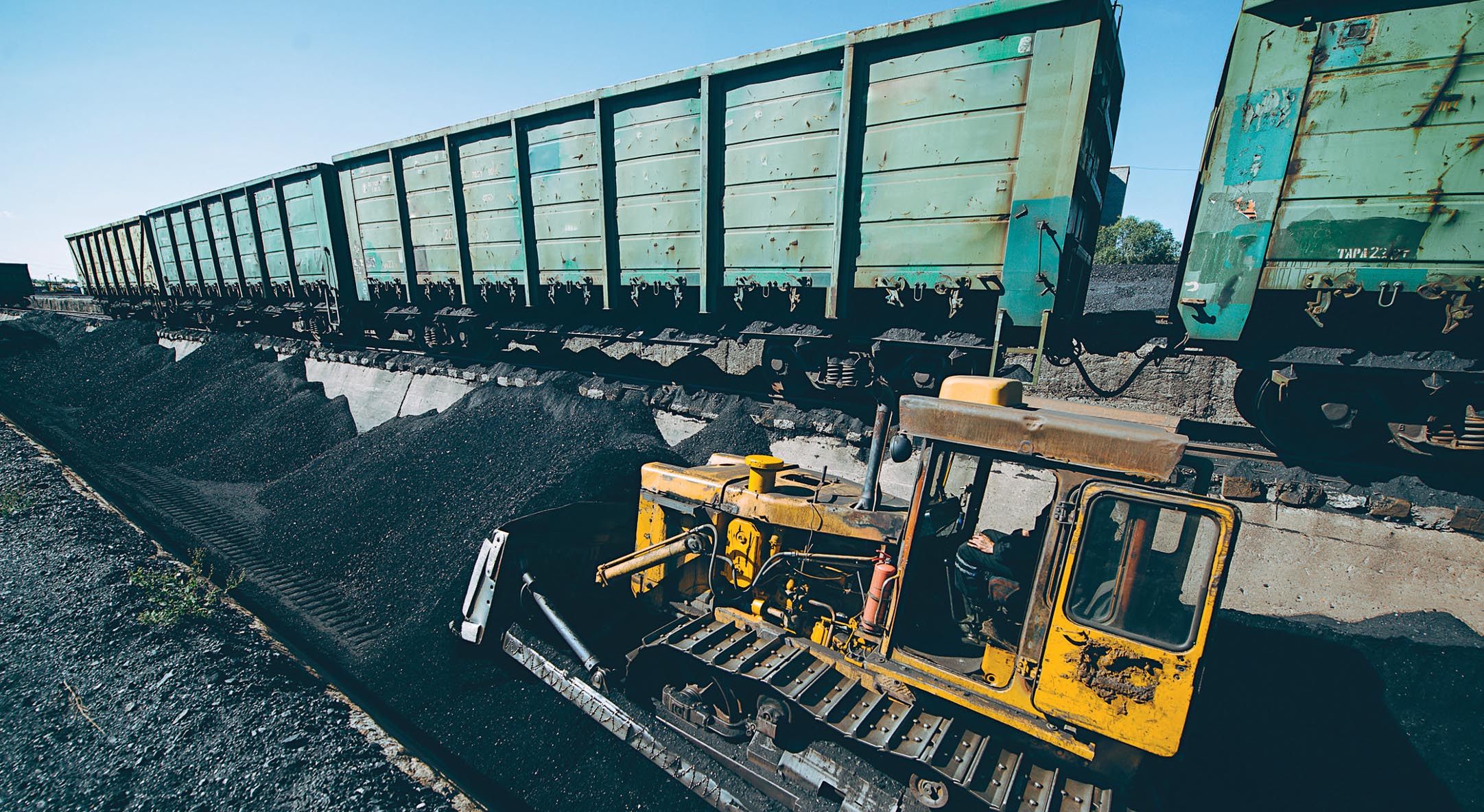 portal, making the environment and forest clearance process smoother. Another important factor is connectivity, as evacuation infrastructure plays a critical role in coal mines. We have undertaken an exercise to evaluate the complete connectivity requirements of coal mines until the year 2047. We have created a digital map of all coal-producing areas along with existing and proposed railway lines in the country. Coalfields with inadequate rail connectivity have been identified, and to address these gaps, we have located additional railway routes through a thorough gap analysis in consultation with the MoR, coal companies and private stakeholders. Additionally, we have identified opportunities for augmenting existing railway lines through tripling and possibly four-lining, along with addressing congestion points through the proposal of new rail overbridges.
Under the PM Gati Shakti National Master Plan, the MoR has broadly incorporated all infrastructure projects into its energy corridor and high-density network corridor. Therefore, in the coming years, all coal-producing areas will benefit from smooth and fast rail connectivity for the evacuation of coal from the existing 39 coal blocks and those that will be auctioned in the future. With the operationalisation of the eastern dedicated freight corridor from Sonnagar to Dadri, the average speed of the railway track has gone up to 35 km per hour, which was 14 km per hour earlier. Therefore, with further augmentation of railway infrastructure, rail movements will become faster, which will lead to enhanced cost savings and logistics efficiency.
“Investing in coal mining makes long-term business sense, given the facilitative support mechanisms in place.”
Some mines that have started commercial production have shown encouraging commercial viability and profitability, exhibiting higher profit margins compared to other contemporary businesses. Coal mining, being a long-term business and providing long-term returns, especially with adequate resources, should be ventured into because the future of coal is assured in the power sector. With the increasing focus on coal gasification and further into chemicals, the future of the coal industry is promising. With regards to financing for coal mine auction holders, the MoC has undertaken meetings with bankers, REC Limited and PFC Limited, seeking their support for financing coal mine projects. In fact, REC has conducted seminars and offered support with facilitated clauses. Financing for coal mining, which used to be an area of concern, is now available, giving a boost to early operationalisation. The ministry is also promoting heavy earthmoving machinery through different support initiatives such as Make in India and Atmanirbhar Bharat. The ministry encourages increased coal production as it will increase return on revenues. It also guarantees support for those seeking opportunities for investing in the coal industry.


