
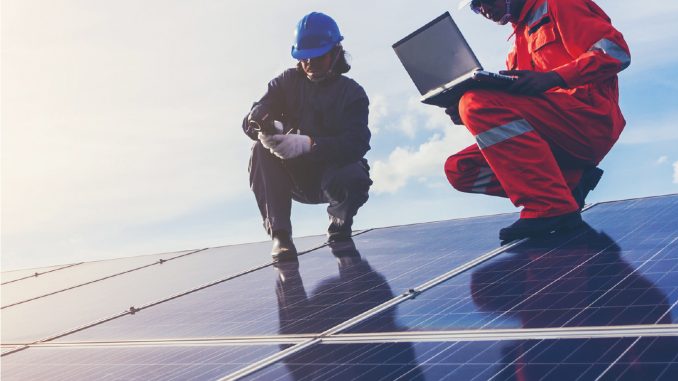
The solar and wind energy industries in India are witnessing a significant shift towards automation and digitalisation, particularly in operations and maintenance (O&M) practices. This transition is expected to optimise performance, reduce manpower costs and ensure compliance with regulatory standards. From basic tasks such as module cleaning to advanced predictive maintenance services, automation is enhancing efficiency and plant assessment capabilities. Both sectors are integrating innovative technologies such as drones, internet of things (IoT) and artificial intelligence (AI) to streamline O&M processes, with a focus on improving maintenance and risk management. Incorporating these advancements not only enhances operational performance but also maximises return on investment in the evolving renewable energy landscape.
Solar
Initially focused on basic tasks such as site management and module cleaning, O&M in the solar industry has evolved to optimise balance of system usage and ensure the delivery of committed capacity. O&M practices that automate predictive maintenance services to reduce manpower costs and comply with stringent scheduling and forecasting regulations are gaining traction. Investments in automation are aimed at maintaining profitability in the face of low tariffs and enhancing performance prediction and plant assessment capabilities. The focus of solar O&M is on improving plant maintenance and enhancing risk management. This involves the regular maintenance and repair of system components to retain optimal performance, while risk management focuses on proactive measures to identify, mitigate and address potential hazards and challenges.
Specific preventive maintenance tasks are crucial for ensuring the optimal performance of solar modules. Regular cleaning of modules is essential, with the frequency adjusted based on environmental conditions such as dust levels. The quality of water used for cleaning must meet specified standards, considering factors such as TDS (total dissolved solids) levels, chlorine, calcium content and electrical conductivity. It is important to use gentle brushes and diluted detergent to avoid damaging the glass surface. Innovations in cleaning methods include the development of automated systems, although these may incur higher costs. Regular checks on cables and connection boxes are essential, including inspection for corrosion, tightness and damage to water seals. Other crucial maintenance steps include ensuring no vermin are present, inspecting cable insulation for cracks or burns, using weather-resistant insulation for outdoor wires and ensuring proper clamping to prevent rubbing against sharp edges. When replacing wires, the rating and type of the new wires must be checked. Inverter maintenance includes ensuring it is installed in a clean, ventilated area away from battery banks, clearing dust from heat sinks and vents, checking for vermin infestation, testing functionality monthly, and inspecting surge arrestors, cable connections and circuit breakers for proper operation.
In addition, regular maintenance checks are essential for ensuring the efficient operation of solar power plants. These checks include ensuring proper roof drainage to prevent water pooling near the array and assessing the integrity of roof penetrations. Ground-mounted systems require inspection for ground erosion around footings. Corrosion on enclosures and racking systems should also be checked. Electrical enclosures should only be accessible to authorised personnel. Maintaining cleanliness throughout the site, including the inverter pad area, is crucial to prevent debris accumulation. Other checks include ensuring there are no loose wires in the array and looking for signs of animal infestation under the array. These routine checks help identify and address potential issues promptly, ensuring optimal performance and longevity of the solar power plant.
The adoption of automated monitoring and big data analytics to optimise solar plant O&M is increasing. Real-time monitoring of equipment performance and energy generation is crucial for maintaining optimal plant functionality. Supervisory control and data acquisition (SCADA) systems have become integral to solar plants, facilitating remote fault identification without disrupting operations. Large SCADA systems offer remote control capabilities alongside monitoring and data collection. Meanwhile, small distributed plants often deploy more cost-effective web-based monitoring systems. These web-based systems focus solely on monitoring and data collection, and do not possess remote control functionalities. Automation technologies such as drones, robots and IoT-enabled wearables are revolutionising the solar industry, primarily to reduce labour costs. Drones are being deployed for site assessment and O&M tasks. Thermal imaging cameras on drones efficiently detect malfunctioning modules, saving significant time compared to manual inspection. In addition, IoT-enabled wearables such as watches and armbands enable remote monitoring of solar plants. They were initially adopted in small rooftop installations but hold immense potential for large utility-scale plants.
Wind power
The growing size and complexity of wind assets necessitate the automation of processes to optimise O&M. The conventional model, which entails a dedicated O&M team for each wind asset, is becoming unsustainable due to rising manpower costs and increasing complexity of O&M data. Real-time and continuous monitoring of wind turbines and associated equipment is crucial for ensuring optimal performance and minimising downtime. With the growing number and size of wind assets, there is an increasing need for integrated portfolio management, demanding enhanced connectivity and more advanced automatic monitoring capabilities. Automatic monitoring systems, tailored to project specifications, can be remotely controlled to both gather and analyse data. Manual tracking and analysis of these extensive and intricate datasets are impractical, highlighting the necessity for big data analytics. The integration of automated monitoring with big data analytics enables efficient handling of vast volumes of diverse data, facilitating fault assessment and reducing operational costs and time.
Digitalisation has revolutionised the wind power industry, transitioning from computer-based systems to cutting-edge technologies such as IoT, cloud platforms, advanced analytics and AI. These digital systems enhance efficiency, reduce operational costs and minimise unplanned outages in wind O&M. AI-powered machines can autonomously manage day-to-day operations and maintenance, significantly reducing time and costs. They can continuously improve performance through self-learning and adaptation. Ongoing research is focusing on developing machine learning systems capable of addressing present and future faults in wind power plants, as well as applications for frequency regulation and weather forecasting.
Unmanned aerial vehicles and flying drones offer detailed insights surpassing those of ground crews, particularly beneficial for site evaluations and O&M tasks. Research indicates that employing fully automated drones, devoid of human pilots, can substantially reduce monitoring durations and expenses. Advancements include autonomous drones equipped with real-time AI and sophisticated analytics, capable of autonomously identifying and addressing wind plant faults, leading to notable manpower and cost efficiencies. In addition, crawling and driving robots have been developed. Crawling robots adeptly approach structure surfaces, utilising radiation to pinpoint material faults. Driving robots oversee the entirety of the supply chain within wind power plants, from transporting equipment to its unloading and installation in accordance with directives.
Conclusion
In sum, the solar and wind sectors are undergoing a significant transition towards automation and digitalisation, especially within the O&M domain. This trend is driven by the positive outcomes observed in reducing manpower costs and improving efficiency. As the industry becomes more technology-driven, the share of digital equipment in total costs is expected to increase, with AI-enabled solutions set to play a central role.
The pandemic situation has underscored the importance of remote monitoring systems, driving further investment in digitalisation to ensure business continuity and workforce productivity. Despite the potential benefits, the adoption of futuristic technologies such as digital twins may pose challenges, especially for smaller players, due to the associated high costs.
Overall, automation and digitalisation in O&M not only enhances operational performance and safety but also maximises return on investment and minimises risks. Developers that invest in these technologies are better positioned to navigate challenges and leverage opportunities in the evolving solar energy landscape.
Aastha Sharma