

Operation Corporation Limited (now Grid Controller of India Limited)
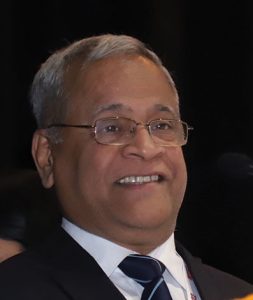
At Power Line’s 17th Annual Conference on “Power Transmission in India”, S.K. Soonee, Former and Founder CEO, Power System Operation Corporation Limited (now Grid Controller of India Limited), spoke about the evolution of the power transmission segment over the years, and the critical role of transmission infrastructure in facilitating the energy transition going forward. He also highlighted the need for a paradigm shift in the approach to transmission planning, one that prioritises long-term benefits and adaptability amidst a changing energy landscape. Edited excerpts…
The power sector faces a big challenge of facilitating the energy transition. This transition necessitates the development of technologies that can enhance resource flexibility, modify existing systems, provide energy storage capabilities and improve demand response. In this regard, transmission is crucial to support the energy transition as transmission infrastructure serves as a critical enabler, a facilitator of balancing supply and demand, and a risk mitigator. It represents a form of insurance, guaranteeing sustainable growth in the future and enabling the management of the projected scenario by 2030.
However, despite its crucial role, the power transmission segment presents a paradox. While it is considered under-utilised, there have also been concerns about over-investment in the segment. Besides, the utilisation of transmission infrastructure involves significant temporal variations as the direction of power flow fluctuates throughout the seasons. Some of the key challenges such as mitigating conflicts of interest in planning, facilitating access to the grid and addressing concerns regarding cost allocation must be addressed to ensure the optimal development and utilisation of the power transmission sector. While the rapid growth in transmission infrastructure witnessed in 2014-15 was significant, maintaining such an exceptional pace may be challenging due to the increase in baseline investment. The double digit growth rate of 15-16 per cent witnessed in the transmission segment in the past has now transitioned to a more sustainable level of 4-5 per cent.
A noteworthy initiative in the Indian transmission segment has been the separation and carving out of the network planning and service provider functions, facilitated by the establishment of Central Transmission Utility of India Limited (CTUIL), which helps mitigate potential conflicts of interest. Established as a regulated entity, CTUIL’s role is restricted to the planning of transmission infrastructure. The actual construction and operation of infrastructure is entrusted to service providers selected through a transparent competitive bidding process. This separation helps mitigate potential conflicts of interest, with CTUIL solely focusing on planning while service providers handle construction and operation through transparent competitive bidding processes.
In addition to this, the implementation of the point of connection (PoC) tariff has streamlined the calculation of transmission charges. This eliminates the previously cumbersome task of determining multiple pancaked fees. Under the PoC system, users are charged a single fee based solely on the quantity of electricity injected into or withdrawn from the grid. This approach simplifies the process and positions the transmission system as a common carrier, facilitating ease of access for all participants. Although there are challenges in achieving perfect cost allocation within the transmission system and disagreements regarding cost distribution may still arise and persist as is inevitable in any allocation system. However, the PoC tariff system eliminates the complexities associated with determining which specific line(s) a user is utilising and the associated charges, significantly simplifying the process.
 A key aspect of optimising transmission access involves determining user rights and capacity allocation. India’s experiment with general network access (GNA) represents a significant step forward. This approach acknowledges electricity as a fungible commodity, which means it is not traceable to a specific source upon entering the grid. Users inject and withdraw power at designated points, and the flow patterns are determined by the overall system dynamics.
Shifting mindsets from line-based allocation to nodal (point-based) allocation is crucial for the effective utilisation of the transmission grid rather than line flow-wise analysis focused on specific lines and their associated charges. This approach originated from attempts to introduce a market system with location-specific pricing. However, within the PoC framework, the fungible nature of electricity renders such allocation feasible.
The current focus on GNA, PoC tariffs and centralised transmission planning establishes a robust foundation for future transmission grid development. With these elements in place, the emphasis can shift towards extensive and necessary transmission infrastructure expansion. This expansion is projected to create a robust foundation over the next decade, and will contribute to the stabilisation of electricity tariffs. It will also facilitate the effective integration of a transitioning energy mix, including new generation sources and fluctuating energy demands.
Several emerging trends necessitate a paradigm shift in transmission planning. First, with the electrification of mobility and widespread adoption of electric vehicles, a robust network capable of handling the resulting increase in mobile charging loads is necessary. Second, the growing demand for hydrogen production through electrolysis plants has resulted in the creation of high-density load centres.
Effective transmission planning must account for these emerging energy hubs, particularly in major metropolitan areas. Lastly, the growing power consumption by data centres necessitates a robust transmission network to meet the increasing energy demands of urban cities. These examples highlight the dynamic nature of energy consumption patterns that require transmission infrastructure development. A temporary surplus capacity is preferable to an acute shortage that could disrupt critical services. Instances of grid congestion, such as those experienced in the southern region in 2012, underscore the critical role that well-planned transmission plays in ensuring a stable and reliable electricity grid.
Policymakers should adopt a more comprehensive approach to transmission planning, factoring in import and export capabilities to enhance grid flexibility to manage uncertainties in power generation and demand. The ideal scenario involves possessing an import capability that meets at least 70 per cent of a state’s load demand. This enables access to power from the national grid during disruptions or periods of high demand within the state. Similarly, sufficient export capacity allows surplus power to be transmitted to other regions. A national median of 72 per cent for import capability currently should serve as a benchmark for state policymakers.
Experience has shown that market-driven approaches are a poor substitute and are ineffective for transmission planning. A central planning authority can ensure coordinated development and efficient utilisation of the transmission network. The concept of transmission as a common carrier signifies that access to the grid should be governed by a neutral entity, independent of transmission line ownership, to ensure fair and non-discriminatory access for all participants.
From a long-term perspective, a high level of investments in transmission will yield benefits for future generations in managing an evolving energy landscape. As an example, Karnataka’s limited import capability of 14 per cent, at present, may pose a significant risk in case of disruptions to hydropower generation in the state. This underscores the importance of adequate import capacity for managing uncertainties. The traditional notion of aiming for high transmission line utilisation of 80-85 per cent is challenged. A network utilisation level of close to 33 per cent, taking into account the need for redundancy (n-1) and the inherent variability of renewable energy sources, is prudent as resource adequacy.
Future challenges for the transmission segment can arise from the integration of renewable energy. The large-scale integration of renewable energy sources such as solar and wind requires significant investment in interconnectivity. While the central government plans for interstate connectivity, the need for adequate intra-state connectivity to efficiently manage the fluctuating availability of renewable energy needs to be addressed. The variability necessitates robust infrastructure to switch between sources and avoid cascading effects on the grid when large amounts of renewable energy are introduced. There has been an emphasis on a long-term perspective for building an adaptable and flexible transmission network that can handle the increasing complexity and variability of a renewable-rich grid.
A robust transmission network also allows for importing power from economical sources from outside the state or region. This will allow wider access to affordable power throughout the grid. The immediate transition concern of high transmission charges for consumers will potentially wane over time due to factors like depreciation in the network over time.
These challenges demand technological advancements to optimise existing infrastructure utilisation, exploring innovative solutions such as reconfiguring existing transmission networks for improved efficiency and two-way power flow.
All major power systems worldwide, including those in developed nations, are grappling with similar challenges regarding transmission planning, development, access, and pricing in light of the energy transition and integration of renewable energy. India’s progress in addressing these challenges is being closely observed as a potential success story in navigating this complex landscape.