
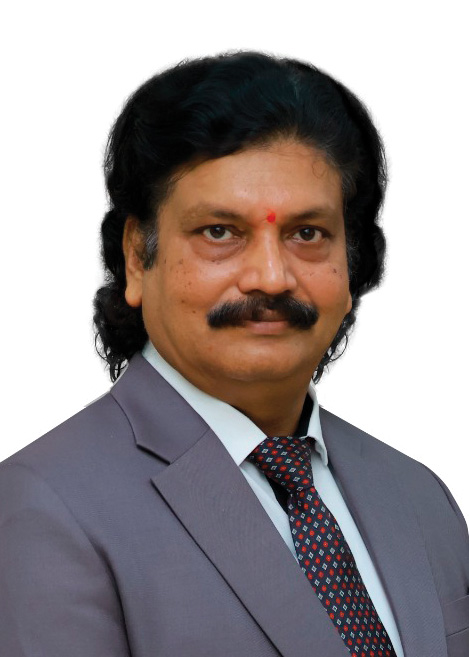
 In a recent interview with Power Line, Prasanna Kumar Motupalli, chairman and managing director, NLC India Limited spoke about the key operational and financial highlights of the company, its upcoming projects, future plans and targets, as well as the top priorities going forward. Edited excerpts…
What have been the operational and financial highlights of NLC India in the past one year or so?
We have achieved 36.32 million tonnes per annum (mtpa) of coal and lignite production, which is the lifetime highest generation achievement. The capex target for the year was overachieved, with 135 per cent of the target fixed by the government. Power generation to the tune of 25 BUs, including 2.1 BUs from renewable energy, was achieved during the past financial year, overcoming land challenges. NLCIL garnered the top three slots in the ranking of lignite-based power stations in terms of PLF in the country. All our mines have received a five-star rating from the Ministry of Coal, except Mine II, consecutively for the past three years. Mine II was constrained due to production issues relating to land acquisition challenges. We have diverted the river Paravanar for ensuring continuity of the mining process in Mine II. This has freed mining operation for the next 25 years. Many long-pending issues were settled through a scientific approach and openness. Land acquisition, which was a major risk for the Neyveli mine, was sorted out and achieved progress, notably, with the support of the Tamil Nadu government and the district administration.
What are the steps being undertaken to increase the mine output?
Mine output is the pivotal point in addressing NLCIL’s power generation target, considering the fact that most of our capacity comes from pithead projects. In our Talabira II C III coal block, in FY 2023, we achieved 10 mtpa against the target of 8 mtpa; in FY 2024 we achieved 13 mtpa against the target of 10 mtpa; and this year, we have set a target of 17 mtpa. We are constantly working to exceed our targets. The Pachwara south coal block in Jharkhand is expected to commence production by June 2024. NLCIL has for the first time won a commercial coal block, North Dadu in Jharkhand. Our aim is to reach 100 mtpa by 2030. Land was the bottleneck in the mine production enhancement area. The stalemate in land acquisition during the previous years hindered progress on that front. However, the much-required Paravanar river diversion was completed with the support of various stakeholders, paving the way for future mine operations. The critical land required for mine progression has been notified for acquisition and the required land will be offered for possession by the district administration. Once the land acquisition issues are sorted out, we envisage smooth sailing in mine production for the next 10 years.
What are some of the initiatives being taken by NLCIL to promote sustainable mining operations?
NLCIL is a 67-year-old company. Sustainability has been its lifeline since its inception. Today, the entire world is talking about sustainability and working towards the same. The company is using specialised mining equipment for mining operations. Right from addressing hydro-geological issues at Neyveli to the use of specialised mining equipment such as Bucket Wheel Excavator C Spreaders instead of conventional dozer C dumpers, NLCIL has incorporated practices that are sustainable in nature. Even before the concept of sustainability came into existence, we created artificial recharge wells and undertook continuous monitoring of the aquifer beneath the lignite seam to preserve its naturality. Instead of dozers and dumpers, which cause much of the air pollution inside mines, NLCIL is deploying huge capex-affinity SMEs and conveyor systems utilising electricity. This has largely reduced emissions within mines. For the first time in the country, we are establishing a 50 MW solar power plant in the mined-out land. Studies are also under way for filling mine voids with fly ash from thermal power plants (TPPs) near mines. We have also appointed an agency for studying the feasibility of establishing a pumped storage hydro plant in mined-out land.
What are NLC India’s upcoming power plants? What is the scheduled commissioning timeline?
As of date, we have 4.5 GW of power generation capacity, and we aim to reach 11 GW by 2030. Equal importance is being given by NLCIL for capacity addition from thermal and renewable sources. Our 2 GW Ghatampur thermal power project will be commissioned shortly. The 3.2 GW NLC Talabira Thermal Power Project, a pithead plant on the Talabira II C III mine, is expected to be commissioned in FY 2029. The prime minister has laid the foundation stone for Phase I (2.4 GW) of this project. The engineering, procurement and construction contract for Phase I has been awarded and the timeline for commissioning the project is 2029-30. Land acquisition is under way and all statutory clearances are in place. We are also working on establishing a pithead TPP at Neyveli, named Thermal Power Station II (second expansion) project. This will be India’s first lignite-based supercritical TPP of 1,320 MW capacity. The land is in possession, all statutory clearances are in place and the power purchase agreement has been executed for the entire capacity. In addition to this, we will take up projects as and when the market opportunity arises.
What are your plans in the renewable energy segment?
NLCIL was the early bird in the renewable energy sector with 1.4 GW capacity as on date. We were the first CPSU to reach 1 GW solar capacity in the country. India aims to triple its renewable energy capacity by 2030; however, we are aiming to increase the capacity by four times. NLCIL strongly believes in the potential and opportunity that renewable energy offers. Our renewable energy target for 2030 is 6 GW and in addition, we have various initiatives and projects that support the government’s green energy goals. NLCIL is establishing 510 MW of solar project capacity under the CPSU scheme with viability gap funding. The projects include a 10 MW solar project in Neyveli, a 300 MW solar project at Barsingsar and a 200 MW solar project in Gujarat for supply of power to Telangana. In addition to these, we are developing a 600 MW solar project at the Khavda Solar Park for power supply to Gujarat. The site has good solar radiation and can achieve a capacity utilisation factor of more than 30 per cent. Bifacial modules are planned to be deployed for achieving better generation. In addition, we are developing an 810 MW solar project in Pugal Solar Park, Bikaner district, Rajasthan. This location also has good solar radiation, resulting in better generation. This financial year, we will commission the 300 MW Barsingsar Solar Project, the 200 MW CPSU project, and a 150 MW wind-solar hybrid project. Next financial year, we will commission the 600 MW Khavda Solar Project and the 810 MW Pugal Solar Project. Action is also under way for developing the 1,000 MW Assam Solar Project.
 What are NLC India’s future plans?
We have an aggressive expansion plan. From 6 GW, we aim to be a 17 GW power generation and 100 mtpa mining company by 2030, with diversified operations including lignite, methanol, green hydrogen and pumped storage. All these initiatives will require investments to the tune of Rs 1,000 billion by 2030 – Rs 120 billion for mining projects, Rs 480 billion for thermal projects and Rs 250 billion for renewable projects; thermal and mining projects will be in a 70:30 D/E ratio and renewable energy projects in an 80:20 D/E ratio. This will entail an equity requirement of Rs 200 billion-Rs 250 billion over the next few years. This is expected to be funded through internal resources. NLCIL has established a grid-scale battery energy storage system (BESS) of 20 MW SPP with 8 MWhr BESS at the Andamans, offsetting diesel-based power generation on the island. We are also establishing a 0.4 mtpa lignite-to-methanol project and a green hydrogen project at Neyveli, to be completed by next financial year. In addition to other renewable energy projects, we are moving ahead with such enabling initiatives. NLCIL has set a capex target of about Rs 970 billion till 2030, taking into account all the projects in the pipeline.
What are your top priorities for NLC India for the next few years?
Sustainability and renewable energy capacity addition are our priorities. My topmost priority for NLCIL is to ensure timely completion of projects that have been won/awarded during the past one year. Commissioning of about 2 GW of renewable capacity and 5 GW of thermal capacity at the earliest is of importance. Although there are challenges, these need to be sorted out through a positive approach. Making our new initiatives such as green hydrogen and lignite-to-methanol projects successful is equally important. I see these projects as enablers in NLCIL reaching the net-zero target.