
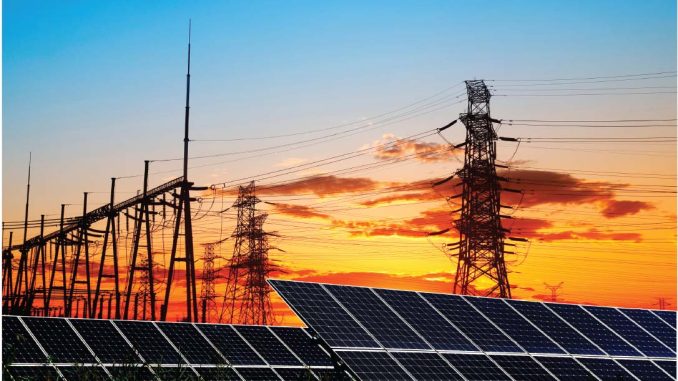
India’s energy landscape is undergoing a significant transformation, driven by a robust increase in power demand and a strong push towards renewable energy sources. In response to this growing demand, the thermal power sector has seen improvements in plant load factors (PLFs) and announcements for new capacity additions, with plans for an additional 80 GW of thermal capacity over the coming years. The distribution sector is also witnessing reforms, marked by reduced losses and improved financial health, although challenges such as inadequate tariff hikes and operational efficiencies remain. As India advances towards its renewable energy goals, the integration of energy storage solutions, the development of green hydrogen initiatives and a renewed focus on nuclear power are shaping the future of the nation’s energy strategy.
Growing power demand
The past twelve months saw the country’s power demand rise rapidly. In 2023-24, the demand grew at 8 per cent (over the previous year) and was recorded at 1,626 BUs, and peak power demand increased by 13 per cent to reach 243 GW. This growth trend has continued in 2024-25. Notably, on May 30, 2024, the country met the highest-ever peak demand of 250 GW. Further, in the first quarter of 2024-25 (April to June), power demand in the country was recorded at 452 BUs, marking an increase of nearly 11 per cent over the corresponding period of the previous year.
The increasing power demand is driven by several factors such as hot weather, resilient economic activity, higher penetration of residential end-use appliances, manufacturing growth and the emergence of new power use cases such as data centres, electric vehicles and hydrogen. These growth drivers are expected to continue increasing the country’s power demand in the coming years. Recently, the Union Minister for Power announced the revised peak power demand estimate of 458 by 2032. This new estimate is nearly 20 per cent higher than the previously projected peak demand of 384 GW by 2032.
Thermal PLF improves, new projects announced
In 2023-24, the all-India thermal plant load factor (PLF) was recorded at 69.09 per cent, increasing from 63.95 per cent in the previous year. In the first four months of 2024-25 (April to July), the thermal PLF was even higher at 73.62 per cent, as against the PLF of 68.15 per cent in the corresponding period of the previous year. Concurrently, on the power generation front, in 2023-24, thermal power generation grew by 9 per cent over the previous year, while in 2024-25 (up to August), the power generation grew by nearly 8 per cent. The increase in power generation and the PLF of thermal power plants (TPPs) in the country is being driven by the growing power demand and limited thermal capacity addition in recent years.
To meet the growing demand, reliance on TPPs is expected to continue, and the segment will see the commissioning of new thermal capacity. As per official estimates, thermal capacity additions of 80 GW are projected in the segment. Around 30 GW is currently under construction and is expected to be commissioned in the next four to five years. Meanwhile, another 50-60 GW of capacity is expected, primarily from brownfield projects, along with a few greenfield projects. In line with this, several key equipment orders have been placed during the past couple of months. Damodar Valley Corporation, NTPC Limited, NLC India Limited and Adani Power Limited have awarded contracts to Bharat Heavy Electricals Limited for setting up TPPs.
While capacity additions are under way in the thermal power segment, the focus on reducing emissions and dependence on imported coal remains. Developers are prioritising emissions control and biomass cofiring initiatives, as well as adopting supercritical technologies for new plants.
Discom reforms show results, but concerns remain
The power distribution sector has registered a significant improvement in operational performance, marked by a decline in aggregate technical and commercial (AT&C) losses to 15.4 per cent in FY 2023 and improvements in billing efficiency to 87 per cent, while collection efficiency remained high at 97.3 per cent.
Notably, initiatives under the Rs 3 trillion Revamped Distribution Sector Scheme (RDSS) aimed at loss reduction and smart metering have been instrumental in driving improvements in the segment. As per the RDSS dashboard accessed on September 30, 2024, under the scheme, a total of Rs 1.13 trillion has been sanctioned so far, of which Rs 168 billion has been released. Since its launch, the RDSS has been facilitating the installation of smart meters. As of September 30, 2024, a total of 222 million smart consumer meters have been sanctioned, of which 14 million meters have been installed. In 2023-24, nearly 4.6 million smart consumer meters were installed, three times the number installed in the previous year. The pace of smart meter installations in the segment is expected to accelerate further, with rapid installation expected in the coming months. Smart meters are expected to plug in the gaps in the system, reduce AT&C losses and address network concerns.
Additionally, the introduction of the late payment surcharge (LPS) rules has successfully instilled payment discipline among discoms. Some discoms have already settled their past dues and several others are expected to do so in the next year or so. As per the PRAAPTI portal accessed on September 30, 2024, the overdue amount till date stood at Rs 416 billion (including Rs 213 billion before the trigger date and Rs 8 billion after the trigger date). In addition, the LPS rules have led to a reduction in payables to generation and transmission companies, with days payable reduced to 126 days and days receivable reduced to 119 days.
Despite these initiatives, the segment continues to face several challenges requiring intervention, especially regarding the cost of power supply. The tariff hike across states remains modest, with a median rise of 1.8 per cent FY 2025, lower than the 2.5 per cent approved for FY 2024. The power purchase cost (PPC) approved for FY 2025 in the tariff orders is lower than the actual PPC for discoms in FY 2023. The gap between the average cost of supply and the average revenue realisation per unit of power sold by state-owned discoms continues to be high at 73 paise per unit in FY 2023, with the gap being well above the national average in Uttar Pradesh, Maharashtra, Telangana and Tamil Nadu.
While concerns regarding the operational and financial performance of discoms remain, these utilities must also adapt their operations to meet new customer requirements and changes in the energy systems. This includes higher load growth, rising green energy in the grid, roll-out of rooftop solar and electric vehicles, and the anticipated competition in supply over the next few years.
Transmission infrastructure expansion continues
The country’s power transmission infrastructure is growing rapidly to meet the increasing power demand and ensure adequate evacuation infrastructure for power generation plants. In 2023-24, transformation capacity of 70,728 MVA and transmission line length of 14,203 ckt km was added. While India has one of the largest synchronous electricity grids in the world and has seen rapid expansion of the transmission network in the past, the pace of network additions must accelerate to meet the country’s energy needs.
As per the recent announcement by the Union Minister for Power, the new National Electricity Plan for central and state transmission systems aims to meet a peak demand of 458 GW by 2032. Under the plan, transmission networks (220 kV and above) in the country will be expanded from 485,000 ckt km in 2024 to 648,000 ckt km in 2032. During the same period, the transformation capacity will increase from 1,251 GVA to 2,342 GVA. Additionally, nine high voltage direct current (HVDC) lines with a capacity of 33.25 GW will be added, complementing the 33.5 GW currently in operation. With this, the inter-regional transfer capacity will increase from 119 GW to 168 GW. The total cost under the plan is estimated at Rs 9.15 trillion, which will help meet the increasing electricity demand and facilitate the integration of renewable energy and green hydrogen into the grid.
With the growing renewable energy integration, the needs and requirements of the transmission network are evolving, requiring attention. HVDC is expected to play a key role in green energy evacuation corridors, while the deployment of static synchronous compensators will be vital for voltage stability. Further, the use of advanced and digital technologies for network management and the effective maintenance and monitoring of assets will be crucial as the sector gears up for greater renewable energy integration.
Renewables flourish
The pace of capacity additions in the renewables segment is growing rapidly. As of August 2024, the country’s renewable energy capacity stood at 152,654 MW, representing 34 per cent of the country’s generation mix. Notably, FY 2024 saw the highest-ever renewable energy capacity addition of 18.5 GW, of which nearly 80 per cent (around 15.2 GW) was in the solar power segment. Building on the momentum, between April and August 2024, India added 7,618.36 MW of solar capacity.
In the solar power segment, capacity addition is being driven by the favourable policy framework and economic factors. The announcement of an annual bidding trajectory of 50 GW by nodal agencies, along with green energy open access rules and innovation tenders – including those for hybrid, round-the-clock and firm and despatchable renewable energy – have been facilitating the expansion of the segment. Particularly in FY 2024, exemption from the Approved List of Models and Manufacturers till March 2024, which allows developers to use imported PV modules for projects commissioned till March 31, 2024, also led to the expeditious completion of solar power projects. Regarding solar tariffs, auctions in the past twelve months saw tariffs stabilising to Rs 2.48-Rs 2.68 per unit, from the high of Rs 2.9 per kWh in early 2023.
While utility-scale solar projects have largely dominated the market, recent policies are significantly boosting the rooftop solar segment. The launch of the PM Surya Ghar: Muft Bijli Yojana in February 2024 aims to install rooftop solar systems in 10 million households, offering generous subsidies of Rs 30,000 per kW for up to 2 kW and Rs 18,000 per kW for additional capacity up to 3 kW. The scheme has generated a remarkable response, with more than 12.8 million registrations and over 1.4 million applications received so far.
In the wind energy segment, 3,253 MW of capacity was added in FY 2024, registering an increase of nearly 40 per cent over the previous year. In addition, the segment is also witnessing increasing policy interventions as well as technological advancements, which are expected to increase capacity additions in the segment. In December 2023, the Ministry of New and Renewable Energy (MNRE) introduced the repowering policy, which is expected to encourage the replacement of older turbines with more efficient models. Moreover, with technological advancements, 3x and 5x capacity turbine models are now available in the market. The government is also working to tap the off-shore wind energy segment, which has an estimated potential of over 70 GW. The introduction of the Viability Gap Funding program, which has an allocation of Rs 74.53 billion, is a significant move toward this goal. This initiative aims to facilitate the installation of 1 GW of offshore wind projects, specifically 500 MW each along the coasts of Gujarat and Tamil Nadu.
Growing focus on energy storage
As India progresses towards increasing renewable energy integration into the grid, it is crucial to augment the energy storage system. For large-scale energy storage, pumped battery energy storage systems and battery energy storage systems (BESSs) are gaining rapid traction, witnessing increasing tendering and investment activity. As per Power Line Research, 80 GWh of energy storage tender capacity has been floated till August 2024, which includes 14 GWh of battery storage, 51 GWh of pumped storage plants (PSPs) and 15 GWh of technology-agnostic capacity.
In the BESS segment, the winning bids in recent tenders for standalone/co-located BESS have been promising. In 2024, the tariff discovered under these tenders ranged from Rs 4.6-Rs 3.41 per kWh. The price discovery of Rs 3.41 per unit under Solar Energy Corporation of India Limited’s (SECI) tender for 1,200 MW solar with 1,200 MWh BESS demonstrates the growing competitiveness of solar with BESS. This price discovery matches, and in some cases surpasses, the recent price discoveries from plain vanilla and renewable hybrid tenders. It also reflects a discount of nearly Re 1 when compared with peak power tenders. This was the first solar + BESS tender under the build, own, operate mode to be successful so far.
In the pumped storage segment, due to a series of policy interventions including the release of guidelines for PSPs, waiver of transmission charges, acceleration of detailed project report approvals, and issuance of energy storage obligations, there is increasing developer confidence, with many large projects being undertaken by central public sector undertakings, state gencos and large private energy players. Notably, as per Power Line Research, there is a substantial upcoming pipeline of PSP projects in India, with over 200 PSPs at various stages, totalling a capacity of 229 GW, slated for commissioning by 2032.
Green hydrogen impetus
Since the launch of the National Green Hydrogen Mission, India has implemented various policies and guidelines to establish itself as a green hydrogen hub. Key initiatives include guidelines from the MNRE for pilot projects in mobility, steel and shipping, as well as green hydrogen testing facilities. The sector is witnessing significant tender activity. In August 2024, SECI issued tenders for green hydrogen hubs with a budget of Rs 2 billion. In July 2024, it launched a tender for 450,000 metric tonnes per annum (mtpa) of green hydrogen capacity, divided into technology-agnostic (410,000 mtpa) and biomass-based (40,000 mtpa) pathways under the Strategic Interventions for Green Hydrogen Transition Programme. In June 2024, SECI released a tender for green ammonia production through cost-based competitive bidding. In March 2024, it issued a tender for 1,500 MW of electrolyser manufacturing capacity, attracting bids for 2,847 MW from 23 companies. Major players such as Adani Enterprises, Avaada Electrolyser, Newage Green Electro and Waaree Energies emerged as successful bidders under the tender.
Despite the significant potential for green hydrogen to decarbonise industrial sectors and strong policy support, challenges remain. Key issues include high production costs, inadequate infrastructure for storage and distribution, the need for further technological advancements and insufficient funding for green hydrogen projects.
Nuclear gets attention
As the country intensifies its efforts to meet energy transition targets, the nuclear power segment – recognised as one of the cleanest technologies with the capabilities to meet baseload power demands – is gaining attention. In March 2024, Nuclear Power Corporation of India Limited (NPCIL) commissioned the 1,400 MW Kakrapar Atomic Power Project Units 3 and 4 in Surat, Gujarat. These pressurised heavy water reactors (700 MW each) were indigenously designed, constructed and commissioned, and are India’s first indigenously developed nuclear power reactors. In another development, in September 2024, the central government approved the establishment of Anushakti Vidhyut Nigam Limited, a joint venture between NPCIL and NTPC Limited, allowing it to build, own and operate nuclear power plants in India. The government granted exemptions to NPCIL for investments over Rs 5 billion and to NTPC for investments over Rs 50 billion in this joint venture. This move is aimed at enhancing financing to enable the rapid expansion of nuclear power capacity in India.
In order to promote the development of small and modular nuclear reactors, in Union Budget 2024-25, the finance minister announced that the government will collaborate with the private sector to establish and undertake research and development, as well as explore new nuclear energy technologies for these reactors. For the first time, the central government is expected to invite private investment of approximately $26 billion in its nuclear energy sector. Reliance Industries Limited, Tata Power Company Limited, Adani Power Limited and Vedanta Limited are among the private companies reportedly in discussions to invest around Rs 440 billion each ($5.3 billion) in the sector. Regarding the operating model, it is expected that while private companies will invest, acquire land and water, and undertake construction outside the reactor complex, the rights to build the reactors, run the stations and manage fuel will remain with NPCIL.
Share of short-term power trading increases
The share of short-term power trading in the country’s total power consumption has been steadily increasing and was recorded at about 15 per cent in 2023-24. Policy measures introduced in the segment include the market-based economic dispatch mechanism and green open access rules, along with an increased focus on green trading segments and the real-time market, have been driving growth in the segment. While concerns regarding the price volatility in the spot market remain, the segment is poised for further growth going forward. With the increase in the integration of rooftop solar, battery storage and electric vehicles into the grid, newer avenues for power trading are set to emerge. Moreover, the Central Electricity Regulatory Commission has initiated the process of market coupling to enhance the efficiency and transparency of the electricity market. This is expected to facilitate efficient price discovery, increase competition and promote optimum resource utilisation, resulting in the further deepening of electricity markets in the country.
Conclusion
India’s energy sector is at a critical juncture, marked by rising power demand and a concerted effort to transition to a sustainable energy future. Embracing diverse energy solutions will not only enable meeting the immediate power demand but also pave the way for a more resilient and environmentally friendly energy landscape. As the country continues to navigate these complexities, the successful implementation of policies and investments, along with the addressing of legacy issues and concerns, will be crucial for achieving the long-term energy goals and fostering economic growth.
Priyanka Kwatra