
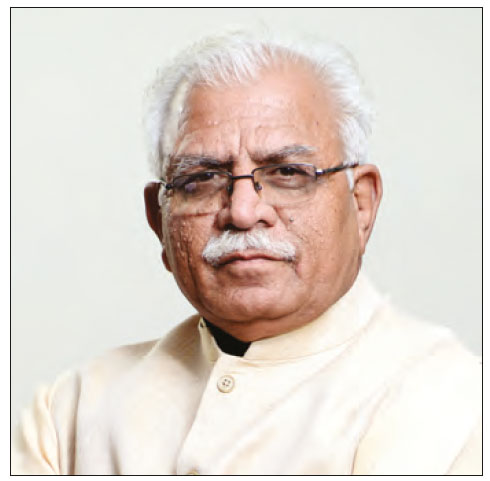
 Manohar Lal Khattar, Union Minister of Power, outlined the government’s strategic priorities and plans at a recent sector event. He spoke about key initiatives of the Ministry of Power (MoP), including the development of the National Electricity Plan (Transmission) for 2023-32, and highlighted the government’s commitment to meeting the country’s energy needs while steering it towards a sustainable and green future. Edited excerpts…
With the new government taking charge all government departments and ministries collectively agreed on the tasks to be completed in the next 100 days, how to advance the projects that are already in the pipeline and the new initiatives to be launched. In this direction, the MoP set out clear goals and made significant contributions towards achieving them.
The MoP has implemented several measures to achieve these objectives. A key initiative is the preparation of the National Electricity Plan for 2023-32, a comprehensive 10-year road map crucial for advancing future strategies. This plan, which serves as the foundation for achieving the country’s energy goals, is set to be officially launched within the next 15 days. A notable aspect of the plan is the projected peak demand, which is expected to reach approximately 425 GW by 2030, with a target of 458 GW by 2032.
The transmission network is set to be further strengthened, with transmission lines expanding from 485,000 ckt km in 2024 to 648,000 ckt km by 2032. Transformation capacity is also expected to increase from 1,251 GVA in 2024 to 2,342 GVA by 2032. The plan includes the addition of nine high voltage direct current (HVDC) lines with a capacity of 33.25 GW, doubling the current 33.5 GW HVDC capacity. Similarly, the interregional transfer capacity is planned to be increased from 119 GW to 168 GW by 2030. The total cost of this plan is Rs 9.15 trillion, representing a substantial financial investment and a critical step towards enhancing the country’s energy security and sustainability. This plan aims to meet the growing electricity demand, support renewable energy integration and accommodate green hydrogen loads into the grid.
An important initiative focuses on variable renewable energy, aiming to increase the capacity of the interstate transmission system from 280 GW in 2024 to 335 GW by 2030. Currently, the capacity stands at 42 GW, with 85 GW under construction and 75 GW in the pipeline. The estimated cost of this project is Rs 606.76 billion.
Efforts are also under way to bring electricity to remote areas of the country, especially to the Particularly Vulnerable Tribal Groups (PVTGs). Under the prime minister’s schemes, 83,596 PVTG households have already been electrified out of the total target of 124,000 households. The remaining households will soon be connected to the grid.
Additionally, of the 80,631 agricultural feeders, 49,512 feeders, where the agricultural load is more than 30 per cent, have already been segregated. The segregation of the remaining 31,119 feasible feeders has been sanctioned to provide reliable daytime power supply to farmers.
Significant progress has been made in the development of electric vehicle (EV) charging infrastructure, with comprehensive guidelines issued to establish a robust network of charging stations supporting the growing adoption of EVs. Currently, there are 34,000 EV charging stations, with a target to expand this number to 100,000 by 2030.
In the hydropower segment, India has identified a total potential of 184 GW for pumped storage projects (PSPs). At present, 4.7 GW of this potential has been installed, with 6.47 GW under construction. Additionally, 60 GW is under survey and investigation, with the goal of achieving the full 184 GW potential. PSP hydro is seen as a key contributor to the renewable energy transformation.
A policy has been established under the Central Financial Assistance Scheme to target potential hydel projects, particularly in the north-eastern states, which often lack financial resources. Under the scheme, the central government will provide equity assistance of up to 24 per cent of the project equity, with a maximum of Rs 7.5 billion per project, to encourage participation from these states. The implementation period is from 2024-25 to 2031-32, with a total cost of Rs 41.36 billion. Several projects have already been identified for assistance.
Support has also been provided for the development of roads and bridges connected to hydro projects and PSPs. However, further efforts are needed in more remote areas, including the construction of transmission lines, powerhouses and communication systems, which are essential for expanding hydro capacity. Plans are in place for 31 GW of hydroelectric production, including 15 GW from PSPs.
Further, the 669 MW Lower Arun hydroelectric project in Nepal has now been approved by the Government of India. The project cost is Rs 57.92 billion, with an implementation period of 60 months.
On the energy efficiency front, the Perform, Achieve and Trade scheme has been successfully implemented to enhance energy efficiency, particularly for industrial consumers. The scheme has been completed, and India’s carbon markets will function within this framework. Trading certificates will be officialised in the voluntary sector starting from April 2026, while the mandatory sector will come into effect in October 2026.
Overall, while India aggressively pursues its energy transition goals, ensuring energy security remains paramount. To meet the peak demand and baseload requirements of a rapidly expanding economy, the MoP has prioritised thermal capacity addition. Currently, the total thermal capacity – coal and lignite based – stands at 217 GW. An additional 28.4 GW capacity is under construction, with 14 GW expected to be commissioned by 2024-25. Further, 58.4 GW is at various stages of planning, statutory clearances and bidding. In the past 100 days, the ministry has awarded 12.8 GW of new coal-based thermal capacity.
While efforts continue to increase renewable energy capacity, maintaining the use of thermal power plants is necessary to meet immediate energy needs. Achieving net zero carbon emissions remains a priority, which will be accomplished by scaling up renewable energy capacity and reducing dependence on thermal energy. The targets set for 2030 are within reach, with all goals met so far.
CSIRT
Power and communication are the country’s lifelines, and the need for their continuous 24×7 availability cannot be overstated. Ensuring the security of projects and assets in the power sector has become a critical concern. Security has multiple dimensions, and today, cybersecurity is of utmost importance as the entire system is interconnected through online communication.
In the past, various agencies and individuals, both domestic and international, have attempted to disrupt the operations of essential projects and weaken national infrastructure. The devastating impact of cyberattacks has already been witnessed, such as the collapse of AIIMS Delhi’s communication system in November 2022, which disrupted patient services for nearly seven days.
Communication systems are now virtually connected across the country and internationally, increasing their vulnerability to cyber threats. Therefore, it is crucial to find ways to safeguard
these services.
The MoP is leading this initiative, with the successful inauguration of the Cybersecurity Incident Response Team (CSIRT) for the power sector,. A dedicated technical team will ensure the continued security of the system. Vigilant monitoring will be conducted to prevent any external threats, as any vulnerability could have severe consequences. The team will work diligently at both the state and central levels to provide comprehensive security.
Safeguarding the power generation, transmission and renewable energy sectors from cyberattacks Will help maintain the strength and resilience of the power sector across all states. This commitment will contribute to national progress.
India is making significant strides towards becoming a developed nation by 2047. Ambitious milestones have been set, and confidence remains high that the country will continue advancing at this remarkable pace, achieving its targets.