
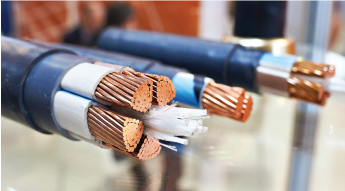
The cables and conductors sector is experiencing rapid technological transformation. These components are critical for transmitting electricity and data, making them fundamental to modern infrastructure. As demand for power and data grows, innovations in this sector aim to enhance efficiency, reliability and sustainability. The Central Electricity Authority’s National Electricity Plan (NEP) Volume II (Transmission) for India outlines an ambitious strategy for expanding the transmission system. Between 2022-23 and 2031-32, over 191,000 ckt km of transmission lines and 1,270 GVA of transformation capacity are planned at 220 kV and higher voltage levels. These expansions aim to accommodate the growing energy demand and integrate renewable energy sources into the grid.
The segment is also expected to see significant technology innovations in the next few years. The NEP projects the addition of 33 GW of high voltage direct current (HVDC) bipole links to enhance long-distance power transmission. Interregional transmission capacity is projected to increase to 143 GW by 2027 and further to 168 GW by 2032, compared to the current 119 GW.
Several ambitious projects are expected to come up over the next few years, which will necessitate more specialised, tailor-made cabling solutions. A key project is the Green Energy Corridor Phase II interstate transmission system project for the evacuation of 13 GW of renewable energy from Ladakh. It is targeted to be set up by 2029-30 at a total estimated cost of Rs 207.73 billion. The project will entail setting up 713 km of transmission lines (including 480 km of of HVDC lines) and a 5 GW HVDC terminal each at Pang (Ladakh) and Kaithal (Haryana). Another major upcoming project is the proposal to connect the Andaman & Nicobar Islands to mainland India via HVDC undersea cables. This ±320 kV, 250 MW HVDC system will span 1,150 km undersea, and represents a pioneering effort in the region. The estimated cost of this project is Rs 151.2 billion.
Going forward, with the rising focus on long-distance power transmission projects and India’s HVDC transmission systems market expected to reach a significant size in the coming years, the industry is expected to witness strong demand for specialised HVDC cables from manufacturers within the country.
HVDC cables
HVDC systems are critical assets within high voltage electricity transmission networks. Their availability is, therefore, considered essential. Extruded HVDC cables and systems have seen significant development in recent years. These cables are insulated using cross-linked polyethylene (XLPE) as an alternative to oil-or mass-impregnated cables. Voltage levels in the range of 320-640 kV are now available, and as suppliers and transmission service operators gain operational experience, the maturity and technology readiness levels continue to increase.
HPC and HTLS conductors
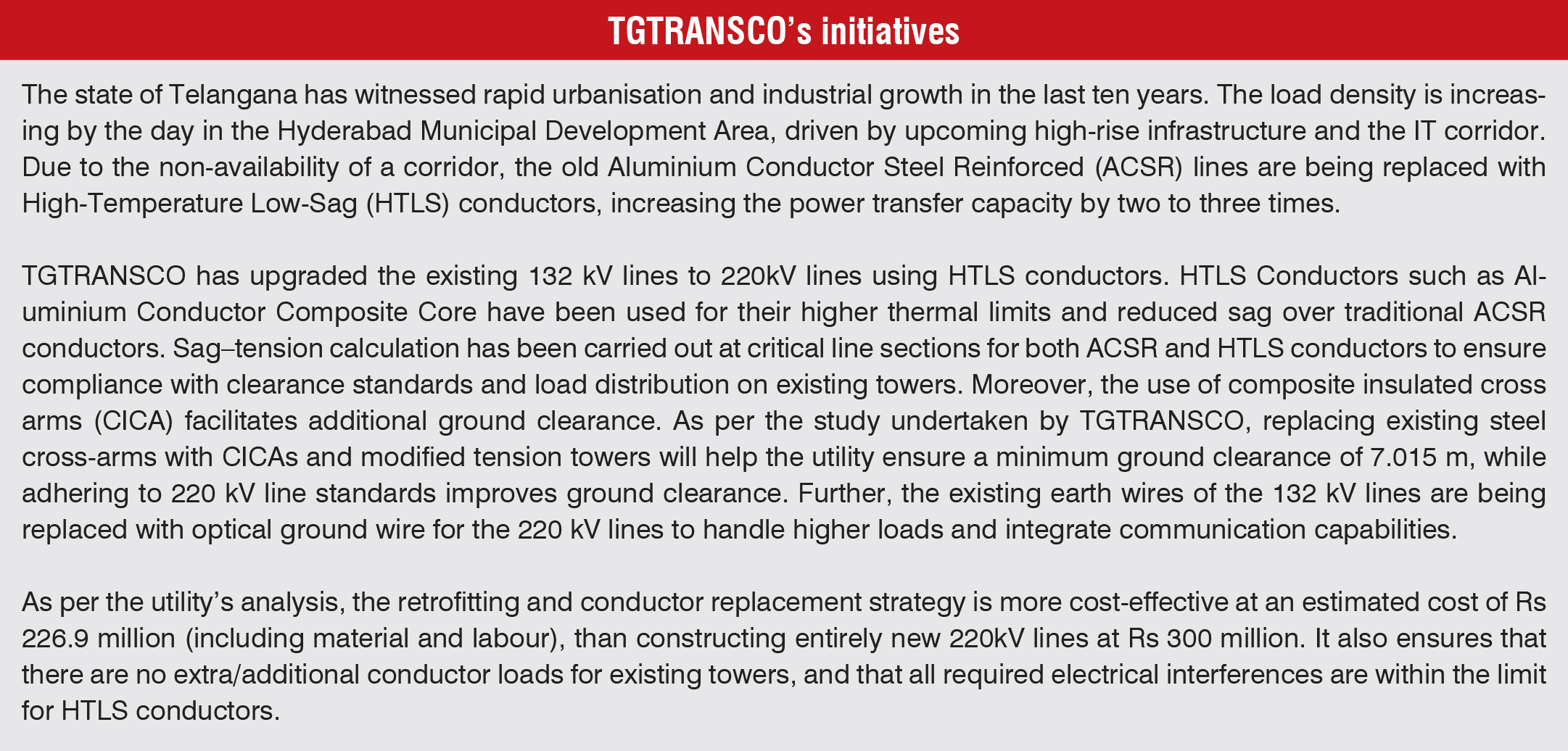
The industry is increasingly turning to advanced conductors such as high temperature lowsag (HTLS) conductors, which can carry more current at higher operating temperatures without significant sag. By upgrading transmission voltages to the next level and replacing existing conventional conductors with HTLS conductors, the power transfer capacity of transmission lines can increase significantly. This capability allows for the reconductoring of ageing transmission lines to boost capacity without requiring new infrastructure, saving both time and costs.
HTLS conductors have high temperature resistance and greater ampacity compared to conventional conductors. They can withstand temperatures of at least 150 °C and up to 250 °C. HTLS conductors can be deployed at the 220 kV, 132 kV and 66 kV levels, as well as in a distribution system where there is congestion, such as in urban areas, and where space is unavailable for the addition of new overhead lines. HTLS conductors can be deployed in new transmission lines as well as for reconductoring existing lines.
Aluminium conductor composite core, aluminium conductor steel reinforced, aluminium conductor composite material and thermal resistant aluminium conductor steel reinforced are high performance conductors that utilities deploy for reconductoring overhead power lines. This is the process of replacing existing conductors with the aim of increasing load capacity and/or improving efficiency while maintaining the same infrastructure. This becomes necessary either when old conductors become obsolete or their maintenance becomes excessively costly, or to improve energy losses when the old overhead line can no longer handle the required capacity. This allows for the installation of more efficient conductors without increasing the number of poles or modifying them. Due to their lightness and strength, these conductors allow for increased energy transmission capacity on old overhead lines without the need to modify existing structures, thereby reducing installation time and costs.
Solar cables
Solar cables connect various components of solar power systems, including panels, inverters and batteries, ensuring efficient energy transfer. Solar DC cables are specifically designed for low voltage applications and are preinstalled in solar panels. On the other hand, solar AC cables handle higher voltages and are used to connect inverters to the grid. The distinction between these cable types is critical for optimising energy flow within solar power systems. They can be single-core with double insulation or twin-core cables. AC cables then connect solar inverters to the grid.
EHV XLPE cables
Extrahigh voltage (EHV) XLPE cables are increasingly used in urban areas to overcome right-of-way (RoW) issues and land unavailability, particularly in densely populated urban areas. Manufacturing facilities for XLPE cables up to the 400 kV levels are available in the country. Utilities are also adopting XLPE cables for their superior thermal resistance, enhanced current-carrying capacity and durability. These cables are particularly suited to urban environments where space constraints make overhead transmission challenging. However, their technical limitations, such as vulnerability at joint and termination points, have spurred interest in alternatives such as gas-insulated lines (GIL) for high-power, short-length applications.
OPGW cables
Higher fibre count aluminium-clad stainless steel tube optical ground wire (OPGW) solutions are gaining traction. These conductors do not require customers to change their tower designs for 220 kV and 400 kV lines. The cables feature a dual-layer design with steel tubes and high-strain steel wires, along with an aluminium layer to support high fault rating current values.
 GIL
GIL
GIL technology is an emerging alternative to conventional cables and overhead lines, particularly in high-current, short-length applications. These lines are insulated with gas instead of traditional materials, offering increased safety and efficiency. GILs are designed for maximum operational temperatures based on surrounding conditions – up to
60-70 °C when deployed within a tunnel, or 40-50 °C when directly buried. They can support maximum temperatures of up to 100-120 °C without demonstrating any symptoms of thermal ageing.
Conclusion
The cables industry is embracing sustainable practices by incorporating materials such as biodegradable polymers, recycled metals and low-toxicity insulation compounds. These advancements not only reduce environmental impact but also align with global sustainability goals. However, challenges such as higher costs and limited material availability remain barriers to widespread adoption.
The cables and conductors sector is evolving rapidly to meet the challenges of modern energy and data demands. From advanced conductors and smart cables to environmentally friendly materials and innovative transmission solutions, these technologies are paving the way for a more efficient, sustainable future. By fostering synergies between different innovations, such as combining smart cable capabilities with eco-friendly materials, the industry can deliver reliable solutions to drive global progress.