
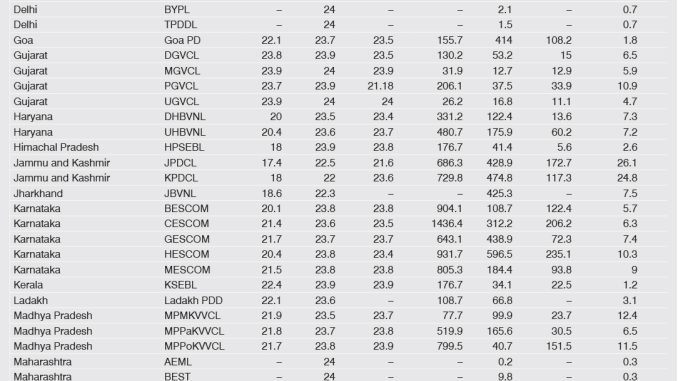
A resilient power network is critical for meeting India’s increasing electricity demand and rising consumer expectations. As electricity consumption increases, ensuring reliable, high-quality and uninterrupted power supply is essential. This entails modernising the infrastructure to accommodate demand growth, enhance power quality and reduce system losses.
Power utilities in India are undergoing a transformation. The evolving energy landscape and emerging consumer demands are driving the adoption of advanced business models. Distribution companies are preparing to accommodate rising load growth, integrate more renewable energy into the grid, expand rooftop solar and electric vehicle (EV) penetration, upgrade network infrastructure and enhance consumer engagement. In addition to these advancements, maintaining power quality is paramount to ensure grid stability and consumer satisfaction.
With the increasing reliance on sensitive electronic devices and renewable energy sources, maintaining high power quality has become even more important. Power quality encompasses various factors such as voltage stability, frequency consistency, waveform distortion and the absence of transients or interruptions.
Need for power quality
The increasing dependence on electrical and electronic systems that are sensitive to power disturbances has underscored the need for power quality. Poor power quality can lead to significant issues, including equipment damage, operational disruptions, energy losses, economic setbacks and challenges in renewable energy integration. Voltage surges, sags and transients can damage sensitive equipment such as computers, medical devices and industrial machinery. Power interruptions or inconsistencies can halt manufacturing processes, disrupt data centres and affect critical operations. Harmonic distortions and low power factors can lead to increased energy losses, reducing overall system efficiency. Poor power quality also results in higher maintenance costs, frequent equipment replacements and production losses.
Furthermore, the integration of renewable energy sources such as solar and wind introduces variability and potential disturbances to the grid, making robust power quality management essential. Further, increased EV penetration is also expected to impact power networks in the next few years. Depending on user charging profiles or modes, harmonic levels can increase to extreme levels, increasing grid stress.
The impact of power quality issues spans multiple sectors. For power utilities, poor power quality translates to customer dissatisfaction, regulatory penalties and increased operational costs. In the industrial sector, poor power quality can disrupt processes, reduce the lifespan of machinery and lead to financial losses due to production downtime. In the commercial sector, data centres and office buildings may experience data loss, server outages and performance degradation due to voltage sags or interruptions. In residential settings, home appliances and personal devices, relying increasingly on steady, high-quality power, face risks of malfunctions and early failures.
Factors impacting power quality
Power quality significantly affects the efficiency, reliability and lifespan of electrical equipment. Various factors contribute to power quality issues, each with distinct characteristics and impacts. Voltage levels are critical to the seamless operation of electrical devices. Most devices are designed to function within a specific voltage range, and deviations from this range can cause significant issues.
Unbalanced voltage occurs when the three phases in a power system have different magnitudes, leading to asymmetrical waveforms. This imbalance can result from unbalanced loads, faulty connections or phase-to-ground faults.
Voltage sags and swells are another common issue. Voltage sags refer to temporary dips in voltage due to sudden load increases, grid disturbances or system faults. This can lead to equipment malfunctions or operational disruptions. Voltage swells are temporary increases in voltage caused by load changes or fault clearance, which can harm sensitive electronics over time.
Electrical interference occurs when electrical noise from other systems or power lines mixes with the power signal. This can degrade the performance of sensitive equipment, leading to operational inefficiencies and errors. Proper grounding of electrical systems helps stabilise voltage levels, reduce noise and prevent electrostatic shocks.
Power factor, a measure of energy efficiency, is another critical factor. A low power factor indicates wasted energy, increasing strain on electrical systems and the likelihood of equipment failure.
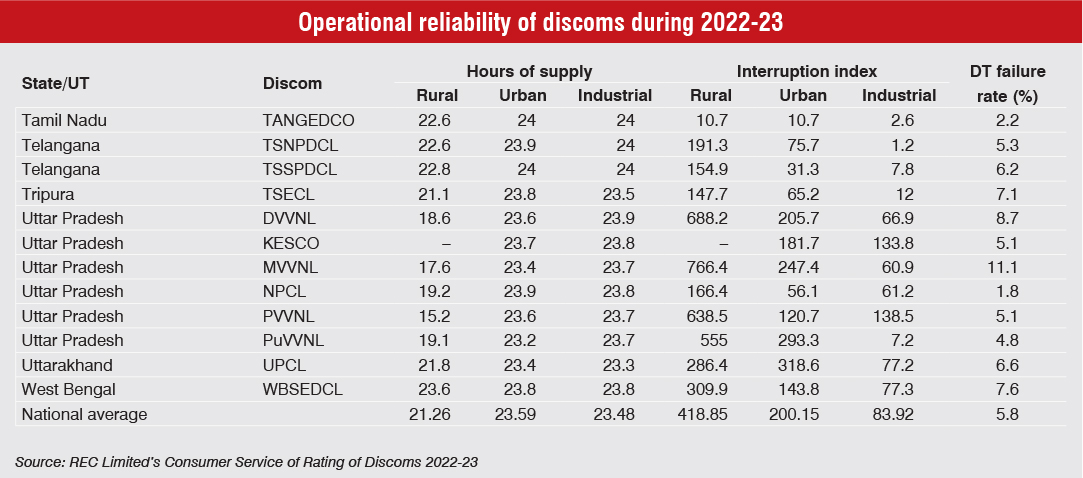 Key initiatives
One of the key steps for improving power quality has been the notification of amendments to the Electricity (Rights of Consumers), Rules, 2020. Under the new regulations, electricity distribution companies are prohibited from engaging in gratuitous or intentional load shedding. If they fail to comply, consumers will have the right to seek compensation from the concerned discom. The rules also establish strict timelines for various services offered by discoms, including new connections, disconnections, reconnections, shifting of connections, changes in consumer category or load, and bill-related services. In case of any delays in delivering these services, the discom will be liable to compensate the affected consumers.
Reducing operational and financial challenges hindering discoms from delivering quality power is a key priority. While aggregate technical and commercial losses declined from 16.23 per cent in 2021–22 to 15.37 per cent in 2022–23, as per the Power Finance Corporation, they remained a key concern. The government’s Revamped Distribution Sector Scheme, with a Rs 3 trillion budget, aims to provide performance-based financial support to discoms.
At the state level, power quality standards are governed by various regulations, performance standards and grid codes issued by state electricity regulatory commissions. These regulations define limits for quality and reliability parameters, such as the notification time for scheduled outages, compensation for unscheduled outages, and thresholds for voltage variations and indices such as the system average interruption duration index and system average interruption frequency index. However, these regulations lack uniformity across states and fail to establish a comprehensive framework for monitoring power quality and encouraging compliance.
Another initiative aimed at improving power quality is the national feeder monitoring system (NFMS). NFMS, an ambitious initiative by the Ministry of Power, is designed to provide real-time data on approximately 250,000 11 kV feeders across India. This system aims to enhance the monitoring of power supply, outages and feeder performance, fostering greater transparency and efficiency in power distribution. By seamlessly integrating data from 87 discoms, NFMS is poised to significantly improve decision-making and performance management in the power sector.
Emerging trends in power quality management
One of the key trends in power quality management is advancements in technology and adoption of innovative approaches to address modern challenges. The integration of the internet of things enables interconnected devices to share real-time data, significantly enhancing power quality monitoring and predictive maintenance. Artificial intelligence (AI) also plays a critical role, with AI-driven algorithms increasingly used to predict and prevent power quality issues. Microgrid solutions with integrated power quality management systems are being deployed to ensure localised, high-quality power supply. Further, advancements in energy storage, including next-generation batteries and ultracapacitors, offer solutions for power quality fluctuations. Additionally, decentralised energy management systems, supported by blockchain technology and peer-to-peer energy trading platforms, are emerging as transformative tools for enhancing power quality in distributed energy systems.
Conclusion
Power quality is a cornerstone of modern electrical systems as it impacts the performance and reliability of equipment and networks. As the demand for electricity and renewable energy integration increases, continuous advancements in technology, compliance with standards and proactive management strategies will be critical for maintaining high power quality. By prioritising power quality, utilities can improve operational efficiency, reduce costs and support a sustainable energy future.
Akanksha Chandrakar