
Power quality is critical for the efficiency and reliability of electrical systems, enabling optimal 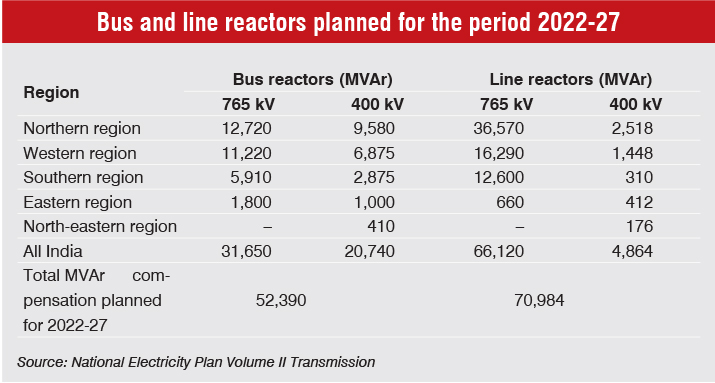 performance, sustainability and infrastructure security. Voltage sags and surges, harmonic distortions, power factor imbalances and electrical noise are common problems that can negatively impact the quality of electrical power.
Further, the increasing integration of renewable energy into low and medium voltage grids has introduced new power quality challenges.
The overall impact of power quality disturbances is far-reaching, affecting both immediate operations and long-term business performance. Therefore, addressing power quality issues requires tailored approaches for detection, analysis and resolution.
Power quality measurements
Critical power facilities have power quality monitoring systems that operate 24×7, ensuring immediate access to crucial information. The first step in deploying power quality monitoring devices is installing a utility shadow meter on the facility side of the transformer. This meter audits the quality and quantity of power supplied power by the electrical provider. The next level of monitoring takes place at main feeders or branches, allowing facilities to assess the quality of power flowing to different areas and how that impacts the overall site power quality index. Then, power quality meters are placed on critical loads, core equipment and essential circuits for operation.
Facilities are also using specialised software, specifically designed for power quality analysis. Power system software acts as the digital brain of electrical networks. It collects real-time data on power usage, quality and distribution from connected devices such as meters and sensors.
Solutions for managing power quality issues
Flexible alternating current transmission system (FACTS) devices are highly effective in improving power quality in distribution networks, particularly by addressing voltage sags and maintaining stability at points where sensitive loads are connected. Their performance relies heavily on robust control systems.
Series controllers are used to introduce series voltage into the transmission line, employing impedance devices such as capacitors and reactors. These controllers regulate reactive power by either generating or consuming it as needed. When the transmission line load is high, additional reactive power is supplied using capacitors. Meanwhile, during light load conditions, excess voltage at the line’s end, caused by low reactive power demand, is managed by consuming reactive power with inductors. Capacitors installed at the line’s end address reactive power needs. Advanced solutions like thyristor-controlled series capacitors and static synchronous series compensators are commonly employed for this purpose.
Shunt controllers regulate current in the power system at the connection point using devices such as capacitors or inductors. Shunt capacitor compensation involves parallel capacitors supplying leading current to offset lagging power factors caused by inductive loads. Meanwhile, shunt inductive compensation uses inductors to manage voltage rises, such as those caused by the Ferranti effect in long transmission lines under no-load or low-load conditions.
Static reactive power compensators combine fixed capacitor banks with thyristor-controlled inductors, where the thyristor firing angle regulates voltage and current. Similarly, static synchronous compensators (STATCOMs), based on power electronics voltage converters, provide dynamic reactive and active power support.
STATCOMs are particularly effective in transmission lines with low power factors and poor voltage regulation, making them one of the most common tools for enhancing voltage stability in power systems. Currently, according to the Central Electricity Authority, 12 STATCOMs/SVCs have been commissioned, 17 are under implementation and two are planned in the interstate transmission system as per the National Electricity Plan.
In addition, dynamic compensation devices have been commissioned/planned under the intra-state transmission system. These include a ± 120 MVAR STATCOM at the Timbdi substation of GETCO (commissioned); ± 300 MVAR STATCOMs each at the 765 kV Jaisalmer and the 400 kV Bhadla substations of RVPNL (planned); and ± 100 MVAR STATCOMs each at the 220 kV Phalodi and the 220 kV Tinwari substations of RVPNL (planned).
Series shunt controllers combine shunt and series operations to generate voltage in parallel and current in series, ensuring coordinated functionality. One notable example is the unified power flow controller, which combines STATCOM and SSSC with a shared DC voltage link. It employs a three-phase controllable bridge to inject current into the transmission line through a transformer, effectively improving voltage stability, power angle stability and system damping.
In multi-line transmission systems, independent series controllers are often used to provide reactive compensation for each line. However, active power can also be transferred between lines using integrated controllers with interconnected DC terminals. The interline power flow controller exemplifies this approach, employing multiple converters connected by a common DC link, each assigned to a separate line.
Battery energy storage systems
Advances in power electronics and storage technologies have made energy storage a leading solution for mitigating power quality issues. Power support, frequency regulation and voltage support are the three main services that battery energy storage systems (BESSs) provide.
BESSs play a key role in managing peak loads by discharging stored energy during periods of high demand. By providing bidirectional fast-response load/capacity, BESSs reduce reliance on spinning reserves and fast-start thermal sources for frequency regulation, thereby lowering emissions. BESSs also support the deployment of EV charging infrastructure by providing fast-charging capabilities and managing peak demand on the grid, improving the integration of EVs into the grid without overloading existing infrastructure.
Technology for harmonic disturbances
Various methods are employed for harmonic compensation, including passive and active compensators, as well as different control techniques. Passive compensators such as capacitors, parallel reactors and series capacitors are widely used in power systems. These devices are either permanently or intermittently connected to the circuit and function by altering capacitance and inductance. However, their operation is static and uncontrollable, offering limited flexibility. For instance, parallel reactors help mitigate voltage increases caused by no-load or under-load conditions, while parallel capacitors boost capacitance during overloads. Series capacitors are used for line length compensation.
Active compensators, typically parallel devices, can dynamically adjust to maintain the desired voltage at their terminals. Both passive and active filters, along with hybrid filters, are effective in compensating harmonics in power systems. A large number of such compensating devices are expected by 2026-27 (see accompanying Table).
Power factor correction techniques
The power factor is a crucial indicator of electrical system efficiency, directly impacting energy usage, system performance and operational costs. A poor power factor leads to increased energy consumption, reduced system efficiency, overheating of equipment and higher utility bills. To mitigate these issues, power factor correction techniques are employed, with capacitors being a widely used solution to offset the effects of inductive loads and improve the overall power factor. Additionally, advanced methods such as synchronous condensers and active power filters can further enhance power factor correction.
Electrical noise
Electrical noise, characterised by unwanted signals and disturbances, can disrupt the performance of sensitive electronic equipment, leading to malfunctions, reduced reliability and potential system downtime. Effective mitigation strategies include the use of filters to block unwanted frequencies, protect equipment from external interference and separate noise sources from critical components. Additionally, proper grounding and the use of surge suppressers can further enhance noise suppression, ensuring seamless operation and safeguarding critical systems from disruption.
An isolation transformer separates sensitive loads from the electrical system, effectively filtering electrical and common-mode noise. Most isolation transformers mitigate harmonic currents generated by loads. Their structure includes a grounded shield made of non-magnetic foil, placed between the primary and secondary windings. This design ensures that transients and noise from the main source are directed to the ground through the primary-side capacitance, preventing them from reaching the load. However, isolation transformers do not address voltage fluctuations or power outages.
Outlook
Artificial intelligence (AI) techniques are being increasingly applied in electrical power grids to address various problems related to power quality. AI techniques such as expert systems, fuzzy logic and neural networks are used to detect and diagnose faults in power systems. Power quality data is continuously recorded and then analysed using modern AI algorithms, enabling organisations to anticipate and address issues proactively. Emerging innovations, such as smart grids, energy storage systems and power quality improvement devices, are reshaping the landscape, providing more robust and sustainable solutions.
Aastha Sharma