

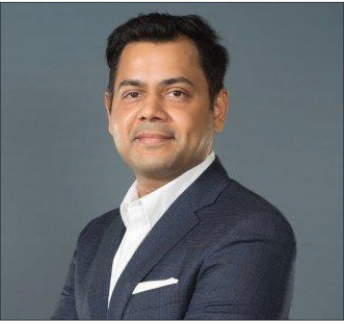
 Power equipment major Skipper Limited is a long-standing player in the transmission and distribution (T&D) space, with strong backward integration capabilities serving both Indian and global markets. In a recent interview with Power Line, Devesh Bansal, Executive Director, Skipper Limited, spoke about the company’s operations, capacity expansion plans, research and development (R&D) investments, and challenges and opportunities. Excerpts…
What strategies have been key to expanding into new geographies, particularly in high-voltage power transmission?
With an existing capacity of 300,000 metric tonnes per annum (mtpa) and plans to add 75,000 mtpa by the end of this fiscal year, Skipper is scaling up its capabilities to cater to the growing demand for high-voltage power transmission infrastructure. Additionally, the company plans to double its capacity over the next three to four years, enabling it to take on larger and more complex international projects. Some of our key strategies for global growth include partnerships with local engineering, procurement and construction (EPC) contractors. This enables Skipper to navigate market-specific regulations and leverage local expertise; provide customised solutions for high-voltage transmission projects, particularly for extra high voltage (EHV) substations and transmission lines, which is witnessing a growing demand in regions pursuing renewable energy integration; and expand into battery energy storage systems (BESS), which allows Skipper to address the increasing need for grid balancing in renewable-heavy markets. Some of Skipper’s key international projects include significant orders in the Middle East and Africa for high-voltage transmission lines, as well as the supply of transmission monopole structures to North America.
What challenges did you face in meeting the technical and regulatory requirements of the North American market?
Entering the North American market, particularly for high-voltage transmission monopole structures, posed unique challenges for Skipper. North America’s stringent technical and regulatory standards required the company to adapt its products and processes to meet local specifications. Some of the key challenges included complying with the requirements of the American National Standards Institute (ANSI). Other challenges included adapting to seismic and environmental codes prevalent in North America, particularly for monopoles designed for areas prone to earthquakes and extreme weather, and meeting documentation standards for quality and traceability, which required close collaboration with local authorities.
To overcome these challenges, Skipper leveraged its state-of-the-art manufacturing capabilities and tower testing station, which validated its products under North American-specific conditions. With plans to commission a second testing station Skipper is further enhancing its testing capabilities to cater to such high-stakes projects and meet global certification requirements.
How does Skipper customise its products and services to meet the technical specifications and documentation requirements of different countries?
Customisation is a cornerstone of Skipper’s success in international markets, ensuring that all products comply with specific technical and regulatory requirements in different regions. Our extensive certification portfolio demonstrates our commitment to meeting global standards and country-specific regulations. In addition, Skipper holds several country-specific certifications that enable us to customise our solutions for different markets. Our R&D centre, which is approved by the Department of Scientific and Industrial Research (DISR), continuously innovates to tailor products for market-specific demands, while our NABL-certified test station guarantees that all products meet stringent quality and safety standards through world-class testing. Through these certifications and our commitment to customisation, Skipper ensures that its products meet the technical documentation, safety and quality standards required across global markets.
How has Skipper’s R&D centre and tower testing station improved its export market positioning and credibility?
Skipper’s dedicated R&D centre and tower testing station have been instrumental in establishing the company’s credibility in international markets. The R&D centre has earned recognition from the DSIR. This research hub boasts NABL-accredited labs for material testing and full-scale load testing. Backed by scientific insights, Skipper continually refines its processes to enhance efficiency and reduce costs, allowing for the development of robust solutions and end-to-end services for clients in highly competitive markets. It accommodates even the most complex high-voltage transmission projects, particularly in regions like Latin America, Europe and North America.
Skipper’s state-of-the-art tower testing facility, spanning 14 acres in West Bengal, ranks among the largest globally. This testing facility sets Skipper apart as a fully backward-integrated company, a rare trait among global manufacturers. Additionally, these tests enhance structural reliability for transmission line systems.
The testing station can handle towers of up to 1,200 kV with heights of 120 meters (the highest in the country), and it accommodates exceptionally heavy towers with optimal loading capacities (up to 1,200 tonnes per leg) and large base widths (up to 35 metres). Notable tests include 765 kV S/C monopole, 220 kV D/C tower, 400 kV D/C monopole, 500 kV D/C tower and 765 kV D/C tower. The station employs dual-speed variable frequency drive-driven electrical winches for smooth loading and features an automated central loading and supervision system for precise control. The upcoming second testing station, to be commissioned by the end of this fiscal year, will further bolster Skipper’s testing capabilities.
For global transmission infrastructure development in countries like Nigeria, Chile and the Philippines, what are the primary challenges and opportunities in these regions?
Countries like Nigeria, Chile and the Philippines present unique challenges, primarily due to complex regulatory frameworks, infrastructure gaps and political instability in certain areas. Navigating these markets requires a deep understanding of local laws and compliance frameworks, particularly for high-voltage transmission projects. In Nigeria, the limited evacuation infrastructure often leads to delays in project execution, while in Chile and the Philippines, the varied terrain necessitates highly customised solutions. Despite these hurdles, significant opportunities are emerging as these regions push for renewable energy adoption. The growing demand for robust transmission infrastructure, including BESS, presents a major opportunity for Skipper to leverage its expertise. With the company’s plan to add 75,000 mtpa to its manufacturing capacity and double it within the next three to four years, it is well-positioned to address these challenges effectively and capitalise on the increasing infrastructure development needs in these markets.
How does Skipper differentiate itself from other global competitors in the industry?
Skipper stands out as a completely backward-integrated company in the power transmission and distribution structures manufacturing sector. We manage the entire value chain, from angle rolling to fabrication and galvanising, proto assembly, load testing and even EPC line construction. This vertical integration enables cost optimisation, faster time-to-market, superior quality control and timely dispatches, while significantly reducing exposure to commodity price fluctuations. This not only enhances our operational efficiency but also provides superior customer service. By placing a strong focus on technological innovation, comprehensive certifications and cost-effectiveness, the company’s extensive certification portfolio, including ISO 9001:2015, ISO 14001:2015, ISO 45001:2018, ISO 3834-2:2021, and country-specific certifications like OETC Oman, INMETRO Brazil, EDL Lebanon, MEW Kuwait, MOEE Iraq, CE Europe and ACHILLES, ensures adherence to the highest global standards. Additionally, Skipper’s R&D centre and its NABL-certified test station drive product innovation, including advanced solutions such as EHV substations and BESS, which are critical for modern power systems.
The company’s strategic plant locations near raw material sources and ports further enhance cost-effectiveness, enabling Skipper to offer competitive prices while maintaining quality. As it expands its production capacity and product offerings, including the commissioning of a second testing station, Skipper ensures that it stays ahead of technological advancements.
In terms of export revenue, which regions or countries do you see as the biggest growth drivers for Skipper in the coming years?
In the coming years, Skipper identifies Africa, Latin America and Southeast Asia as key regions for driving export revenue growth. Countries such as Nigeria, Chile and Indonesia are heavily investing in transmission infrastructure to support their growing populations and renewable energy initiatives, making them crucial for Skipper’s expansion. Additionally, the Middle East remains a significant market for high-voltage transmission projects, while Latin America, particularly Chile and Brazil, offers increasing opportunities as these countries prioritise renewable energy transmission and grid upgrades.
What are Skipper’s short- and long-term goals for increasing the export component of its revenue?
In the short term, Skipper aims to grow its export component by approximately 10-12 per cent over the next fiscal year. This growth will be fuelled by the planned 75,000 mtpa capacity expansion and increased demand in key markets such as Africa, Southeast Asia and Latin America, where infrastructure development is on the rise. Over the next three to four years, Skipper is targeting a steady increase in export revenues, with the goal of achieving a 50-60 per cent growth. This growth will be supported by Skipper’s strategic focus on expanding its product portfolio into BESS and EHV substations, as well as strengthening partnerships with local EPC contractors in high-growth markets. By leveraging its backward integration, automation and technological innovation, Skipper aims to solidify its position as a key player in the international power transmission sector. These strategic efforts, combined with Skipper’s proactive approach to addressing global energy transition needs, will help the company gradually increase its export revenues while maintaining a competitive edge in global markets.