
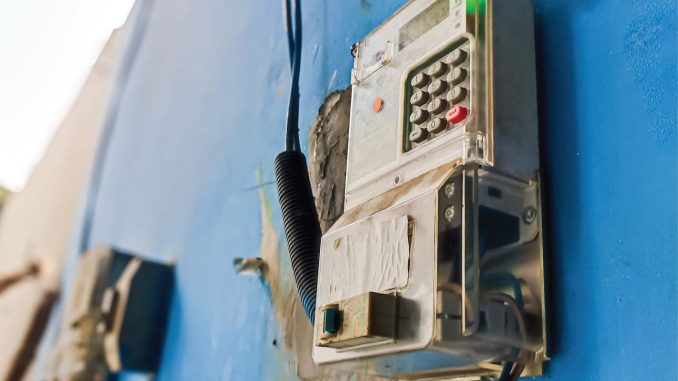
India’s power sector has evolved significantly over the past few years with the adoption of advanced metering infrastructure (AMI) under the Revamped Distribution Sector Scheme (RDSS). However, ensuring seamless communication and interoperability between smart meters, head-end systems (HESs) and meter data management systems (MDMSs) remains a key challenge in this transition.
Recognising the need for a unified and standardised approach, the Ministry of Power, along with the Central Electricity Authority (CEA), released guidelines for establishing end-to-end interoperability within the AMI system in January 2025. These guidelines aim to eliminate communication bottlenecks between smart meters and HES, propose solutions for a unified HES, establish standard-based approaches for interoperability, and develop plug-and-play mechanisms for seamless integration across AMI systems.
Background
At present, AMI systems in India rely on three primary communication technologies – radio frequency (RF) mesh, power line communication (PLC) and cellular.
Each of these technologies has distinct operational mechanisms and infrastructure needs, with RF and PLC relying on intermediate neighbourhood area network (NAN) devices, while cellular technology operates on the direct wide area network (WAN). Despite the advantages of these communication technologies, interoperability remains a pressing concern. This is mainly due to the presence of multiple proprietary RF mesh solutions with diverse routing protocols and vendor-specific security mechanisms. In addition, varying communication architectures lead to separate, rather than unified, HES systems.
Previously, in an order dated June 4, 2024, the power ministry recommended the constitution of a committee to standardise and ensure the interoperability of AMI layers. The committee was tasked with identifying bottlenecks in meter and HES communication, mainly for RF and NBIoT communication technology, as well as implementation challenges, and proposing solutions for a unified HES. After multiple meetings, the present guidelines have been finalised by the committee.
Approaches
The present guidelines on AMI interoperability are aligned with the specific deliverables of Phase A and Phase B, as outlined below:
- Phase A – Unified HES-MDMS Interface Specification
- Phase B – Pluggable Module Specification
Phase A provides an early solution focusing on establishing a unified HES to ensure interoperability with both the MDMS and smart meters operating on direct cellular and RF mesh communication technologies. In this phase, the meter communication module can be swapp as long as it uses the same communication technology – cellular with cellular or RF with RF – and is supplied by the same vendor.
Phase B introduces a more flexible, secondary solution by decoupling the communication module from the meter, while maintaining a common, secure enclosure. This is achieved by standardising the interface within the meter that connects to a pluggable module employing either of these technologies, with provisions for additional technologies in the future. Under this phase, both direct cellular and RF mesh communication modules can be plugged into meters even if the meters and modules are sourced from different vendors, enhancing cross-vendor interoperability. However, for RF mesh communication, an aggregator provided by the same communication module vendor is required to facilitate the connection.
To support these phased implementations, the guidelines propose a single unified HES with standardised interfaces to the MDMS and meters, ensuring interoperability across different HES makes. For WAN-connected meters, two communication options are outlined – direct IS-15959-based communication between the HES and meters, and a WAN adaptor with an IEC 61968-9-based interface.
Further, RF and other NAN-connected meters are expected to communicate through a network management system (NMS) adaptor, also using an IEC 61968-9-based interface. Additionally, for upstream communication between the unified HES and the MDMS, the guidelines recommend an IEC 61968-based application programming interface (API) to facilitate smooth data exchange. These specifications are designed to ensure flexibility for future advancements, allowing the interface to accommodate evolving communication technologies.
AMISP integration architecture
AMI service providers (AMISPs) are responsible for delivering the agreed-upon service level agreements (SLAs). Under the existing AMISP architecture, integration between system components is largely based on bilateral agreements between the involved parties. Meters equipped with communication modules interact with the HES through vendor-specific protocols, while the HES connects to the MDMS through vendor-specific integration. The MDMS, in turn, facilitates utility-specific communication with other utility systems.
The proposed model aims to address the challenges of the existing system while ensuring that AMI functions are delivered as per the agreed SLA. Although the current architecture meets the functional requirements of utilities, it operates as a black-box model where system components operate in isolation. This makes integrating new vendors difficult, increases costs due to component duplication and creates entry barriers for new participants. To mitigate these challenges while maintaining the AMISP’s accountability for data delivery under the SLA, two alternative architecture options have been proposed – a unified HES and MDMS at the AMISP level and a unified HES at the AMISP level and MDMS at the utility level.
The proposed architectures outline several key aspects for both Phase A and Phase B. In Phase A, all meters must support IS 15959. Moreover, cellular communication modules must be configurable in transparent mode, while RF mesh communication may optionally support this mode for communication between the HES and meters. Further, the unified HES is required to facilitate meter reading and control messages over IS 15959, enable offline meter reading in case of connectivity issues to meet SLA requirements and integrate with WAN adaptors or NMS using IEC 61968-9 for standard meter reading and control messages. Additionally, it must support extra message formats to facilitate network optimisation, key changes and firmware upgrades. The interface between the unified HES and MDMS should also follow IEC 61968-9. Thereafter, under Phase B, pluggable communication modules will be introduced in meters by defining hardware and mechanical parameters.
Interface framework
To ensure smooth communication across AMI components, the guidelines define a structured interface framework that standardises message formats, communication protocols and data exchange mechanisms. At its core, the interface framework is built on IEC 61968-100 for standardised message patterns, covering request-response and notifications. Currently, it supports existing protocols such as simple object access protocol API and Java Message Service for message transport. However, incorporating representational state transfer API and other message bus options is recommended. Similarly, for message encoding, while extensible markup language is the standard schema, introducing JavaScript object notation can improve compatibility with modern applications. The framework also defines key interactions between system components. When the communication module is in transparent mode, the unified HES can directly communicate with the meter using IS 15959. For additional functionality, the unified HES can integrate with the WAN adaptor via IEC 61968-9 for meter reading and control. Further, the NMS and MDMS also interact with the unified HES following IEC 61968-9. Notably, to prevent unauthorised access, meter manufacturers must securely transfer meter keys and firmware to the unified HES using a key file. The MDMS is also expected to interact with other utility systems in accordance with IEC 61968-9.
Conclusion
As the power sector landscape continues to evolve, standardisation and interoperability will be crucial for the future of AMI systems. Going forward, these guidelines are expected to address challenges by reducing vendor lock-ins and facilitating greater cross-system communication for seamless integration at all levels. This, in turn, will enable utilities to adopt more flexible and secure metering solutions.
Ultimately, by enhancing efficiency and scalability in smart metering deployments, these measures will not only help in setting up a unified HES ecosystem in India, but also accelerate the adoption of next-generation communication technologies the sector.