
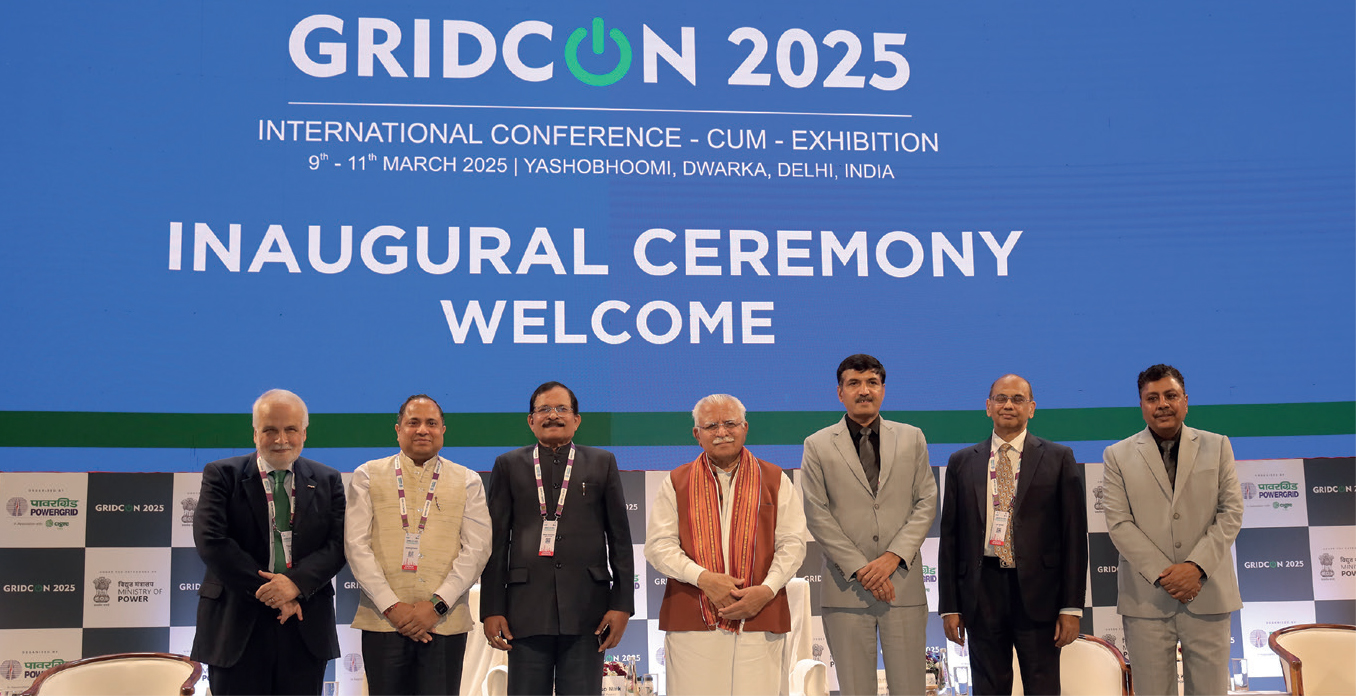
 The three-day exhibition and conference, GRIDCON 2025, organised by Power Grid Corporation of India Limited (POWERGRID), in association with CIGRE-India, commenced on March 9, 2025, with a grand opening ceremony held at the India International Convention & Expo Centre, Yashobhoomi, Dwarka, Delhi.
Mr Manohar Lal, Union Minister of Power, Government of India, delivered the keynote address. The inaugural also saw special addresses by Mr Shripad Yesso Naik, Minister of State for Power and New and Renewable Energy; Mr Ghanshyam Prasad, Chairman, Central Electricity Authority (CEA); Dr Ajay Mathur, Director General, International Solar Alliance; along with a theme address by Mr R.K. Tyagi, Chairman and Managing Director (CMD), POWERGRID. There was also a keynote address by Dr Konstantin O. Papailiou, President, CIGRE, followed by a vote of thanks by Mr Naveen Srivastava, Director, Operations, POWERGRID.
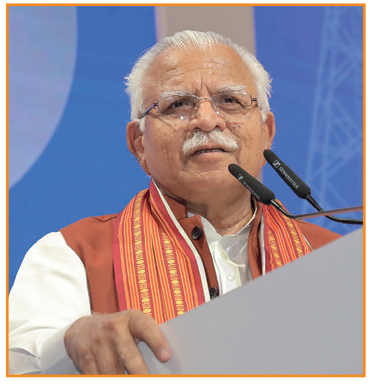 Mr Manohar Lal, Minister of Power, Housing and Urban Affairs
Mr Manohar Lal highlighted the remarkable progress of India’s power sector, reflecting on its journey from humble beginnings to its current prominence on the global stage. He recalled that in 1967, when he was in Class 7, villages like his first experienced the glow of an electric bulb. This marked a huge transition from studying under clay lamps to modern electricity. Despite initial scepticism about the limited impact of such small steps, the minister emphasised the importance of igniting even a single lamp in darkness, symbolising progress.
Mr Manohar Lal acknowledged the collective efforts that have contributed to the power sector’s growth. He credited national leadership for effective policymaking, along with the dedicated involvement of various stakeholders, businesses and the general public. He highlighted the pivotal role of the power sector in economic growth, facilitating industrial expansion and driving national development.
Discussing future goals, Mr Manohar Lal emphasised that to achieve India’s vision of becoming a developed nation by 2047, the power sector must expand significantly. He stresses the need for coordinated efforts between power generation companies, transmission companies and discoms to ensure seamless energy delivery.
He drew a powerful analogy, comparing transmission lines to arteries in the human body, essential for delivering power where it is needed. He called for a faster development of transmission infrastructure to match the rapid growth in power generation, and stressed the need for cooperation between public and private sector participants.
On international cooperation, Mr Manohar Lal revealed ambitious plans such as the proposed undersea transmission line to Sri Lanka and a joint project with the UAE, which will involve setting up a transmission project with a significant investment of Rs 400 billion. He referenced India’s “One Sun, One World, One Grid” initiative, which aims to unify and strengthen power connectivity across regions.
Addressing infrastructure challenges, Mr Manohar Lal stressed the need for new technology, improved land acquisition policies and public support to accelerate transmission line expansion. He noted that land acquisition must be achieved through consensus rather than compulsion, ensuring satisfaction among stakeholders. Additionally, he advocated for promoting domestic manufacturing to reduce dependency on imported transmission equipment such as transformers, HVDC components and insulators, reinforcing the “Make in India” vision.
He highlighted India’s impressive economic growth, noting its rise from the 10th largest global economy a decade ago to the 5th position today, with aspirations to soon become the third largest. He credited the power sector as a key driver in this economic surge and emphasised the need to enhance power capacity to sustain this momentum.
Focusing on sustainable energy, Mr Manohar Lal stressed the importance of diversifying energy sources. He highlighted the shift from traditional thermal power to solar, wind, and nuclear energy as part of India’s commitment to achieving net-zero carbon emissions by 2070. He praised India’s proactive steps in meeting climate targets, making it one of the fastest achievers among G20 counties. He also reiterated the country’s ambitious goal of achieving 500 GW of renewable energy capacity by 2030.
The minister concluded by celebrating India’s expanding transmission network, which has grown from 296,000 ckt km in 2014 to an estimated 475,000 ckt km in 2025. He encouraged continued investment to meet the projected Rs 9.16 trillion required for the power transmission sector by 2032. Commending the collective efforts driving these achievements, he urged stakeholders to persist in advancing India’s energy infrastructure for sustained economic growth and environmental sustainability.
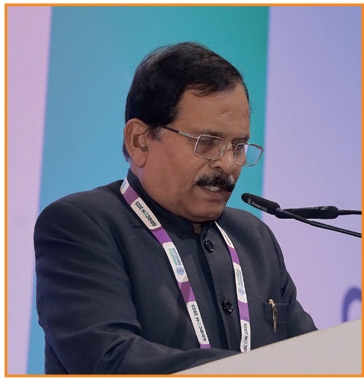 Mr Shripad Yesso Naik, Minister of State, for Power and New & Renewable Energy
Mr Shripad Yesso Naik expressed his gratitude to POWERGRID for organising GRIDCON 2025, which serves as a crucial platform for discussing sustainability and adaptability. At a time when the world is witnessing an unprecedented energy transition, he emphasised that India is leading with a vision for a sustainable and resilient power sector.
Under the visionary leadership of Prime Minister Narendra Modi, India has set ambitious and necessary targets for its energy future, including achieving 500 GW of non-fossil fuel capacity by 2030 and net zero emissions by 2070. Over the past decade, India’s energy landscape has undergone a remarkable transformation, with solar capacity increasing from a modest 2.8 GW in 2014 to surpassing 100 GW last month. The installed renewable energy capacity has grown by nearly 200 per cent, from 75.5 GW in 2014 to 220 GW today. Additionally, the transmission network has expanded significantly, growing from 2.97 lakh circuit kilometres in 2014 to 4.91 lakh circuit kilometres in 2025.
India is not only enhancing its energy security but also setting an example for the world in clean energy adoption. The country has already achieved 47 per cent of its 500 GW target and is well on track to meet its goals. With an even more ambitious target of 1,800 GW of renewable energy by 2047, India reaffirms its leadership in the global clean energy movement.
The transmission sector must evolve in tandem with energy generation to support the growing renewable energy capacity and ensure a stable, resilient power grid. As the integration of renewable energy sources increases, the role of a robust transmission infrastructure becomes even more critical. Since solar and wind energy are inherently variable, their integration requires grid modernisation and large-scale energy storage solutions.
To address this challenge, the government is actively promoting pumped hydro storage projects and battery storage as integral components of a stable power supply. India’s current energy storage capacity of 4.86 GW needs to be scaled up to 74 GW by 2032, including 27 GW from pumped storage projects (PSPs) and 47 GW from battery energy storage systems (BESSs).
The National Electricity Plan (NEP) 2023-2032 has been finalised to cater to an anticipated peak demand of 458 GW by 2032. Correspondingly, India’s transmission network is set to expand from 4.91 lakh circuit kilometres in 2024 to 6.48 lakh circuit kilometres by 2032. In line with this, extensive transmission systems have been planned for major renewable energy zones.
He also remarked that the power transmission sector across the world is facing supply chain constraints due to the increase in demand for transmission equipment as renewable energy deployment speeds up, and India is no exception. The rising demand for transformers, conductors and substation equipment puts pressure on the supply chain, and localisation of production is the need of the hour to address supply chain constraints. Renewable energy projects in India typically have a gestation period of one and a half years while the transmission network takes three to four years to come up. This time gets stretched further by right-of-way issues. Obtaining land for transmission corridors remains a significant challenge. While policies and guidelines have been put in place and approvals are being expedited, technological solutions like underground cable and advanced tower designs are the need of the hour to overcome this battle.
Mr Naik reiterated the commitment to growth by highlighting the outlined ambitious plan to spend Rs 9.15 trillion by 2032 to enhance power transmission. This investment will support the development of new transmission lines and substations, and increase India’s presence in the global power equipment market. This initiative will drive innovation, create jobs and boost the economy.
Mr Naik also spoke about the need to leverage technology in smart grid visualisation solutions, AI, IoT and predictive analytics to improve real-time monitoring. The concept of grid resilience also extends to the development of transnational grid interconnections. Initiatives like One Sun, One World, One Grid aim to harness the diversity of solar power availability across different regions. The Ministry of Power along with the Ministry of New and Renewable Energy is working to iron out the bottlenecks in the renewables sector by engaging with stakeholders including manufacturers, technology providers, service providers, think tanks, researchers and academics.
Finally, Mr Naik spoke about the key role of POWERGRID and called it the backbone of the power transmission ecosystem in India. Currently, it carries about 45 per cent of the total power generated in India through its transmission network consisting of 400 kV and 765 kV AC and 800 kV and 500 kV HVDC system. Today, POWERGRID’s interregional transfer capacity stands at 100 GW, which is 84 per cent of the national interregional transmission capacity. It has consistently maintained an outstanding track record of system availability at 99.8 per cent and has a formed a cross-border link between India and neighbouring countries, including Bangladesh, Nepal and Bhutan, with a transmission capacity of up to 4,745 MW.
Mr Naik noted that POWERGRID is doing very well in the competitive bidding era, winning more than 70 transmission projects by beating its competitors. The company has grown by leaps and bounds in the last 35 years. It has shown strong performance and has a leading position in the sector today. He stated that everyone gathered at GRIDCON 2025 should reaffirm their collective commitment to building a green and future-ready power transmission system. He noted that the deliberations on new technologies such as UHVAC, battery energy storage systems, renewable energy integration, green hydrogen plants, undersea cables, and e-mobility would be thought-provoking and insightful. He emphasised the importance of working together to drive India’s power transmission sector towards a cleaner and more sustainable future.
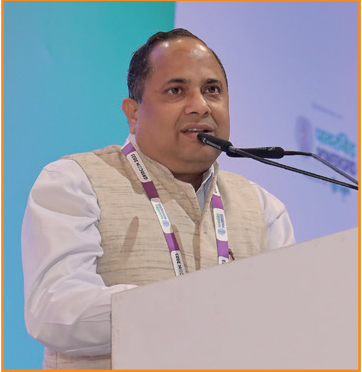 Mr Ghanshyam Prasad, Chairperson, Central Electricity Authority
Mr Ghanshyam Prasad noted that all of us are aware of the energy transition taking place globally, including in India. The world is observing India for its initiatives, particularly in the power sector, which have accelerated the energy transition.
The country has successfully surpassed 200 GW of renewable energy capacity and is now targeting around 500 GW of renewable energy by 2030, 600 GW by 2032 and potentially around 2,000 GW by 2047 or 2050. This will be driven by a combination of various technologies, including solar, wind, storage, hydropower and nuclear.
With this expansion of generation capacity, there is a huge requirement of transmission infrastructure in India. Earlier, transmission service providers were concerned about low demand for transmission infrastructure. However, with the energy transition and the setting up of large renewable energy capacities, the transmission infrastructure pipeline has expanded significantly. The commissioning of transmission infrastructure is within the timeline and delays are being avoided. With this, the country is ensuring timely integration of renewable energy capacities, avoiding curtailment of generation and minimising generator losses.
Mr Prasad shared that the country plans to integrate 500 GW of non-fossil fuels by 2030 and the exclusive transmission plan for this has already been declared by the CEA. Further, 600 GW has been targeted for 2032 and around 2,000 GW by 2047. The aim is to ensure that the timeframes for transmission line development match the commissioning timelines of renewable energy projects.
The energy transition presents another key challenge as the country plans to increase the nuclear energy capacity from 8 GW to roughly 100 GW by 2047. In addition, there will be 100-150 GW of hydro power capacity by 2047. These projects will come up in difficult terrain, where setting up transmission infrastructure will be an arduous task. A huge network of transmission system will be developed to achieve these ambitious targets. Going forward, a large portion of the transmission network will get older, requiring replacement, upgradation and reconstruction.
Mr Prasad assured investors in the transmission space, particularly manufacturers, that there is a huge opportunity in the sector. All stakeholders need to collaborate to tap this potential.
He added that while a huge transmission network is being set up across the country, many villagers still question why they are not receiving 24 hours of power supply. Thus, going forward, the government’s aim should be to ensure regular supply of power in rural areas.
Several meetings have been held with manufacturers and all stakeholders must now prepare for the setting up of higher voltage transmission lines. The sector has transitioned from 220 kV to 400 kV and 800 kV lines. The time has come to take another big leap and set up 1,200 kV lines, the highest voltage level in the world.
Another priority area for the transmission sector should be the promotion of domestic manufacturing and the Make in India initiative. The aim should be to achieve 100 per cent domestic content in transmission infrastructure equipment in the next five to seven years to avoid supply chain issues.
Another key priority area is the shift towards underground and subsea cables in order to tap offshore wind. In addition, interconnectors are needed to connect the Indian grid with the global grid, especially in Southeast Asia and the Middle East. In fact, these innovative technologies are also needed for connect the Andaman and Nicobar Islands and the Lakshadweep Islands. Going forward, there will be a huge requirement of subsea cables, creating a significant opportunity for manufacturers.
Another priority is ensuring that the equipment and infrastructure are disaster resilient. In the past, particularly in Odisha and other regions, multiple towers have failed and a lot of time is taken to restore the grid. The country cannot afford more such power outages in the future.
Going forward, the power sector will face a myriad of challenges. The foremost challenge will be integrating variable renewable energy into the grid while ensuring accurate demand forecasting of renewable energy generation. The grid currently operates on a 15-minute time block, but it will need to transition to a 5-minute time block for more accurate renewable generation predictions.
Going forward, the integration of BESS into the power grid will be key and its integration must be planned in line with transmission planning to optimise both and improve grid monitoring.
Cybersecurity is another key concern given India has the largest synchronous grid in the world and also trading power with neighbours.
Going forward, grid operators need to do resource adequacy planning for both generation and transmission, at intra and inter-state levels, for the next 10 years. This presents a Rs 10 trillion investment opportunity.
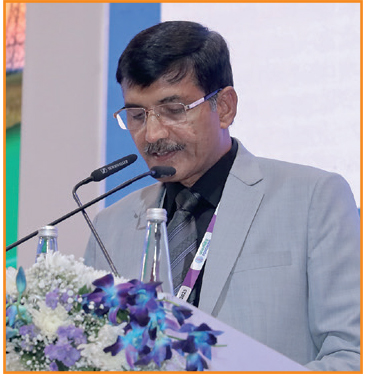 Mr R.K. Tyagi, Chairman and Managing Director, POWERGRID
Mr R.K. Tyagi, Chairman and Managing Director, Power Grid Corporation of India Limited (POWERGRID), delivered the inaugural address at GRIDCON 2025: International Conference-cum-Exhibition. He began the address by highlighting the global shift towards energy transition, which is only possible through grid resilience and by adopting strategies to enhance the reliability, sustainability and adaptability of the power transmission system.
He noted that collaboration is key, stating that we must work as a common force within the energy sector to drive the global energy transition. Under the One Sun, One World, One Grid (OSOWOG) initiative, it is time to envision global platforms where we think and deliberate as ambassadors of the energy transition – beyond national, sectoral or organisational boundaries – to work towards resolving the challenges that the energy transition faces today.
Mr Tyagi noted, “POWERGRID is honoured to organise this international conference-cum-exhibition under the patronage of the Ministry of Power in collaboration with CIGRE India. This event brings manufacturers, professionals, researchers and academia from the power system community across the globe to shape the future of resilience, asset management and digital transformation. It provides a platform to explore cutting-edge insights, enable exclusive networking, unlock collaborative opportunities and develop strategies to enhance the reliability, sustainability and adaptability of power transmission systems.”
He observed that electricity demand is increasing due to the rapid electrification of transport, air conditioning and industrial processes. The widespread adoption of electric vehicles, heat pumps, data centres and artificial intelligence applications continues to drive electricity consumption higher each year. Moreover, renewable energy now accounts for around one-third of the global electricity supply, with solar PV investments surpassing all other energy sources combined.
However, Mr Tyagi noted that the existing infrastructure must keep pace with this growth. Recognising these challenges, investment in transmission infrastructure is growing worldwide. To align with net-zero pathways, annual investment in the transmission segment must reach $250-$300 billion by 2030.
Today, India stands proud with an installed capacity of 466 GW and one of the world’s largest synchronised grids, thanks to the unwavering efforts of players in the power sector. However, the journey is far from over. Energy transition and energy security, with affordability at the core, are focus areas for the country’s rapid development. To this end, the Indian government has set a target of achieving 500 GW of non-fossil fuel-based capacity by 2030.
Mr Tyagi also noted that the Indian government has undertaken several initiatives to establish a transnational grid interconnection under the OSOWOG initiative, which is spread over Southeast Asia to the European Union via South Asia, the Middle East and the African grid. The total planned investment in the grid till 2032 exceeds Rs 9 trillion. POWERGRID is committed to this mission and will continue to ensure that not a single MW of renewable power is wasted due to transmission constraints.
POWERGRID has always ensured that the Indian electricity grid is technologically at par with best-in-class international utilities. We are driving innovation by developing and adopting modern technologies like multi-circuit towers, extra tall and narrow-based towers, efficient conductors, insulated cross arms and GIS (over AIS) in urban areas.
Other recent technological innovations include the replacement of synthetic oil with more environmentally friendly ester oil for transformers and reactors, and ongoing efforts to replace SF6 gas with eco-friendly alternatives to minimise environmental impact. Further, POWERGRID has successfully commissioned the 1,200 kV test station at Bina, as well as several key ±800 kV HVDC power links such as the Northeast-Agra, Champa-Kurukshetra and Raigarh-Pugalur lines. POWERGRID has also commissioned India’s first state-of-the-art technology VSC-based HVDC system that combines sustainability, stability and grid resilience.
In conclusion, Mr Tyagi noted that GRIDCON 2025 is a platform where visions turn into blueprints and blueprints turn into action. A resilient power grid requires a robust transmission system, strengthened by collaboration, leadership and commitments to sustainability. To power the future, protect the present and preserve the planet, the time for change is now – and together, we will make it happen.
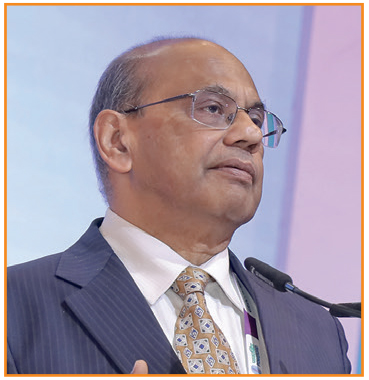 Dr Ajay Mathur, Director General, International Solar Alliance
Dr Ajay Mathur addressed GRIDCON 2025 on the role of renewable energy, solar integration and global partnerships. He emphasised that solar energy is abundant, sustainable and increasingly cost-competitive, making it a key driver of the energy transition. In developed nations, electricity consumption is more or less constant. Hence, solar power can meet daytime energy needs. However, in developing countries, the challenge is different. They often have to choose between solar electricity, which is available only during the day, and coal-based electricity, which provides round-the-clock power.
He noted that over the past year, four different auctions have reduced the price of round-the-clock renewable electricity to Rs 4-Rs 5 per kWh, as compared to thermal power tariffs of Rs 5.11-Rs 6.31 per kWh. “This is the economic straw that has broken the camel’s back,” he remarked.
On transmission infrastructure, he stated that transmission development remains a key bottleneck, as it takes significantly longer to construct lines compared to setting up solar or battery storage capacity. He proposed that each state should designate dedicated land pockets for renewable energy projects, similar to solar parks such as Khavda in Gujarat, Bhadla in Rajasthan, and Pavagada in Karnataka. If round-the-clock renewable energy projects are developed within these designated zones, transmission infrastructure can be planned accordingly. This would enable the seamless transfer of power from generation sites to load centres or high-tension transmission lines. Establishing such planned renewable energy hubs will facilitate better grid integration and eliminate the inefficiencies of ad hoc project locations.
Dr Mathur displayed eagerness to implement this model in India and extend these learnings to our 153 member countries, demonstrating successful strategies for renewable energy integration. Grid integration of renewable energy remains a significant challenge. Two years ago, the West African Power Pool approached ISA with concerns about incorporating increasing volumes of renewable energy into their grid. To help them gain a better understanding, a visit to India was facilitated. They observed POWERGRID’s operations and visited the Southern India Load Despatch Centre, gaining first-hand experience on enhancing renewable energy integration. He recommended the establishment of universities and training centres, where professionals from across India and worldwide can gain practical knowledge on integrating intermittent renewable energy . This is a key challenge that remains to be addressed.
He also stated that several ways have been explored on how to manage the growing share of variable renewable energy and highlighted challenges such as the duck curve or the camel curve for energy demand. However, India has already addressed these issues with innovative solutions. These lessons must be shared globally.
Finally, he reaffirmed the commitment to accelerating the clean energy transition, calling it the need of the hour. He noted that the Hon’ble Minister has highlighted both national and global priorities as well as the pathways to achieve them. By integrating solar energy into our grids through cutting-edge technologies and policies, he emphasised that global partnerships can be fostered to help build a sustainable, resilient and inclusive energy future.
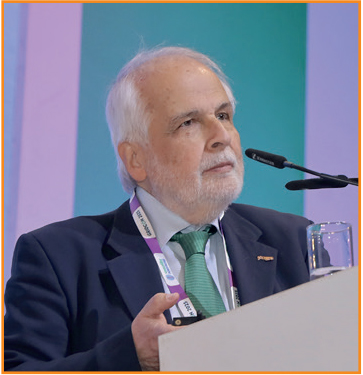 Dr Konstantin O. Papailiou, President, CIGRE
Dr Konstantin O. Papailiou highlighted that CIGRE, with over 20,000 members worldwide, is a global community dedicated to advancing power system expertise. Its mission as a non-governmental, non-profit organisation is to raise its voice and point out the problem, attract and educate young people, utilise better human capital and support research initiatives related to energy transition.
Papailiou noted that approximately 20 per cent of the world’s population still lacks access to electrical power. Global electricity demand is expected to rise between 6,000 TWh and over 7,000 TWh by 2030, which is equivalent to adding the current electricity demand of the US and the European Union. By 2050, global electricity demand is projected to be 150 per cent higher in a Net Zero Emissions (NZE) by 2050 Scenario. Electricity networks serve as the backbone of power systems and must expand and modernise to support the energy transition. The total length of the electricity grid is expected to more than double from 2021 to 2050. The annual investment in grid infrastructure is projected to rise from around $300 billion in recent years to approximately $600 billion by 2030, with an average of $800 billion per year until 2050.
To fully electrify the planet, global electricity demand in the NZE scenario by 2050 is estimated to be between 25,000 GW and 40,000 GW. Further, he highlighted that the current installed capacity from all energy sources is about 10,700 GW, of which approximately 3,300 GW comes from renewable energy sources (RES) and 400 GW from nuclear, both of which are carbon-free. This means that an additional 20,000 GW to 35,000 GW of power generation capacity must be added, requiring the construction and running of more than 1,000 power plants of 1,000 MW capacity per year until 2050. The majority of these new power plants will be based on wind and solar energy with some nuclear power plants as widespread commercial fusion power is unlikely to become viable before mid-century due to complex engineering challenges and regulatory hurdles.
The global transmission grid, which is largely composed of overhead lines, is currently estimated to span approximately 8-10 million circuit km. The energy transition will require the addition of 1.5-2.5 million km of new transmission lines, mainly high-voltage (HV) lines, including around 300,000-500,000 km of high-voltage direct current (HVDC) lines. About 40 per cent to 60 per cent of the existing lines, equivalent to roughly 3-6 million km, will need to be replaced or refurbished by 2050. This means that the total requirement for HV overhead transmission lines by 2050 is expected to be between 4.5 million km and 8.5 million km.
Papailiou highlighted that decarbonisation is imperative, as carbon emissions drive climate change and increase the frequency of natural disasters. The power sector must lead the transition to full electrification with zero emissions. Governments and industry leaders must communicate the urgency of grid expansion and renewable energy adoption, as the energy transition is not optional but essential. Attracting and educating young engineers is crucial to sustaining this transformation. Establishing specialised academic programmes will help train the next generation of energy professionals. Strengthening human capital and supporting research in clean energy technologies will be key to achieving a sustainable, electrified future.
Mr Naveen Srivastava, Director, Operations, POWERGRID
Mr Srivastava thanked Shri Manohar Lal, Union Minister of Power, for his thoughtful address and for providing a clear vision for the development of the power sector. This will be crucial in meeting the country’s future demand economically and reliably, facilitating the country’s economic growth. His address increased the confidence of enterprises and communities involved in systems and renewable energy integration, strengthening the country’s commitment towards net zero.
He also thanked Mr Shripad Yesso Naik for addressing the gathering with his insightful remarks, and Mr Ghanshyam Prasad for the CEA’s invaluable support to the event. He also thanked Mr Ajay Mathur for sharing his views and guidance on combating climate change through solar energy solutions, and Dr Konstantin O. Papailiou for sharing his views and perspectives. He also thanked Mr R.K. Tyagi for his instrumental role in organising GRIDCON 2025. Under his mentorship, the event has become a reality today and is being attended by over 2,000 members. He also thanked the regulators, private business leaders, technical experts, researchers, start-ups and other distinguished guests.
GRIDCON 2025 has attracted delegates from 32 plus countries. Around 458 papers were called for the event, of which 158 have been selected and will be presented over the next two days, showcasing innovations in the sector. Mr Srivastava also thanked press and media representatives present at the event.
GRIDCON 2025 will also have a special “Women in Energy” session and “Next Generation” session, along with stalls from startups and academia, presenting their innovative ideas at the event. GRIDCON 2025 provides a platform for the young generation to meet experienced delegates, offering enriching takeaways on the energy sector.
Read all the updates from GRIDCON 2025 day 2 here