
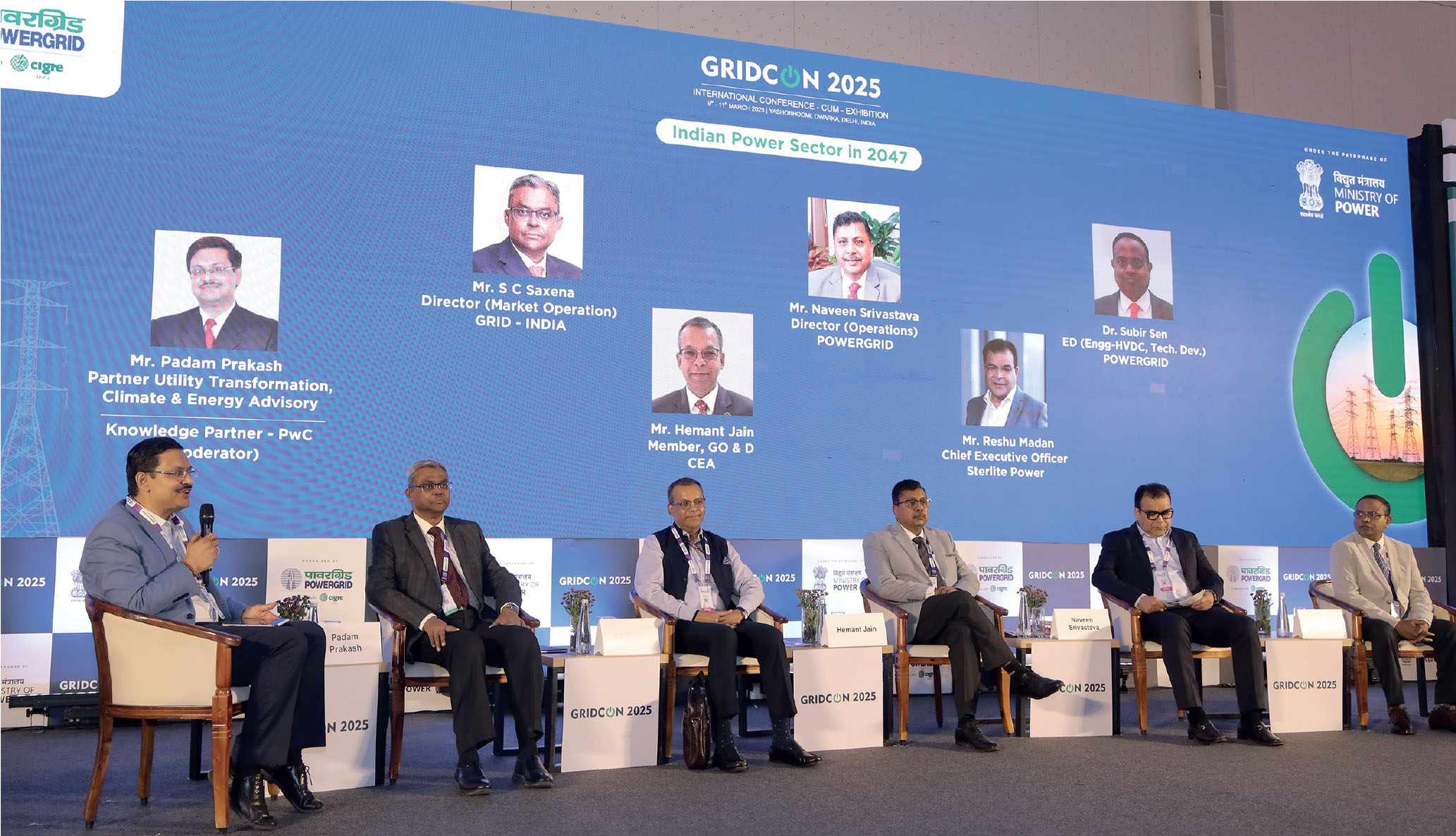
 Indian Power Sector in 2047
At GRIDCON 2025, the panel discussion on “Indian Power Sector in 2047” explored the key factors shaping the future of India’s power sector, including the role of transmission companies, grid stability, reliability and resilience, technological advancements in transmission, and policy and regulatory changes.
Mr Padam Prakash, Partner, PwC, moderated the session. The panellists for the session were Mr Naveen Srivastava, Director (Operations), POWERGRID; Mr Reshu Madan, CEO, Sterlite Power; Mr Hemant Jain, Member, CEA; Mr S.C. Saxena, Director (Market Operations), Grid India; and Mr Subir Sen, Executive Director, POWERGRID.
The discussion focused on the transformation of India’s power sector by 2047, highlighting the technological, regulatory and infrastructure advancements required to build a secure, sustainable and efficient grid.
Mr Padam Prakash opened the panel discussion by setting the context for the discussion on the future of the Indian power sector in 2047. He outlined four key areas for discussion – role of transmission companies; grid stability, reliability and resilience; technological developments in the transmission sector; and policy and regulatory changes governing the sector.
By 2047, India’s estimated economy is projected to reach $30-$35 trillion, with a per capita income of around $14,000 (up from the current $2,500), making a robust and dynamic power sector crucial to support this growth. Further, the distribution segment is expected to become competitive, with discoms turning profitable and offering consumers choice of supply. The electricity demand is expected to nearly double from 250 GW today to around 410-430 GW. The installed capacity mix is expected to undergo a major change, reaching 2,100 GW by 2047, with significant capacity coming from solar and wind. The transmission segment is also expected to see key technological advancements, such as the deployment of 1,200 kV ultra-high voltage transmission, and the addition of 200,000 ckt km of transmission lines and 1,200 GVA of transformation capacity.
Mr Naveen Srivastava reinforced the scale of transformation required in India’s power sector by 2047. He noted that out of the projected 2,100 GW of generation capacity by 2047, 1,600-1,700 GW would come from renewable sources, significantly altering the grid dynamics.
He emphasised that with an expected addition of 200,000 ckt km of transmission lines and a surge in transformation capacity to over 4,000 GVA, traditional manual operations would no longer be feasible. Instead, the grid would need to be AI-driven, IoT-enabled and largely unmanned. The volume of data generated by such an extensive infrastructure would necessitate smart transmission lines and substations capable of self-operation and real-time decision-making. Mr Srivastava highlighted that POWERGRID is already advancing in this direction, with 281 substations currently being operated remotely from the NTAMC. POWERGRID aims to transition towards fully digital substations by 2047. The focus is now on predictive maintenance through advanced monitoring technologies, including transformer and breaker condition monitoring.
POWEGRID is also focusing on promoting local manufacturing, ensuring that foreign contractors setting up projects in India must invest in factories within the country. Also, to address the growing challenge of right of way, POWEGRID is implementing Dynamic Line Rating (DLR) systems, making existing corridors and transmission lines smarter to handle additional load.
He stressed that cybersecurity is a critical focus area, given the vast transmission infrastructure network. Investments are being made to strengthen cybersecurity measures, including ensuring that operational technology (OT) and information technology (IT) systems remain separate in order to mitigate cyberthreats.
Mr Reshu Madan highlighted the company’s leading role in India’s private transmission sector and its international footprint, particularly in Brazil. Sterlite Power has assets worth approximately $10 billion, with $7 billion in India and $3 billion in Brazil. Currently, the company manages 11 operational and under-construction assets valued at around $4 billion.
He emphasised that investment in transmission infrastructure is critical. However, transmission development is lagging behind generation capacity, posing a major challenge for the sector. One of the challenges is the efficiency gap. In India, constructing a 400 kV line takes 1,100-1,200 man-days, while a 765 kV line takes about 1,600 man-days. In comparison, the same work takes 600 man-days in Thailand, 400 man-days in Brazil, and only 200-250 man-days in the US or Europe.
Speed, innovation and mechanisation are essential for transforming the transmission sector. Sterlite has pioneered the use of heli-cranes in Jammu & Kashmir, as well as drones for projects in the Northeast to accelerate project execution. These advancements have significantly reduced project timelines from 48-60 months to 24-36 months. Looking ahead, reducing dependence on manual labour is important due to skilled workforce shortages.
On the company’s plans, he shared that Sterlite Power is making significant investments of Rs 4 billion to expand its conductor production capacity from 110,000 tonnes to 150,000 tonnes. A part of this investment will be used to set up a greenfield plant in Baroda, which will manufacture 400 kV cables. These investments and technological advancements align with the country’s growing power demand and the goal of building a resilient transmission network for the future.
Mr Hemant Jain provided the perspective of a technical and planning body, emphasising the importance of a robust power sector in realising India’s Vision 2047. He stated that as India approaches 100 years of independence, a strong power infrastructure will be a critical pillar of the country’s progress. He acknowledged POWERGRID’s leadership in developing the interstate transmission system (ISTS) and recognised the contributions of private transmission players, particularly Sterlite Power and others, in strengthening the sector. This collaborative effort, he noted, enabled India to meet a peak demand of 250 GW last year, with an expectation to reach 270 GW this year.
Mr Jain highlighted that by 2047, India’s installed capacity is projected to grow fivefold, with nearly 90 per cent coming from non-fossil fuel sources, including renewable energy and nuclear power. However, he pointed out an important distinction: while installed capacity is expected to grow five times, energy demand and peak load will increase only threefold. This indicates a shift in the energy mix, with a reduced reliance on conventional thermal power and a greater share of variable renewable energy. This transition poses a significant challenge in maintaining grid reliability. The evolving energy system will require careful planning and coordination among central, state and private sector players to ensure stability. Mr Jain appreciated the collective efforts of stakeholders in reaching the current stage, where India can confidently meet its energy and peak demand requirements. Looking ahead, he emphasised the need for continued collaboration to address the challenges posed by an increasingly RE-driven grid.
Regulations are essential to maintain the health and operability of the power system to serve consumers effectively. He acknowledged that while India’s interstate transmission system has evolved and continues to do so, the real challenge lies in integrating intra-state transmission networks. Their seamless coordination is crucial for a well-functioning power sector.
He stressed that the harmonisation of regulatory processes is essential to ensuring that investors have clarity on compliance requirements and approval procedures before entering the sector. A cohesive regulatory framework will help streamline investments and execution timelines. He also highlighted the role of regulatory bodies and statutory entities like the CEA in ensuring that the process remains efficient and investor-friendly, fostering a stable and predictable environment for power sector growth.
Looking ahead, he underscored the critical importance of peak load management, particularly in the context of increasing renewable energy integration and the expected 250 GW of thermal capacity by 2047. He emphasised that peak load management strategies, including flattening the load curve, must become a key focus in future policies and operational frameworks. He suggested that these strategies should be gradually incorporated into regulatory harmonisation efforts to ensure a balanced and resilient grid. He also highlighted the need for a more professional and expert-driven approach to load despatch functions at the state level. Jain called for state load despatch centres to be equipped with capabilities similar to regional load despatch centres, ensuring that holistic load forecasting, generation planning and resource mobilisation are carried out efficiently.
Mr S.C. Saxena highlighted the changing dynamics of power demand and supply due to the increasing share of renewable energy. He pointed out that India recently crossed 65 GW of solar generation during daytime, and managing this peak has not been a challenge. However, the real issue arises during non-solar hours, when the entire 65 GW of solar generation disappears. This shift has led to a redefinition of peak demand periods, making non-solar peaks more significant and challenging than ever before. As more solar capacity is added, meeting daytime demand will become easier, but ensuring resource adequacy for non-solar hours will be critical. To address this, new rules and regulations have been introduced, mandating resource adequacy studies up to a 10-year horizon. This includes reserve planning, ensuring not just demand fulfilment but also contingency preparedness. He cited a recent example where 7-8 GW of solar power was lost in an instant due to cloud cover, emphasising the need for robust backup mechanisms.
On the transmission side, he noted that traditional power flows have historically been east to west, east to north and east to south, based on the placement of conventional power resources. However, with the rise of renewable energy in western, northern and southern India, electricity transmission flows are changing. This shift requires significant upgrades and modifications in transmission infrastructure to efficiently integrate and manage variable renewable energy sources.
He highlighted out that traditionally, the northern region was an importing zone, serving as a major demand centre. However, recent data revealed that during solar hours (10 a.m. to 6 p.m.), the entire northern region is now exporting power, a fundamental shift from historical trends. This shift introduces new challenges in transmission operations, particularly the emergence of bidirectional power flows that change on a diurnal basis. Managing these dynamic flows will be critical, as they could lead to congestion issues across the transmission network. He acknowledged that congestion events are already occurring intermittently, underscoring the need for proactive grid management strategies.
Mr Saxena also talked about the importance of flexibility in power generation, given the increasing share of renewable energy in the mix. With renewables set to dominate by 2047, all other energy resources – including thermal – must become more adaptable. While the share of thermal power is expected to decline, he projected that some level of thermal generation would still be necessary in 2047.
Mr Subir Sen outlined the roadmap for India’s power sector transformation by 2047, emphasising the need to reimagine and elevate the sector to meet dual energy goals – ensuring energy security and progressing toward net-zero emissions by 2070. He noted that by 2047, 90 per cent of electricity generation is expected to come from non-fossil fuel sources, making energy independence a key objective.
Mr Sen highlighted three critical challenges – what he termed the “three A’s” – that must be addressed to build a sustainable and resilient power sector. These are adequacy, accessibility and affordability. To meet these objectives, he stressed the need for significant expansion of transmission infrastructure, covering bulk transmission highways at the interstate and intra-state levels, as well as deeper penetration into the distribution network. The integration of advanced technologies is essential to ensure that the grid operates synchronously and efficiently. He advocated for a “smart” power system – one that can sense meaningfully and respond in real time – enabled by the internet of energy (IoE) integrated with the internet of things (IoT).
Mr Sen emphasised that the future grid must minimise human intervention by leveraging digitalisation, artificial intelligence (AI) and machine learning (ML) for both construction and asset management. Predictive analytics will play a crucial role, allowing automated corrective actions to prevent faults before they occur. He pointed to digital substations as a key component in managing the increasing share of renewable energy, which is inherently variable and intermittent. A major shift, he explained, will be the transition from grid-following inverters to grid-forming inverters, which will enhance grid stability and security. Additionally, energy storage will be crucial, particularly pumped storage hydropower, which is expected to grow from 4.7 GW at present to 116 GW by 2047. Other energy storage technologies, including battery energy storage systems, are projected to reach 47 GW by 2032.
Mr Sen concluded by stating that achieving these goals will require equal focus on digitalisation, decentralisation and automation, ensuring a resilient, efficient and future-ready power system for India. He also highlighted the importance of nuclear energy in India’s future energy mix, with 100 GW of nuclear capacity expected to come online. He underscored the need for clean, green and lean development as well as the optimisation of existing assets to enhance their utilisation.
He proposed innovative solutions for lower voltage levels (132-220 kV), such as photonic coatings on conductors and high-capacity conductors, to improve transmission efficiency. Additionally, he emphasised the significance of medium-voltage DC (MVDC) systems, which should be developed alongside high-voltage DC (HVDC) systems (500 kV, 320 kV, 800 kV). He pointed out that even 33 kV and 66 kV DC systems could be valuable, requiring advancements in software and infrastructure. Regarding urbanisation and industrialisation, he noted that India’s population is expected to reach 1.7 billion by 2047, making it difficult to build new transmission infrastructure. MVDC networks and underground cable systems will be necessary for power distribution in densely populated areas.
Mr Sen highlighted the importance of offshore wind energy, citing projects in Tamil Nadu and Gujarat, where 10 GW has been identified for development by 2032. Offshore wind power will require dedicated AC-DC transmission infrastructure, undersea power cables and transnational grid interconnections for optimal resource utilisation. He noted that the development of undersea grids and deep-sea power transmission would require extensive research and investment. He also discussed the key role of public-private collaboration in R&D to drive innovation, demonstration and deployment of new technologies.
Finally, Mr Sen outlined four key priorities for India’s power sector – energy security and net-zero transition by 2047, smart and efficient transmission networks, AI-driven cybersecurity with a zero-trust approach, and capacity building for emerging technologies. He emphasised the need to modernise transmission infrastructure with 1,200 kV ultra-high voltage AC, HVDC, MVDC, and energy storage solutions while ensuring supply chain security. He proposed the PQRS framework – prioritise action plans, ensure quick implementation, enhance reliability and response, and uphold safety standards.
 Global Trends in Energy Transition
The panel on “Global Trends in Energy Transition” featured a discussion among Mr B.V.R. Mohan, Director (Projects), POWERGRID; Mr Luke Robinson, Executive Director, International System Operator Network, AEMO, Australia; Mr Michael Timofeev, Chief Executive Officer, StorEn, UAE; Ms Bani Varma, Director (IS&P), Bharat Heavy Electrical Limited; Mr Joji Sebastian, Vice-President and Head, Operations (Domestic), Power T&D, Larsen & Toubro; and Mr A.K. Rajput, Former Member (Power System), Central Electricity Authority.
The session was moderated by Mr Hitesh Chaniyara, Partner, PwC. He noted that the energy sector is transforming around four key themes: decarbonisation, decentralisation, digitalisation and disaggregation. India, one of the fastest-growing energy markets, is leading this shift, balancing energy security, economic growth and sustainability. India has set ambitious goals, including 500 GW of non-fossil fuel capacity by 2030, 50 per cent renewable energy generation, a 1 billion tonne reduction in carbon emissions and achieving net-zero emissions by 2070. Achieving these targets requires scaling up renewable capacity, modernising the grid and integrating energy storage solutions.
Mr B.V.R. Mohan highlighted that the transmission sector in India has evolved from simply connecting generators and loads to becoming a vital, vast and reliable grid network. It has transformed into a marketplace for buying and selling electricity and has positioned India as one of the largest transmission utilities globally, ensuring that no power is wasted. With the rapid rise of renewable energy project deployment, there is pressure to match this with growth in transmission capacity and timelines. The challenge is not just the shorter gestation periods of renewable power projects, but also the intensity and speed at which these transmission projects must be developed. This rapid pace of development is putting stress on the entire supply chain, encompassing transformers, insulation boards and high voltage direct current (HVDC) systems.
The government’s production-linked incentive (PLI) scheme aims to address some of these challenges, but the increased demand for resources, such as the workforce needed for transmission line erection and fitting, is further compounded by the simultaneous growth in the renewable energy sector. Both sectors rely on the same limited resources, adding strain to the overall system. Another major challenge is securing the right of way for transmission projects, which involves addressing landowner and farmer concerns about the value their land contributes to the transformation. The government is taking active measures such as new guidelines to resolve this issue. To meet the growing demand, ramping up manufacturing capacities and skilling the workforce is essential. POWERGRID is making progress in this area, but collaboration across all sectors is necessary to move forward effectively.
Mr Luke Robinson highlighted that the Australian Energy Market Operator (AEMO) manages two separate synchronous systems: the National Electricity Market, stretching 5,000 km across Australia, and a system in Southwestern Australia. The East Coast system has a mix of coal, gas, hydro and renewable energy, and has achieved 75 per cent renewable penetration, while the West Australian market operates with 82 per cent renewable energy. Both regions have seen significant growth in renewable inverter-based resources. A standout case is South Australia, where the installation of synchronous condensers has reduced reliance on gas-fired generation, allowing the system to sometimes operate with 100 per cent of the load coming from rooftop solar alone. AEMO also plays a key role in system planning, helping meet Australia’s net-zero emissions targets and addressing challenges such as forecasting, inverter-based resource integration and power system modelling.
He mentioned that distributed energy resources have become the largest generator in the East Coast system, requiring increased visibility and control. He emphasised the importance of learning from global experiences, such as integrating data centres, offshore wind and large-scale battery systems to avoid common challenges. He also highlighted the importance of developing robust power system models for planning, operational studies and real-time analysis. Key lessons include defining roles and responsibilities for managing distributed energy resources, ensuring systems are future-proofed and implementing emergency backstop procedures. He stressed the importance of operational readiness, thinking ahead to monitor system stability and investing in people. AEMO’s Operations Academy fosters collaboration between operational staff and back-office teams, providing valuable insights into areas requiring improvement.
Mr Michael Timofeev emphasised that his company specialises in designing battery storage systems, primarily using CATL products for the DC side. The demand for energy storage systems is increasing as they play a crucial role in balancing the grid by acting as both generator and load. They are especially vital for managing the intermittency of renewable energy sources such as solar and wind, providing smooth load distribution and storing excess energy for use during high-demand periods such as mornings and evenings. Additionally, decentralised energy storage solutions are important for enhancing the output of transformers in substations and supporting demand response for individual or commercial consumers. In recent years, India has made significant progress in implementing energy storage, but challenges remain in fully realising these standards.
The goal is to make these storage systems operational 24/7, which requires establishing service centres across India, potentially with partners such as POWERGRID, who operate the country’s largest power lines. He concluded by stressing that energy storage is essential for achieving energy transition and maintaining balance in the power system.
Ms Bani Varma stated that equipment manufacturers play a crucial role in strengthening India’s transmission infrastructure, especially in integrating renewable energy sources. She highlighted the growing gap between supply and demand, with increasing pressure to expedite projects despite shortages in critical raw materials and components. However, she expressed optimism that industry capacity will scale up within the next two years.
She emphasised the need for standardisation, urging broader adoption of standard equipment specifications by both central and state entities. Additionally, she underlined the importance of new technologies such as STATCOM, synchronous condensers, HVDC and UHVAC transmission in ensuring grid reliability, availability and stability. She pointed out that synchronous condensers are particularly essential in renewable-rich regions lacking conventional generators. Further, she stressed that a strategic mix of indigenous innovation and technology transfer is necessary, suggesting that PLI schemes could incorporate incentives for in-house technology development. She highlighted the shortage of skilled manpower, particularly at the artisan level, calling for industry-wide efforts to enhance workforce training. On HVDC advancements, she noted that these technologies are critical for large-scale renewable energy evacuation, especially from the resource-rich western and southern regions. She stated that India already has significant HVDC experience, with BHEL successfully executing a few HVDC projects and securing new contracts.
Mr A.K. Rajput highlighted the importance of policy-driven planning and skilled manpower in achieving energy transition. He stressed that India’s power infrastructure must adapt to evolving climate conditions, as equipment traditionally designed for 40-45°C must now withstand extreme temperatures ranging from -20°C to 55°C. He suggested that the standards agencies should reassess equipment specifications to enhance robustness. He also underscored the need for clear objectives, defined targets and fixed timelines to ensure a structured energy transition, cautioning against a fragmented approach. Addressing supply chain bottlenecks, he emphasised the necessity of funding and developing a skilled workforce.
Mr Rajput further stressed indigenous R&D and innovation in conductor materials, advocating for a lifecycle-based evaluation of transmission projects to optimise resource utilisation and minimise carbon emissions. He pointed out that congestion issues in transmission planning must be addressed through strategic reconductoring and augmentation of critical infrastructure, particularly in urban centres such as Delhi. On offshore wind and solar transmission, he noted that India is in the early stages of offshore wind development, with identified sites and initial plans underway. He emphasised the need for domestic subsea cable manufacturing and the gradual build-up of technical expertise before large-scale deployment. He advocated for a phased approach, allowing India to gain operational experience before scaling up.
Mr Joji Sebastian noted that energy transition is the defining challenge of the decade, driven by India’s commitment at COP26 to achieve a 45 per cent reduction in greenhouse gas emissions by 2030 and ensure that 50 per cent of its energy generation comes from renewable sources. He emphasised that this ambitious target, which also involves achieving 500 GW of green energy by 2030, is shaping the future of India’s power sector, particularly its transmission infrastructure. He stressed that the scale and pace of this transformation are unprecedented, requiring a fundamental shift in how transmission projects are executed. He stated the critical role of manpower upskilling, automation and mechanisation in accelerating project timelines, with L&T actively implementing advanced construction techniques. Additionally, he highlighted the importance of a resilient supply chain, noting the current shortages in capacity and the need for import substitution in key components such as electronic surface releases and subsea cables.
He also pointed out that a robust policy framework with a strong social engagement component is essential for a smooth transition, moving beyond right-of-way challenges to a more holistic, community-driven approach. He said that as new technologies and energy storage systems become integral to the grid, digital energy solutions will be crucial for optimising energy management. L&T is investing significantly in digital transformation to enhance the efficiency of transmission networks. Lastly, he highlighted the unique Indian mindset of resilience and innovation, stating that the country’s “can-do” attitude will turn challenges into opportunities and drive the energy transition forward.
 Planning, Design and Operation of Offshore Transmission Network
In the plenary session on “Planning, Design and Operation of Offshore Transmission Network”, Mr Wessel Bakker, Business Director, Offshore Power Grids, DNV, the Netherlands, discussed the global energy outlook up to 2050, prospects for offshore renewable energy systems and key concepts for connecting offshore renewable energy with the main grid. He also highlighted the challenges and recommendations from an Indian perspective.
According to DNV’s annual Energy Transition Outlook report, the global electricity system is projected to undergo a dramatic transformation by 2050. The world will see an estimated 55,000 utility-scale plants, 12,000 onshore wind farms and 5,000 offshore wind farms, each averaging between 300 MW and 400 MW, as well as around 1.3 billion electric vehicles. Offshore wind is expected to become a dominant energy source, both in fixed and floating configurations. By then, the electricity demand and supply will more than double and a large chunk of the power requirement will be met by renewables. Solar power will also grow very rapidly. Meanwhile, a significant number of fixed and floating offshore wind projects will come up. Further, electricity systems will become larger but also more efficient. In this landscape, strong regional power collaborations will be essential for improved cost economics and overall decarbonisation. India is also planning international and regional transmission collaborations through cross-border and offshore transmission links with countries in Asia, ASEAN and other regions, which will be important for the region’s overall future energy security.
In addition, India has significant plans in the offshore wind space and has started implementing its first offshore wind farms. Offshore wind development sites have been identified in the states of Tamil Nadu and Gujarat, and a total potential of 37 GW of offshore wind capacity has been identified for development by 2030. These projects will require adequate offshore transmission networks to connect them to the national grid.
There are many different concepts for developing offshore transmission networks, particularly for offshore wind projects. Nearshore offshore wind projects are located at a distance of up to 100 km from the coast. For India, which is beginning its first offshore wind power development, nearshore projects are the first step towards offshore power grids. In this case, using a 66 kV cable is the current norm. However, the industry is moving towards 132 kV, which will require fewer array cables. Developing offshore wind projects farther offshore, beyond 100 km, will require more advanced transmission technologies to connect them to the main onshore grid. These projects are large, with capacities of 1-2G W, and require HVDC technologies for transmission. There are many such contracts underway in the Netherlands and Germany.
Further, when transmission interconnections are being planned for a particular region, an offshore wind farm can be inserted to create hybrid interconnections. A key advantage of this concept is that offshore wind can be transmitted to regions with the highest demand for greater profitability. Meshed transmission grids can also be created for offshore wind power evacuation for greater efficiencies and system reliability. Another concept is the hub-and-spoke model of development, which enables smarter offshore wind and transmission project development. Further, artificial energy islands, floating offshore substations and subsea substations are being developed in different parts of the world.
However, supply chain constraints, vessel availability and skilled workforce shortages are critical bottlenecks in offshore transmission integration. Addressing these challenges requires early investment in industry capacity building and policy support. Additionally, regulatory harmonisation across regions is necessary for international offshore grid integration.
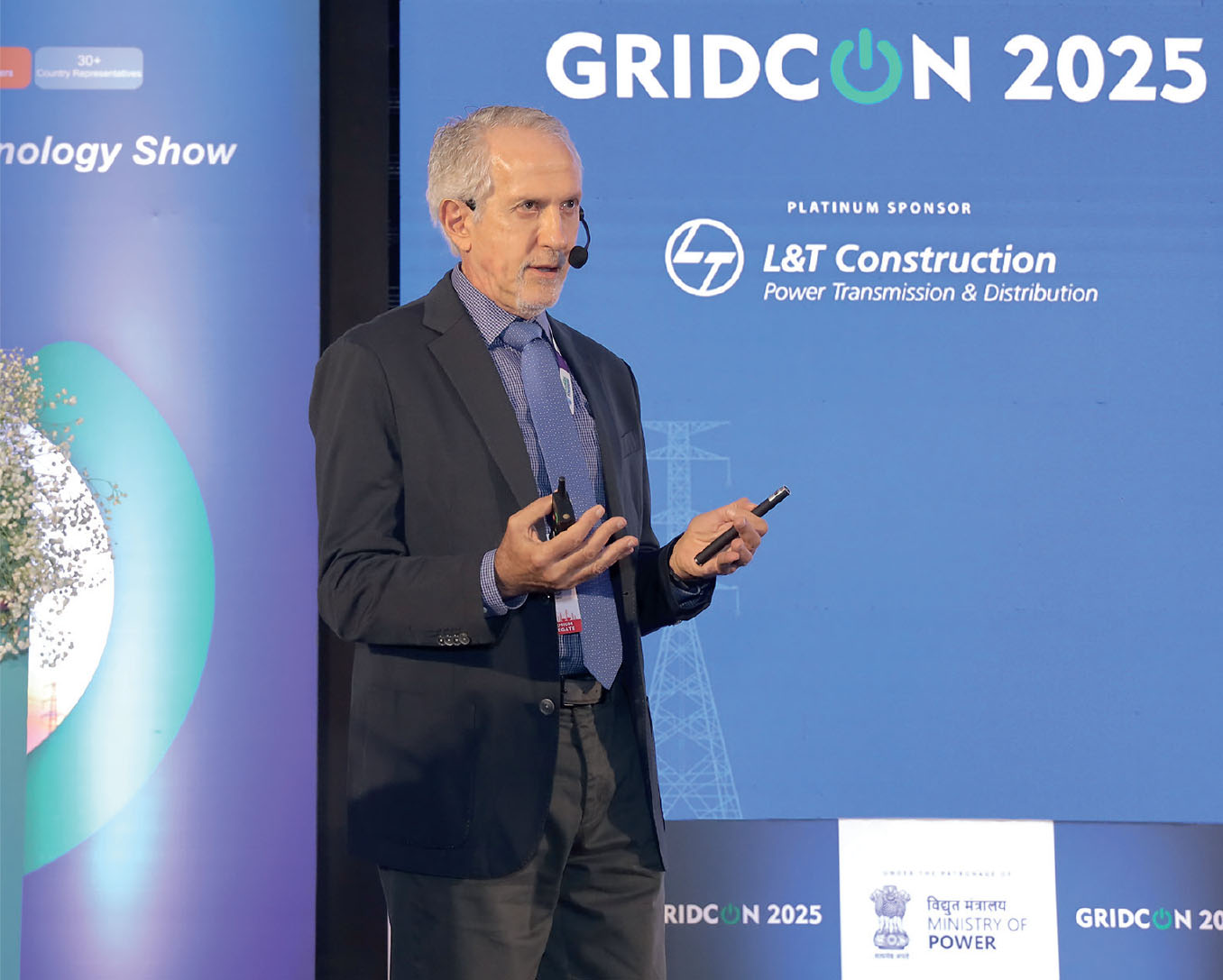 Advances in DC Technologies
Dr Marcio Szechtman, Director General, CEPEL, Brazil, spoke about the advancements in high voltage direct current (HVDC) technology over the years, highlighting its evolution from an emerging solution to a crucial component of modern power grids, enabling efficient long-distance transmission and renewable energy integration.
Before 1972, HVDC applications using mercury-arc valves were limited to 450 kV. The introduction of thyristors revolutionised the technology, allowing higher voltages and power transmission. In the 1970s and 1980s, the AC versus DC decisions were based on costs, with HVDC proving advantageous for long-distance transmission. However, during the 1990s, project deployment was slow, with frequent converter transformer failures raising concerns about HVDC’s viability.
He stated that the 2000s marked a major turning point. The emergence of voltage source converter (VSC) modular multilevel converter (MMC) technology in 2006, which was particularly suited for undersea and underground cables, helped in overcoming the ±800 kV voltage barrier. Several major projects in China and India were subsequently taken up. Unlike line-commutated converters (LCCs), VSC eliminated communication failures and used insulated gate bipolar transistors instead of thyristors.
Early VSC systems faced limitations, but the introduction of MMC allowed full control of active and reactive power, improving grid stability. The elimination of large AC filter yards reduced the land footprint, further facilitating multi-terminal direct current (MTDC) systems and DC grids in China, Italy and Japan.
Countries such as China, India and Brazil have adopted different HVDC expansion strategies based on their energy needs. China developed single bi-poles ranging from 5,000 MW to 8,000 MW, enabling large-scale power transmission. India has implemented a single bi-pole line with two 3,000 MW converters in parallel for optimal efficiency. Brazil has developed two independent 4,000 MW bi-poles with interconnected routes to enhance system reliability.
Another key ultra high voltage direct current (UHVDC) project was the hybrid Yunnan-Guangxi ±800 kV HVDC project, which was commissioned in 2020. It integrated LCC and VSC technologies in a three-terminal system, transmitting 8,000 MW over 1,489 km. Another project, the Changji-Guquan ±1100 kV UHVDC system, holds the world’s highest voltage rating, significantly improving transmission efficiency.
Overall, he stated that HVDC’s evolution is steering towards architectures resembling AC grids. The Zhangbei ±500 kV HVDC demonstration project in China integrates wind, solar and hydro energy over a wide area. Multi-terminal interconnections, higher power ratings and multi-voltage DC levels necessitate advanced DC/DC converters, signalling a shift toward grid-like HVDC networks.
Medium voltage DC applications are advancing, enhancing renewable energy integration and local transmission. The Xinjiang Renewable Energy DC Collection Project is testing an MMC using integrated gate commutated thyristors at ±500 kV and 200 MW, while the Qinghai Photovoltaic DC project has deployed a ±15 kV/60 MW MCC concept to assess compatibility with larger ±500 kV/2000 MW systems.
Dr Szechtman emphasised that HVDC is set for transformative growth, transitioning from isolated projects to large-scale interconnectors that complement AC grids. This is being driven by the global expansion of renewable integration, particularly in China, India and Brazil, with potential adoption in the US. Northern Europe is also shifting from isolated offshore wind projects to hub-to-hub MTDC and DC grids, while DC super grids and overlay networks are poised to enable efficient cross-border transmission. Advancements in DC circuit breakers and switching stations are expected to improve fault clearance and system reconfigurations. Interoperability and regulatory challenges, however, must be addressed to ensure a seamless energy transition.
Global Operational Experiences of UHVAC Systems
Mr Eiichi Zaima, CRIEPI, Japan, spoke about the system aspects of ultra-high voltage (UHV) transmission technologies and operational experiences with UHV transmission lines, including site-testing of substation equipment.
He noted that Japan has over 30 years of operational experience with UHV transmission lines of 550 kV and lower voltages. The country has also carried out verification of substation equipment at test sites.
He further noted that there are plans for the current under-550 kV transmission system in Japan to be uprated in the future, as described in the “Master Plan of Future System Plan in Japan”, which is based on operational experiences.
As per the “Master Plan for the Wide-Area Interconnection System Organization for Cross-Regional Coordination of Transmission Operators of Japan”, uprating of the voltage to UHV level is expected to not only be effective in increasing the power flow, but also expanding the operational capacity of the Tohoku-Tokyo interconnection project.
The project has been constrained by the need for synchronous stability. Therefore, depending on the expected introduction of power sources and other factors, the operators will consider either strengthening the Tohoku-Tokyo interconnection or uprating UHV facilities.