

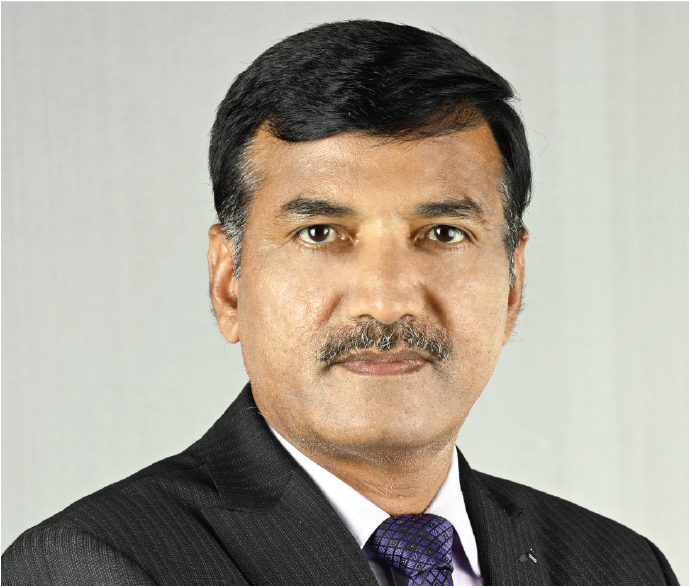
 Power Grid Corporation of India Limited (POWERGRID) organised GRIDCON 2025, an international conference-cum-exhibition at IICC, Yashobhoomi in New Delhi this month. The event, held under the patronage of the Ministry of Power and in association with CIGRE India, brought together top industry leaders. R.K. Tyagi, Chairman and Managing Director, POWERGRID, delivered the inaugural address. Excerpts…
A global shift is taking place towards energy transition, and transition is only possible through transmission and a resilient grid. Collaboration is key. We must work as a common force within the energy sector, driving the global energy transition and adopting strategies to enhance the reliability, sustainability and adaptability of the power transmission system.
As our Prime Minister envisions us to achieve the One Sun, One World, One Grid (OSOWOG) mission, it is time to envision global platforms wherein we think and deliberate as ambassadors of the energy transition – beyond national, domain or organisational boundaries – to work towards resolving the challenges that the energy transition faces today.
POWERGRID is honoured to organise this international conference-cum-exhibition under the patronage of the Ministry of Power, in collaboration with CIGRE India. This event brings together manufacturers, professionals, researchers and academics from the power system community across the globe to shape the future of resilience, asset management and digital transformation.
Moreover, renewable energy now accounts for around one-third of the global electricity supply, with solar photovoltaic investments surpassing all other energy sources combined. However, the existing grid infrastructure is struggling to keep pace with this growth. Recognising these challenges, investment in transmission infrastructure is growing worldwide. It is estimated that, to align with net zero pathways, the annual investment in the transmission segment must reach $250 billion-$300 billion by 2030.
Today, in India, we stand proud with an installed capacity of 466 GW and one of the world’s largest synchronised grids, thanks to the unwavering efforts of all players in the power sector. However, the journey is far from over. Energy transition and energy security, with affordability at the core, are the focus areas for the country’s rapid overall development.
To this end, the Indian government has set a target of achieving 500 GW of non-fossil-fuel-based capacity by 2030. Further, the government has undertaken several initiatives to establish transnational grid interconnections for OSOWOG, stretching from Southeast Asia to the European Union via South Asia, the Middle East and the African grid. The total investment planned in the grid till 2032 is expected to exceed Rs 9 trillion.
POWERGRID is committed to this mission and will continue to ensure that not a single megawatt of renewable power is wasted due to transmission constraints. POWERGRID has always ensured that the Indian electricity grid is technologically at par with best-in-class international utilities. We are driving innovation by developing and adopting modern technologies such as multicircuit towers, extra-tall and narrow-based towers, efficient conductors and insulated cross-arms, and favouring GIS over AIS in urban areas.
Other recent technological innovations include the replacement of synthetic oil with more environmentally friendly ester oil for transformers and reactors, and ongoing efforts towards replacement of SF6 gas with eco-friendly alternatives to minimise environmental impacts.
Further, POWERGRID has successfully commissioned the 1,200 kV test station at Bina, as well as several key ±800 kV HVDC power links such as the Northeast-Agra, Champa-Kurukshetra and Raigarh-Pugalur lines. POWERGRID has also commissioned India’s first state-of-the-art VSC-based HVDC system, which combines sustainability, stability and grid resilience.
Today, we gather here as co-creators of a resilient, sustainable and adaptable power system. GRIDCON 2025 is a platform where visions turn into blueprints and blueprints turn into action. As we move forward, we must remember that a resilient power grid requires a robust transmission system, strengthened by collaboration, leadership and commitments to sustainability. To power the future, protect the present and preserve the planet. The time for change is now – and together, we will make it happen.