
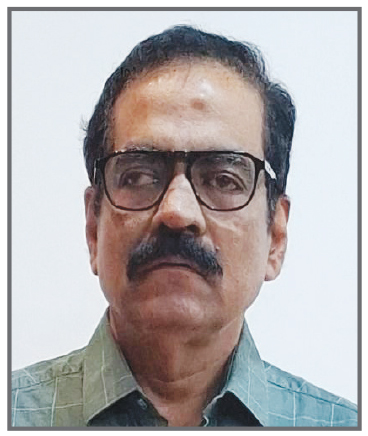
 Kausik Datta is currently serving as executive director (operations & services) at West Bengal Power Development Corporation Limited (WBPDCL). He has over three decades of experience in the thermal power sector, having joined WBPDCL in December 1990 as an assistant manager. Over the years, he has held key roles across construction, commissioning, mechanical maintenance, operation planning and project administration. He was promoted to general manager in 2019 and then to executive director in 2022.
As executive director, Datta oversees the operation and maintenance (O&M) of all five thermal power plants of WBPDCL. His responsibilities span safety, environment, ash utilisation and coordination with agencies such as the Central Pollution Control Board, Eastern Regional Power Committee, Central Electricity Authority and the state load despatch centre.
Under his leadership, WBPDCL’s average plant load factor has improved from around 55 per cent to 88.9 per cent. In 2024-25, WBPDCL achieved highest plant load factor as a generating sector in all India power generation with several of it’s power plants securing top ten rankings. This improvement followed a series of strategic interventions, including the decommissioning of inefficient units at the Bandel thermal power station, revamp of critical assets at Kolaghat and Sagardighi, and resolution of fuel and technical bottlenecks. Furthermore, WBPDCL has added over 1,000 MW of thermal capacity in recent years and is currently setting up the state’s first supercritical thermal unit (660 MW) at Sagardighi. The corporation has also ventured into coal mining and solar generation, with five coal mines and 45.58 MW of solar capacity under development.
Datta has also overseen significant enhancements in O&M practices, including the adoption of advanced process control systems, distributed control system and programmable logic controller upgrades, switchyard automation, availability-based tariff metering improvements, and SAP implementation. Emphasis has also been placed on preventive maintenance, condition monitoring and upskilling of O&M personnel.
Looking ahead, he notes that key challenges for WBPDCL include achieving 100 per cent ash utilisation, securing tariff revisions to cover the cost of environmental compliance and addressing the impact of increased flexibilisation on efficiency metrics such as station heat rate and auxiliary power consumption.