
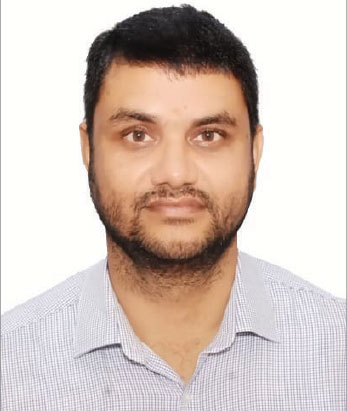
 Ashish Mamgain currently serves as Deputy General Manager at THDC India Limited (THDCIL), where he plays a key role in the execution of the Tehri Pumped Storage Project (PSP), India’s first variable-speed pumped storage facility. An electrical engineer by qualification, Mamgain began his professional journey with THDCIL in 2007 as an Executive Trainee and has since been part of the organisation’s steady transformation into a diversified energy utility.
Over the past 18 years, Mamgain has contributed across multiple verticals including the operation and maintenance of hydroelectric plants, corporate-level project services, and the execution of India’s first variable-speed tehri pumped storage project (4×250 MW). Key contributions include the modernisation and indigenisation of electro-mechanical systems and optimisation of preventive maintenance strategies. He also supported the restoration of Koteshwar’s electro mechanical (EM) systems following the 2010 flood.
Most notably, he has been involved in the commissioning of the first two units of the 1,000 MW Tehri PSP, which achieved commercial operation in mid-2025. Mamgain recalls the Uttarakhand’s long-standing dependence on traditional water-powered systems such as gharats (indigenous watermills). This early exposure fostered a interest in hydropower solutions.
His responsibilities at the Tehri PSP include overseeing high-priority interfacing activities, managing coordination among contractors, and working closely with senior leadership and OEMs. He has been instrumental in executing critical components such as the asynchronous generator and the three-phase AC excitation system-technologies being deployed for the first time in India. He also played a key role in assisting senior management and technology partner GE Vernova, in optimising the commissioning schedule.
Mamgain believes that recent milestones such as Tehri PSP’s commissioning, along with private sector momentum at sites like Pinnapuram.
That said, he points to several challenges that need resolution such as dependence on foreign OEMs for critical technology, the need for regulatory clarity around ancillary service monetisation, and streamlining of environmental clearances for PSPs with minimal ecological impact. He advocates for deeper technology transfer, enhanced domestic manufacturing capabilities, and tailored market mechanisms to unlock PSPs’ full value.