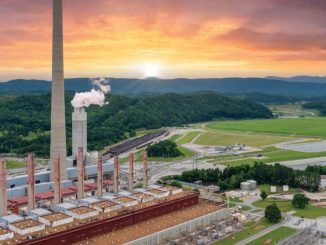
Carbon capture, utilisation and storage (CCUS) is emerging as a critical lever in the power sector’s decarbonisation strategy. In the near term, retrofitting existing coal- and gas-based power plants with CCUS can significantly reduce their carbon footprint while preserving the economic value of installed assets. In the longer term, integrating CCUS with bioenergy offers the potential for negative emissions, helping offset residual emissions from hard-to-abate sectors and reducing the overall cost of achieving net zero.
Under the United Nations Framework Convention on Climate Change Paris Agreement, India has committed to reducing its carbon emission intensity by 30-35 per cent by 2030. Coal-based generation, responsible for around 62 per cent of national CO2 emissions in 2020 and projected to contribute about 54 per cent in 2030, will remain central to the energy mix in the medium term. This underscores the urgency of reducing the carbon intensity of thermal power through CCUS deployment. Efficient and scaled adoption of CCUS could lower India’s greenhouse gas emissions by 50-85 per cent by 2050, positioning it firmly on the path to net-zero CO2 emissions.
CCUS pathways
The CCUS process comprises a suite of advanced technologies designed to capture CO2 emissions from major sources such as thermal power plants and prevent their release into the atmosphere. Once captured, carbon emissions can either be stored in deep geological formations or repurposed for industry use.
CO2 capture technologies operate through several pathways. Post-combustion capture involves extracting CO2 from flue gases after fuel combustion, typically using chemical solvents or membranes. Pre-combustion capture separates CO2 before combustion by converting fuel into a mixture of hydrogen and CO2. Oxy-fuel combustion burns fuel in pure oxygen, producing a flue gas primarily composed of CO2 and water vapour, simplifying capture. Additionally, direct air capture technologies remove CO2 directly from ambient air to address existing atmospheric emissions.
Beyond capture and storage, the captured gas can be valorised as a feedstock to produce a wide array of commercial products. This typically involves reacting CO2 with hydrogen to form intermediate compounds, which are subsequently converted into fuels and chemicals. In the energy sector, these intermediates can be transformed into methanol, ethanol, synthetic methane and sustainable aviation fuels, offering alternatives to conventional fossil fuels. In agriculture, CO2 enables the production of urea, a key fertiliser. The chemical sector can utilise CO2 to manufacture organic chemicals such as olefins, formaldehyde and acetic acid. Additionally, carbon black produced from CO2 could find applications in advanced materials such as carbon nanotubes and nanoparticles.
Further, CO2 can be directly repurposed into various products. The gas has the potential to be used in enhanced oil recovery, which could help extract more oil from existing wells. In the construction industry, it can be used to create building products such as carbonated fly ash aggregate. CO2 can also be used in the production of inorganic chemicals such as soda ash and baking soda. The gas could also find applications in food and beverages, welding, and fire extinguishers. Other emerging use cases include high-purity compounds to extract Omega-3 fatty acids.
 Challenges and the way forward
The deployment of CCUS at scale faces multiple barriers. The capital- and energy-intensive nature of capture processes, coupled with high operating costs, remains a primary challenge. Retrofitting thermal plants involves design limitations and potential efficiency losses, while the absence of large-scale CO2 transport and storage infrastructure hinders deployment. Regulatory uncertainty, long-term liability for stored CO2 and the absence of a robust carbon pricing mechanism alsp dampen investor confidence. Limited public awareness and the shortage of skilled manpower add to the challenges.
To make large-scale CCUS projects viable, several financial and regulatory measures are required. Introducing a “Green Tag” for methanol and extending the SIGHT scheme, originally for green hydrogen, to provide equivalent support for CO2-based green methanol could drive the uptake of CCUS plants. Additionally, supportive price mechanisms and comprehensive financing, including viability gap funding (VGF), low-cost financing with interest rates below 5 per cent and interest subvention that can be tied to economic factors such as inflation, would further improve project economics. To further reduce initial barriers, a GST Holiday is proposed for early-stage plants.
In addition, technology demonstration plants are crucial for validating new technologies and establishing accurate cost figures. Since these demonstration plants are not expected to be commercially viable from the start and require significant investment, a mechanism to incentivise their development is essential. This dual strategy ensures the long-term economic sustainability of large-scale projects while supporting the initial high-risk phase.
Targeted policy incentives such as VGF, low-cost financing and GST exemptions for early-stage plants can help improve project economics. Concessional climate finance and international technology partnerships are essential to bring down costs and accelerate technology transfer. Expanding CO2 utilisation markets through offtake agreements can provide steady revenue streams. Equally important is the establishment of a national CO2 transport and storage framework to enable cross-sector adoption. With strong policy support, industry commitment and sustained R&D, CCUS can transition from pilot projects to a core element of India’s low-carbon transition, enabling emission reductions from coal power and other hard-to-abate sectors while creating new industrial opportunities.
Based on a presentation by Shaswattam, Executive Director, NTPC Energy Technology Research Alliance (NETRA) at a Power Line conference