

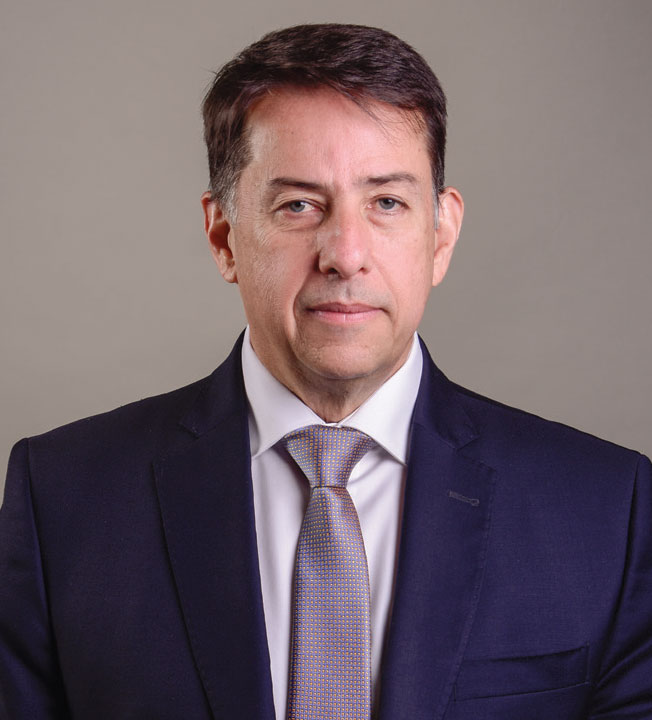
 In a recent interview with Power Line, Guilherme Mendonca, Managing Director and Chief Executive Officer, Siemens Energy India Limited (SEIL), shared his views on the current state of the sector and the future outlook. He also spoke about the company’s key achievements and future plans. Excerpts….
How do you rate the performance of the power sector in the past one year or so?
The solid macroeconomics, GDP growth rate of more than 6.5 per cent, focus on industrialisation and rising consumption are driving a “supercycle” in India’s power sector. Our per capita energy consumption is growing at 11 per cent, but is still one-fifth of China and one-third of the world. This indicates the tremendous potential for a surge in power demand.
On the supply side, the transformation has been just as striking. Non-fossil fuel capacity has already crossed 50 per cent, years ahead of the 2030 target. Renewable generation grew 11.4 per cent year on year, while solar capacity has grown leaps and bounds to over 100 GW. Alongside, with huge renewable energy integration into the grid, grid stabilisation solutions are becoming critical.
While new coal-based plants will continue to be built for some more time, the long-term direction is clear: nuclear power is targeted to reach 100 GW by 2047 and is set to become the next foundation. India’s power story is one of high growth, with a move towards a cleaner, more secure energy future, and we are committed to partnering in that transition.
What, according to you, are the biggest opportunities and challenges in the sector?
One of the biggest challenges I see on the generation side is keeping pace with the growing demand. While the addition of new capacity is surging, there are supply chain and project execution constraints. Extending the life and efficiency of the existing power fleet through advanced services, modernisation and upgrades is essential to sustain reliable generation.
On the transmission side, the rapid integration of intermittent renewable energy, while critical for decarbonisation, is straining grid stability. This necessitates cutting-edge and proven solutions for grid stabilisation, ranging from static synchronous compensators (STATCOMs) and advanced storage systems to synchronous condensers. While the implementation of renewable energy projects is much faster, the transmission implementation cycle remains longer due to challenges related to execution complexity, land acquisition, right of way, etc. Another crucial point is cybersecurity. Strong and reliable cybersecurity is key to ensuring energy security and avoiding disruptions. Power transmission is a highly vulnerable sector, so it is essential to ensure that the technology used is safe and reliable.
Global supply chains remain vulnerable to geopolitical shocks and regional conflicts. We have been seeing customers moving to bulk orders well in advance for transmission equipment. To support our customers in meeting their commitments on time, we have announced a total capex investment of Rs 7.4 billion in the Siemens Energy business for scaling up capacities for transformers and switchgear at our Kalwa and Aurangabad facilities respectively.
Addressing the challenge of decarbonising hard-to-abate sectors, solutions for industrial electrification, automation and efficiency enhancement such as waste heat recovery and automation are gaining importance. Further, with a price discovery of below $4 per kg, the green hydrogen sector is moving from hype to hope.
What are emerging trends in power sector, and how is Siemens Energy India adapting to these?
With eight factories, 11 regional offices, two service centres and nearly 4,300 employees, SEIL is a pure-play energy technology company that offers a comprehensive portfolio of products, solutions and services designed to support customers along the entire energy value chain to enable their energy transition journey and achieve their net zero targets. Our portfolio offerings include low to zero emissions power generation, transmission and storage, and industry decarbonisation.We are actively aligning our portfolio and capabilities to support the evolution across generation, transmission and industrial applications. The most prominent trend is a sharp rise in energy demand. To meet this demand, while new capacities are being built, it is also important to focus on the existing thermal fleet of over 243 GW as of July 2025. Here, we are supporting utilities with life extension solutions, emissions reduction technologies and efficiency upgrades. Our focus is on ensuring reliable performance through advanced retrofit and digital service offerings.
India’s transmission capacity is projected to reach 2,412 GVA by 2032, necessitating robust infrastructure. SEIL is committed to supporting the transmission segment with our high voltage and extra high voltage transformers, gas-insulated switchgear, switchgear, grid automation and high voltage direct current (HVDC) systems.
Grid integration of intermittent sources such as solar and wind is a growing challenge. Our global expertise and advanced technologies such as STATCOMs, synchronous condensers, energy storage systems and intelligent grid management solutions are capable of managing this transition. Rapid industrialisation is driving demand for reliable captive power solutions. We are supporting these customers with steam turbines, cogeneration systems and aftermarket services near their operations, tailored for sectors such as manufacturing, chemicals and other energy-intensive industries.
What will be the role of AI and digital solutions in meeting the requirements of the future grid?
As India rapidly scales renewables, the system faces greater variability and stress. Digital tools, particularly artificial intelligence (AI), are what turn uncertainty into predictability. We are embedding AI and digitalisation into every layer of our portfolio. Digital twin solutions for transformers and turbines enable customers to simulate performance, predict failures and reduce downtime, extending asset life while lowering life cycle costs. Our AI-driven condition monitoring systems in high voltage substations help utilities detect anomalies early and intervene before disruptions occur. Similarly, remote diagnostics and internet of things-enabled service platforms are already supporting utilities and industries in maximising uptime and efficiency.
Our digital control systems and remote monitoring platforms allow independent power producers and utilities to run plants more flexibly, even under fluctuating demand. Our flexible AC transmission systems and HVDC systems provide the physical backbone of the future grid, while AI and digitalisation provide intelligence. Together, they form an integrated ecosystem – linking generation, transmission, storage and consumption into a resilient, flexible and future-ready grid.
What have been the key business highlights of Siemens Energy India in past 12 months or so?
With the successful demerger and listing of SEIL this year, we now operate with greater agility, transparency and sharper strategic focus. This allows us to reinvest more decisively in priority areas, align more closely with India’s energy transition agenda, and deliver faster on the needs of our customers and partners. The business has been on a strong growth trajectory, as reflected in the quarterly results of SEIL. In the third quarter of FY 2025, new orders rose by over 94 per cent to Rs 32.9 billion, and revenue grew by 20 per cent over the same quarter of FY 2024.
Deepening our roots in India, we have committed to expanding our high voltage switchgear manufacturing facility in Aurangabad, while also scaling capacity at our Kalwa transformer factory. These moves align with nation’s Make in India and Atmanirbhar Bharat vision.We maintain a sharp focus on diversity hiring, including greater participation of women in India’s energy transition, starting with our own shop floor. Recently, our Grid Technologies Services team made history by securing the first-ever order for our Blue portfolio in India – a 145 kV SF6-free circuit breaker – from an Indian state power utility, reinforcing our commitment to grid decarbonisation and sustainability.
What are your key focus areas and top priorities going forward?
As an energy technology company operating across the entire energy chain, we are focused on strengthening our core businesses to capture the momentum in the sector, by scaling capacities, expanding reach and driving sustainable growth. We are also focused on driving grid decarbonisation and sustainability. Here, our SF6-free Blue portfolio is a great proof-point of cutting-edge technology and environmental responsibility going hand in hand.
Lastly, the decarbonisation of heat and industrial processes is critical for efficient industrial operations. We have the expertise, technology and skills to capitalise on these trends and support India’s energy transformation.
What is your outlook for the power sector?
The rise in electricity demand is unmistakable, driven by economic expansion, industrial acceleration and growing domestic consumption. We are looking at a leap from 1,694 TWh in 2025 to nearly 2,500 TWh by 2032. This is not just a statistic; it is a signal of scale of opportunity ahead. On the generation side, ambition is clear. India is doubling down on its renewable energy targets, aiming for 500 GW by 2030 and 669 GW by 2032. While coal will continue to play a stabilising role in the short term, we are seeing nuclear energy emerge as a strong contender for baseload capacity, with plans to scale from 8.8 GW today to 100 GW by 2047.
Transmission infrastructure is also undergoing a massive upgrade. The NEP outlines a Rs 9.16 trillion investment through FY 2032 to strengthen grid capacity and resilience. This is a critical enabler for integrating renewables and meeting peak demand reliably. Decarbonisation is no longer a distant goal, it is a present-day priority. India has already surpassed its 2030 target of 50 per cent non-fossil generation, five years ahead of schedule. The National Green Hydrogen Mission is another bold step, targeting 5 million metric tonnes of production annually by 2030. We see ourselves as a key partner in this journey. Whether it is delivering advanced transmission systems, modernising thermal assets, enabling industrial electrification or pioneering green hydrogen solutions, we are here to support India’s energy transition with technology, expertise and commitment.