Rising power demand, rapid capacity expansion and a strong clean energy push are driving investments in the Indian power sector. Investor interest remains strong across renewables, storage, transmission and smart infrastructure. At the same time, challenges relating to discom finances, transmission and renewable integration persist. Leading financiers and investors share their views on the sector performance, emerging challenges and investment outlook…
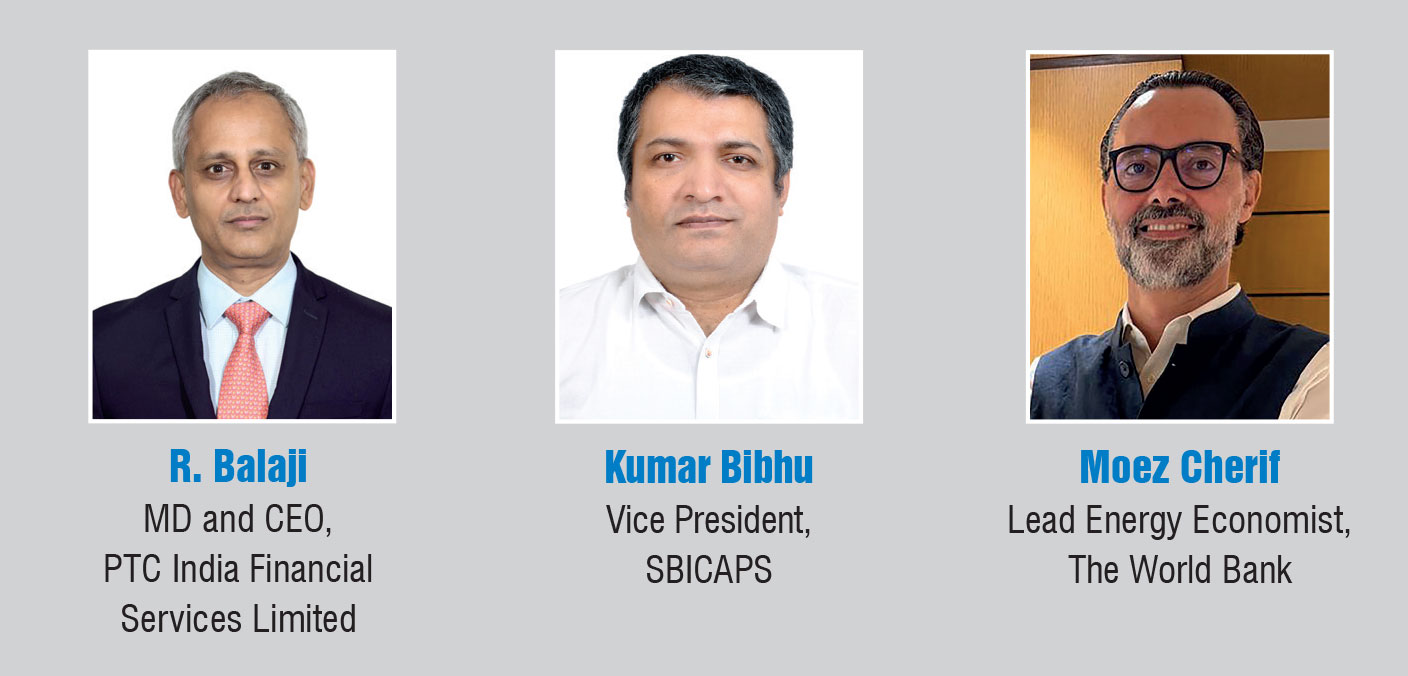
What is your assessment of the current state of the power sector? What is the prevailing investor sentiment with regard to the power sector?
R. Balaji
India’s power sector stands at one of its most defining junctures. On the one hand, the system is grappling with record-breaking demand, having crossed the 250 GW peak load mark. On the other, it is being propelled by a policy vision that seeks to build 500 GW of non-fossil capacity by 2030, a goal that would place India among the world’s largest clean energy economies. Balancing these twin imperatives, ensuring round-the-clock reliability while accelerating the greening of the grid, is reshaping not just how we generate electricity, but also how we plan, finance and deliver energy. The question for policymakers, investors and financiers is no longer whether India will transition to sustainable power, but how quickly and at what scale. For institutions like ours, the story unfolding is not merely one of growth; it is, more importantly, a story of sustainable transition.
The current state of the sector reflects both resilience and rapid evolution. India has achieved near-universal electrification, with a total installed capacity of around 476 GW, of which nearly 49 per cent comes from non-fossil sources such as solar, wind, hydro and nuclear. This marks a structural transformation, as non-fossil capacity is now nearly on par with thermal. Growth is being powered not just by household electrification and conventional industry but also by emerging, high-consumption sectors such as 5G-driven telecom networks, Artificial Intelligence (AI)-powered data centres, electric mobility and green manufacturing. Around 79 per cent of new capacity added in the first quarter of 2025 came from renewable sources, underscoring the momentum behind India’s clean energy transition. Solar power alone added about 24 GW in the first half of 2025, a milestone that would have seemed ambitious only a few years ago. Alongside this, wind, hydro and hybrid projects are scaling up steadily, while coal continues to provide the stabilising backbone needed for grid reliability in the near term.
Policy clarity has been central to building investor confidence. The government’s road map for achieving 500 GW of non-fossil fuel capacity by 2030 is underpinned by a coordinated national transmission plan and complemented by targeted programmes for rooftop solar, storage, offshore wind, green hydrogen and smart metering. Flagship initiatives such as PM-KUSUM, the PM Surya Ghar: Muft Bijli Yojana and the National Green Hydrogen Mission provide the visibility and scale that global investors look for. Regulatory steps such as the Green Energy Open Access Rules are unlocking new demand segments, particularly from commercial and industrial consumers who are seeking assured access to clean power. This is reflected in investor sentiment, which is optimistic but increasingly selective. Long-term capital views India as one of the most credible energy transition markets globally, but the fund flows are now concentrated in companies with strong fundamentals, scalable clean energy platforms, and credible environmental, social and governance (ESG) commitments. Equity market volatility, valuation corrections and persistent concerns around the financial health of distribution companies have reinforced this shift towards quality and discipline.
Kumar Bibhu
The Indian power sector remained an area of intense activity in FY 2025 and the trend is likely to continue even in this financial year. The total installed capacity of the sector is about to exceed the 500 GW mark for the first time, mainly backed by capacity additions in the renewable energy sector. At the same time, peak demand is touching the 250 GW mark in the country. A key feature of these developments is their multidimensional nature. Growth in the power sector is not concentrated in a few segments, areas or geographies. It is multisegmental, with vigorous activity across thermal, nuclear, storage, hydro and other segments. Further, the sector is accommodating several innovations such as smart metering, derivative trading, round-the-clock renewable energy solutions, storage solutions and green hydrogen.
These activities and innovations have fuelled heightened investor interest. It is estimated that an additional Rs 33 trillion of funding will be needed to meet the National Electricity Plan’s generation targets. Further, the sector has received fresh impetus from the Government of India’s plans to add 80 GW of incremental thermal capacity by FY 2032. Many key players have already announced their capacity addition plans and started placing orders with equipment manufacturers. Several issues associated with nuclear projects have been resolved and players such as NTPC and Nuclear Power Corportation of India Limited (NPCIL) have new nuclear capacity addition plans. These activities have created a positive investment climate.
Moez Cherif
The Indian power sector has seen remarkable progress over the past decade and a half. The central transmission grid has been unified into a single synchronised national grid, while generation capacity has increased significantly, reaching 495 GW in August 2025, nearly three times the capacity in 2010. The sector is also becoming greener, with renewable energy, including hydropower, now accounting for almost half of the capacity mix. However, the growing share of solar and wind energy generation has introduced intermittency, making energy storage solutions critical. The Ministry of Power is promoting energy storage through obligations on distribution companies, while green hydrogen, which requires large amounts of renewable energy, is being considered for decarbonising industries.
Private players are increasingly driving investment in the power sector, accounting for about 45 per cent of total generation assets, particularly in solar and wind generation. While transmission and distribution investments are still dominated by the public sector, private sector investment in transmission is growing through tariff-based competitive bidding. Electricity distribution remains the weakest link in the value chain due to several challenges, but the government is taking measures to address them. Achieving the ambitious targets set for 2047 requires continued focus on grid stability, reliability and sustainable operations.
Overall, investor sentiment remains positive, especially in power generation, driven by government policy support, rising electricity demand and a shift towards renewable energy. Foreign direct investment in non-conventional energy reached $21 billion between 2020 and 2024 as per department for promotion of industry and internal trade, supported by policies such as the production-linked incentive scheme for solar manufacturing and the allowance of 100 per cent FDI in power generation.
Scaling up investments in greening the power sector is a big opportunity for India. It not only helps address environmental issues such as air pollution, but also drives employment, as green industries and businesses that reduce their own energy intensity tend to create more and higher-paying jobs. Greening the power sector is the most efficient way of improving the environmental sustainability of industrial energy buyers and ensuring compliance with international export standards.
The World Bank is actively supporting government policies in the sector, including initiatives for renewable energy deployment, green hydrogen, storage technologies and transmission investments.
What are the biggest issues and challenges facing the segment?
R. Balaji
Financial innovation has deepened market participation, creating investible structures that align with institutional capital appetites. Infrastructure investment trusts, securitisation of receivables and public-private models for smart meter roll-outs are opening up new avenues for annuity-style, yield-oriented investment. These structures allow investors to leverage long-tenor cash flows while mitigating counterparty and grid risks. That said, this momentum should not obscure the structural challenges that continue to weigh on the sector. Distribution remains the weakest link, with aggregate technical and commercial (AT&C) losses still in the 15-18 per cent range and arrears affecting cash flows, despite the early benefits of smart meter roll-outs under the Revamped Distribution Sector Scheme (RDSS). Transmission bottlenecks, arising from land constraints, forest clearances and congestion, are slowing renewable evacuation and inflating project costs. Renewable integration, with its inherent variability, demands large-scale storage solutions, flexible generation and AI-enabled grid management. Supply chain dependencies, particularly on lithium, advanced battery and electrolyser imports, increase both cost pressures and energy security concerns. In addition, project execution continues to be hampered by delays in land acquisition, environmental clearances and signing of power purchase agreements. Above all, climate variability, ranging from heatwaves to shifting hydrology and unseasonal rainfall, is reshaping demand curves and ramping needs, forcing system planners to integrate diversification, storage and advanced planning into every stage of investment.
Kumar Bibhu
Some of the key issues and challenges facing the segment are as follows.
- Grid integration of renewable power: More and more renewable capacity is being added and fed into the grid, with current estimates at around 192 GW. The intermittent and infirm nature of this power, without adequate storage solutions, makes it challenging to maintain grid stability.
- Financial condition of discoms: While much has been done to improve the financial health of discoms, it still remains an area of concern for the sector. The overall AT&C losses of discoms have increased from 15.11 per cent in FY 2023 to 16.12 per cent in FY 2024. Further, discoms’ collection and billing efficiency also requires improvement. Faster implementation of smart metering could alleviate some of these issues.
- Low generation capacity utilisation: Despite a large installed base, generation plants deal with lower plant load factors (PLFs). The average PLF of thermal power plants in India remained below 70 per cent in FY 2025, leading to suboptimal utilisation of resources and higher cost of power supply for discoms.
- Transmission bottlenecks: The increase in generation capacity will require corresponding transmission capacity. However, with huge generation capacities being planned, the unavailability of adequate transmission capacity is emerging as a roadblock. Faster implementation of planned transmission capacities, supported by a modern digital backbone, is the need of the hour.
Moez Cherif
Despite impressive strides, the Indian power sector continues to face significant challenges. While the rapid expansion of installed capacity and the creation of a unified national grid are notable achievements, issues remain around the despatch of variable renewable energy, bottlenecks in intra-state transmission, and the financial sustainability of distribution companies. The shift towards renewables is commendable, but integrating intermittent energy sources requires further technological and infrastructure upgrades.
Congestion is a growing issue, particularly in renewable energy-rich states such as Gujarat, Maharashtra and Rajasthan. This is due to the intermittent nature of renewable energy generation and limited integration with existing grid infrastructure. While interstate transmission system investments have generally kept pace with generation capacity, intra-state transmission system development has lagged, with only about three-quarters of planned lines built between 2017 and 2022. Private sector participation in intra-state transmission projects is increasing, but is yet to catch up with interstate projects. Additionally, India needs to scale up investment in energy storage, including both battery and pumped hydropower storage, to ensure grid stability and efficient integration of renewable energy.
The low financial viability of publicly owned distribution companies further threatens the renewable energy ramp-up necessary to meet energy transition targets. The government’s RDSS aims to address these deficiencies with a significant outlay over five years.
The World Bank is providing both technical assistance and financial resources to invest in intra-state transmission infrastructure, both battery and pumped hydropower storage, and the modernisation of transmission and distribution utilities at the state level.
What is the investment outlook for the power sector over the next one to two years?
R. Balaji
The investment outlook for 2025-27 remains strong across multiple fronts, but with sharper selectivity. Renewable energy will remain the anchor of capacity expansion, with accelerated solar, wind and hybrid projects driving progress towards the 500 GW non-fossil target. Distributed solar is emerging as a transformative frontier, with the PM Surya Ghar scheme catalysing rooftop adoption across households through a Rs 750.21 billion outlay, while the PM-KUSUM scheme, with an allocation of Rs 344.22 billion, is solarising agricultural pumps and integrating farmers into the transition. On the commercial and industrial side, green energy open access is creating new demand for financing structures such as vendor finance, aggregator platforms and small-ticket receivable securitisation. The transmission sector offers a multi-year, multi-gigawatt investment pathway, as green corridors and high-capacity lines are essential to unlock renewable-rich regions. Smart meter roll-outs represent another annuity-style investment avenue, backed by public-private models that offer predictable long-term cash flows.
Storage will inevitably become the system’s marginal capacity, with batteries and pumped hydro providing both technical resilience and investment opportunities. Yet, the pace of storage deployment will depend on clear policy frameworks for tariffs and availability payments. Offshore wind and green hydrogen, though still at nascent stages, are being scaffolded by supportive policies. Offshore wind is benefiting from a viability gap funding framework that offsets its high upfront costs, while the green hydrogen sector is advancing under the SIGHT programme, with an allocation of Rs 174.9 billion within an overall outlay of Rs 197.44 billion. Both are expected to scale from pilot projects to mainstream adoption within the next two years. Meanwhile, thermal capacity will remain relevant for grid stability in the medium term, with demand projected to rise until at least 2031-32. However, the financing focus is shifting away from traditional baseload expansion towards retrofits that improve flexibility and emissions performance, positioning coal plants as complements to renewable variability rather than long-term anchors.
For infrastructure-focused NBFCs, this is not just about deploying capital but about shaping the transition itself. Financing now demands alignment with both policy priorities and operational performance. This includes designing cash flow-linked debt structures with pricing tied to verified outcomes, scaling platform financing for rooftop and behind-the-meter portfolios, supporting supply chains with working capital and vendor finance, and backing annuity-based models in smart meters, storage and transmission through appropriate credit enhancements. Mobilising private credit and InvIT-ready structures will be essential to recycle operating assets and attract global ESG-focused capital pools.
Ultimately, India’s power sector today is not debating whether it will transition to clean energy but determining the speed and scale of that transition. The risk-reward balance remains distinctly attractive wherever projects align with clear policy signals, assured offtake, evacuation readiness and disciplined O&M practices. The opportunity for financiers and investors alike is to back green, digital and flexible assets that will strengthen the grid, meet surging demand and accelerate India’s progress toward a 500 GW non-fossil future by 2030. This is not just a story of growth, it is about building a power ecosystem that delivers affordable, reliable and green energy with consistency and resilience.
Kumar Bibhu
The National Electricity Plan has charted a clear course for the Indian power sector with ambitious targets. It is estimated that an additional investment of about Rs 33 trillion is needed to meet these generation targets. While renewables will account for a significant share in this capacity addition and investment demand, the plan also envisages significant contribution from thermal power and storage. Thermal generators have placed boiler-turbine-generator orders worth more than Rs 2 trillion with equipment manufacturers, translating into about Rs 5 trillion of additional investment. In addition, emphasis is being placed on nuclear capacity addition, especially through small modular reactors.
Given these positive signals, the power sector is expected to witness significant activity over the next one to two years. In addition to generation, matching investments are expected in transmission and distribution, particularly, smart metering. Therefore, in the short to medium term, the investment scenario for the power sector remains positive.
Moez Cherif
The power sector has witnessed a clear shift from public sector-led thermal power investments to a more diversified landscape, marked by significant private and foreign investment, especially in renewables. In 2024, 83 per cent of power sector investment went to clean energy, with solar PV constituting more than half of total non-fossil investment. While FDI has been growing, it still represents a modest portion of total investment.
The rising investment trend in the power sector is expected to continue, driven by increasing power demand, infrastructure upgrades and a shift towards cleaner energy. Renewable energy is likely to be a key focus area, with India aiming to increase its non-fossil-fuel-based installed electricity generation capacity to 500 GW by 2030. The government has announced various measures to accelerate investment in renewables, nuclear power, and transmission and distribution infrastructure. The union budget for 2025-26 has significantly increased funding for the renewable energy sector. Scaling up investments across the power sector value chain is essential to keep up with fast growing demand, and strengthen India’s energy independence and environmental sustainability.
The government’s commitment to energy transition and infrastructure development is expected to drive growth in the power sector. Electric vehicles and data centres are anticipated to significantly contribute to power demand growth by 2035. With a robust GDP growth outlook and emerging new demand drivers, India’s power consumption is expected to grow steadily over the next decade. The World Bank estimates that by 2030, the power sector will require substantial annual investments of around $70 billion annually across generation, storage, transmission and distribution. Meeting these investment needs will require significant private and commercial capital, supported by policy stability and enabling regulations. The World Bank Group is prepared to mobilise all available resources – public, private and guarantee instruments – to help scale up the required investments.