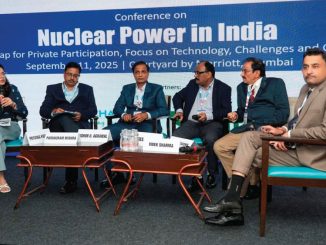
The power ministry has recently released the Draft Electricity (Amendment) Bill, 2025, outlining a host of measures aimed at transforming the power distribution segment. Among its key provisions, the draft bill proposes the sharing of distribution networks to promote efficiency and competition. It allows distribution licensees to supply power through their own or shared networks. Apart from this, the bill proposes cost-reflective tariff determination by electricity commissions to empower the state commissions to determine tariffs suo motu, thus ensuring timely implementation. Industry experts share their views on the likely impact and challenges of the proposed reforms. Edited excerpts….

What are the key hits and misses of the Draft Electricity (Amendment) Bill, 2025? How will it impact the sector?
Pankaj Batra
There are not many amendments in the Draft Electricity (Amendment) Bill, 2025, as was expected, since the Electricity Act of 2003 itself was a comprehensive act, with the basic purpose of making the power sector more professional. The act lays out the institutions and their functions, such as defining functions of the central and state transmission utilities, load despatch centres (more commonly known as system operators) and dedicated lines. The changes include the corporatisation of the erstwhile state electricity boards, introduction of privatisation and competition (mainly in the generation and distribution sectors) and regulation in the transmission sector. It aims to make the sector more efficient by encouraging privatisation in generation to attract more capital, thereby fostering competition between the public and private sectors, as well as within the private sector. In order to enable a level playing field, regulatory commissions were again formally constituted, both at the central level (for interstate matters) and state level (for intra-state matters), although they were first constituted under the Electricity Regulatory Commissions Act, 1998, and some states had already constituted these before the Electricity Act, 2003 with Odisha doing so even before the Electricity Regulatory Commissions Act, 1998. Open access was introduced, power trading was constituted as an independent activity, and the power market was initiated.
However, the portion of the sector that was overlooked in the Electricity Act, 2003, was the need to bring about efficiency in the distribution sector. Although it placed the onus on state regulators to make the distribution sector more efficient, in terms of specifying the distribution code, setting tariffs and defining obligations of distribution licensees and consumers, it has not shown the expected results. The losses of state-owned distribution continue to accumulate and are set off by the central government through various schemes. In order to make the sector sustainable, it is important to address the issues of the distribution sector. In the three to four attempts to amend the act, it repeatedly stalled over reforms to the distribution segment. Improving distribution efficiency is essential to make the sector sustainable.
In the amendment, tariffs are proposed to be cost-reflective, so that discoms do not suffer financial losses. This, of course, is good, since if we want to have a professional distribution sector, discoms should be profitable, or at least have enough funds for not only running their normal business, but also for development and capacity building of the states’ officials.
At the same time, the Indian government does not want industries to suffer from high tariffs, making them globally non-competitive due to cross-subsidisation. So, what is proposed is that any consumer above the load of 1 MW can go for open access, and discoms are not obligated to supply power to these consumers. However, if they want to procure power from the host discom on a standby arrangement, if they cannot source power through open access, they can fall back on the discom for supplying power at a higher rate. It means that the discom will have to keep some capacity for standby arrangements, or alternatively buy power from the power exchange to cater to the standby arrangement. As the saying goes, the proof of the pudding is in the eating. Let us see if this works. Therefore, cross-subsidy will be eliminated, and if the state government wants to give subsidy to disadvantaged categories of consumers, it needs to provide upfront subsidy for the same. In most developed countries, the tariff for industrial consumers is lower than that for residential consumers. In India, it is the reverse. This provision may help in reducing the tariff for industries.
My view is that this method would allow cross-subsidising consumers to move out of the discom’s purview, while the cross-subsidised consumers remain. This would then result in a higher tariff for the cross-subsidised consumers, such as the residential and agricultural consumers. According to me, a better system would have been to eliminate cross-subsidisation between consumers, apply a uniform tariff for all consumers, and provide direct subsidies to the disadvantaged section of society or to any sector that the government wishes to support – similar to the mechanism used for gas cylinders. An additional advantage in this system is that competition does not get distorted due to cross-subsidy.
Another provision proposed is to allow the sharing of the distribution system by multiple distribution licensees in the same area, whereas earlier, there could be different distribution licensees in the same geographical area, but they had to have their own network. The amendment would enable the optimal utilisation of distribution assets, similar to what already exists in the transmission sector, which will help reduce the cost of supply to consumers.
In the renewable energy segment, it is proposed that the minimum percentage of renewable energy mandated to be consumed by a discom is to be in accordance with the percentage specified by the state electricity regulatory commission (SERC), but should not be lower than that specified by the central government. Earlier, it was the percentage as specified solely by the SERC. As a result, different SERCs set varying percentages, mostly lower than the trajectory specified in the tariff policy by the central government, which hindered progress towards the commitments made by the central government. Therefore, the amended provision is expected to give a boost to renewable energy.
Other proposed measures are related to making the state regulators more accountable and increasing the number of Appellate Tribunal for Electricity (APTEL) members, as the current shortage of support staff requires members to handle most tasks themselves, including studying cases and dictating orders. The bill also proposes establishing an electricity council to promote consensus-based reforms and provide policy advice to the states. These are positive steps. Energy is the lifeline of a country, and the share of electricity is expected to keep increasing. Therefore, it is of utmost importance that adequate attention is given to this sector. These measures are aimed at making the sector more efficient.
Ann Josey
Two game-changing proposals not included in previous amendments to the Electricity Act, 2003 are the possibility of universal service obligation (USO) exemption for discoms for consumers of 1 MW and above, and time-bound phasing out of cross-subsidy in tariffs for manufacturing enterprises. Both proposed provisions recognise the following emerging developments in the sector.
First, direct procurement through open access has been adopted and implemented across all Indian states, resulting in significant sales migration, particularly through renewable energy-based captive systems in recent years. However, such direct procurement also relies on concessional reliability services provided by discoms, such as banking and standby. For example, banking service costs range from Re 0.60 to Rs 3 per unit of energy banked, but the charge levied is closer to Re 0.25 per unit. Additionally, consumers opportunistically switch between the market and discoms, making planning and operations a complex challenge for discoms. These costs are socialised among all other discom consumers through tariffs and regulatory assets. Removing the USO would be the first step towards consumers availing all supply and reliability services from the market rather than at concessional rates from discoms.
Second, high tension (HT) industrial consumers pay at or close to the cost of supply in 14 of the 17 states for which we analysed actual sales, revenue and tariff data, implying either no or marginal contribution to cross-subsidy. In fact, cross-subsidy revenue between tariff categories is also not substantial and contributes to less than 5 per cent of expenses in 11 of the 17 states.
Given these developments, we believe that the proposed amendments need to be strengthened and accompanied by several other measures to usher in the next wave of reforms in the sector to further competition and market development. To this end, discoms’ exemption from the supply obligation should be notified by states five years before implementation to allow for adequate time for adjustment to this major change. Such an exemption should be applicable for all discoms in the area of supply and should be for a category of consumers connected to a voltage level (> 33 kV or > 11 kV), as this will be easier to implement, and also include HT consumers below 1 MW. These consumers can be called “deemed open access” consumers.
Along with the exemption, SERCs should not set tariffs for supply (fixed/energy charge) for deemed open access consumers. Only the wheeling, transmission and supply of last-resort charge should be applicable. Supply, standby and other reliability services should be procured by the deemed open access consumers through market contracts and market-determined prices from traders, generators and even discoms.
Further, to de-risk market participation, especially for small consumers, a new class of licensees can be introduced, who sell power to deemed open access consumers at the national/state level (similar to trading licensees at market-determined prices) but under standard contracts approved by regulators. To compensate for the loss of revenue for discoms and given the diminishing role of cross-subsidy, open access charges of cross-subsidy surcharge and additional surcharge can be replaced with a supply obligation charge. This charge, which would be permanently fixed, can be capped at Rs 2.50 per unit. It would be levied on open access and captive consumers, but can be differentiated. For deemed open access consumers, it should be discontinued after a five-year period. Additionally, discoms can provide supply of last resort to deemed open access consumers when both supply and standby arrangements fail. The supply of last-resort charges should be set by the regulator and should not be less than twice the average cost of supply to compensate for planning, scheduling and risk management by discoms.
We believe such an approach would build on the implementation of open access, competitive bidding and delicensing of generation to usher in investment, innovation and new business models in the sector while protecting small consumers. It would unleash competition for 30 per cent of demand in India, while requiring the participation of only 900,000 consumers (less than 0.3 per cent of all consumers), making it easier to implement than full carriage and content separation. States would also retain flexibility in the timing, manner and phasing of adoption. Discoms could also participate as traders in the market, and consumer participation would be de-risked through the new bulk supply licensees.
Vikas Gaba
India’s power sector has long struggled with inefficiencies, financial fragility and opaque subsidy structures. The Draft Electricity (Amendment) Bill, 2025 is a reasonable attempt to address these systemic issues. It proposes cost-reflective tariffs, transparent subsidy flows, competitive distribution, stronger regulatory oversight and new measures to modernise infrastructure. If implemented thoughtfully, the bill could initiate meaningful improvements in India’s energy landscape.
One of the most promising aspects is the push for mandatory cost-reflective tariffs. By allowing SERCs to revise tariffs annually, the bill aims to eliminate chronic under-recovery and reduce reliance on bailouts. This is crucial for improving service quality and attracting investment. The move to link subsidies directly to budgetary transfers rather than embedding them in inflated tariffs enhances transparency and fiscal discipline. Opening up distribution to competition and allowing multiple discoms in the same area could drive performance and consumer choice. Industrial consumers, often burdened with high tariffs, stand to benefit from procurement flexibility and fairer pricing, boosting manufacturing competitiveness and supporting India’s Make in India initiative. The bill also seeks to strengthen India’s power sector by accelerating transmission development through an electric line authority, streamlined approvals and a clear right-of-way framework with fair compensation. It mandates cybersecurity standards to safeguard grid security and grants legal recognition to energy storage technologies.
Arun Goyal
Key hits
The draft bill allows for multiple distribution licensees or franchisees to operate in the same area, using the shared existing distribution network, subject to applicable charges and regulatory oversight by SERCs. This is to ensure that multiple suppliers can efficiently utilise existing infrastructure. It will introduce competition at the retail supply level and give consumers a choice to select their electricity supplier. In turn, it is expected to improve service quality, lower tariffs and spur innovation.
The draft bill has proposed that cross-subsidies with respect to railways, metros and manufacturing enterprises will be fully eliminated within a period of five years from the date of commencement of the Draft Electricity (Amendment) Bill, 2025. Specifying the timeline for the removal of cross-subsidies is a big positive. Reduced electricity tariffs for manufacturing enterprises are likely to give a fillip to manufacturing and is a step in the direction of achieving Atmanirbhar Bharat.
The bill proposes to increase the number of members in APTEL from three to seven. This is essential to address the rising backlog of cases in APTEL, ensure timely adjudication and enhance investor confidence.
Misses
It is proposed that the appropriate government suggests the eligibility criteria for captive generating plants and their users. What is to be treated as a captive generating plant has been a much litigated and debated issue in the past. It is desirable to have a clear definition of captive plants in the amendment bill, or it may be prescribed by the central government through rules to have uniformity throughout the country.
The draft bill specifies that SERCs, in consultation with state governments, may exempt distribution licensees from the obligation to supply power to consumers with demand exceeding 1 MW (eligible for open access). Further, SERCs may designate a distribution licensee to supply electricity to such consumers if their existing arrangements (open access) fail. It implies that a distribution licensee will be designated as a supplier of last resort and a distribution network, to which the open access consumer shall be connected, will be established by that distribution licensee. If that is the case, then the proposed amendment is redundant and not required.
Section 66 of the Electricity Act, 2003, which deals with the “development of the market”, is proposed to be slightly amended. In the past, there has been criticism that the existing Section 66 is too broad and gives too much bandwidth to the Central Electricity Regulatory Commission to make regulations relating to power markets. With the increasing penetration of intermittent sources of renewable energy, the power markets, market platforms and intermediaries will play a much bigger role. The amendment mentions market platforms and non-transferable specific delivery contracts for difference, but fails to define them. The amendment proposed is very minimal and could have been dealt with in much greater detail.
In the proposed amendment to Section 86 (1) (e), SERCs are required to specify the renewable consumption obligation (RCO) for distribution licensees. Further, an amendment to Section 142 is also proposed, where if the RCO is not met, the person will be liable to pay a penalty. However, as per the latest notification issued under the Energy Conservation Act dated September 27, 2025, the penalty is also proposed under Section 26 of the Energy Conservation Act. There cannot be two penalties under two different central acts for not meeting the RCO. In case RCO is proposed to be implemented through the Energy Conservation Act, there is no need for RCO-related provisions under the Electricity Act. It will only add to the confusion.
Ankit Jain
The Draft Electricity (Amendment) Bill, 2025 represents a major milestone in India’s ongoing efforts towards power sector reforms. The bill introduces several provisions aimed at strengthening the financial health of discoms, promoting clean energy and enhancing the competitiveness of the Indian industry.
One of the most significant features is the mandate for cost-reflective tariffs, which seek to address continued losses in the distribution sector by ensuring that electricity prices more accurately reflect the true cost of supply. This move, backed by a recent Supreme Court judgment that emphasised the liquidation of the regulatory assets, is expected to improve the financial discipline of utilities and reduce their reliance on government bailouts. Regulatory commissions are mandated to set electricity tariffs that fully reflect the actual cost of supply. Additionally, in cases where utilities delay the submission of tariff petitions, the commissions are empowered to determine tariffs on their own initiative (suo motu), thereby ensuring timely revisions and maintaining regulatory efficiency. This mechanism is expected to improve the financial viability of state discoms, which often fail or delay the implementation of the cost-reflective tariff hikes and file timely tariff orders.
Another key highlight is the bill’s focus on industrial competitiveness, wherein it proposes to eliminate cross-subsidies for manufacturing enterprises, Indian Railways and metro railways within five years. The bill aims to lower industrial power tariffs, thereby making India more competitive globally. However, the shift towards cost-reflective tariffs and reduced cross-subsidies could either result in elevated electricity costs for a few consumer groups or an increase in state subsidies. Tariff rationalisation and cost-reflective pricing could face strong resistance, particularly from states and farmer groups, as these measures could lead to higher electricity bills for agricultural and residential consumers. States will also bear the fiscal burden of providing targeted subsidies, which could strain their budgets and delay implementation. Also, the ambitious five-year timeline for eliminating cross-subsidies could face resistance from states and consumer groups that depend on subsidised tariffs, potentially leading to pushback and delays.
Currently, distribution licensees are obligated under the USO to supply electricity to all consumers, including those eligible for open access – typically those with demand above 1 MW. With the proposed amendment, SERCs may exempt distribution licensees from the USO to supply electricity to large consumers with demand above 1 MW, thereby enabling such consumers to procure power directly through open access. To ensure uninterrupted supply in cases where other arrangements fail, SERCs may designate one of the distribution licensees to supply power at a premium over the cost of supply. Nonetheless, if such arrangements fail, distribution licensees will continue to be the last resort or the backup. Exempting discoms from the USO for large consumers (above 1 MW) may reduce their financial burden and procurement risks, but it could also lead to revenue loss as high-paying consumers shift to open access. This shift may increase tariffs for the remaining consumers and impact service quality. Also, there could be reduced incentive for discoms to invest in the existing infrastructure. Moreover, the clarity on the contours of sharing arrangements for the distribution infrastructure between two or more discoms is expected to emerge in due course of time.
The bill proposes introducing a monetary penalty for shortfalls in renewable purchase obligation (RPO) compliance. The penalty is set above the market price of renewable energy certificates (RECs), which typically range from 30 to 40 paise per kWh, to discourage entities from opting to pay a minimal fine instead of meeting their obligations. This move is expected to strengthen compliance with the RPO framework and accelerate the clean energy transition process. However, it may also place financial pressure on entities with limited access to renewable sources.
There is also a proposal for the establishment of a national-level electricity council, to be notified by the central government as a high-level institutional mechanism to advise both central and state governments on electricity policy matters, facilitate consensus on reforms and coordinate their implementation. This could be aimed at ensuring policy alignment across jurisdictions and help check fragmented decision-making to accelerate the implementation of the national energy goals.
The bill is a positive step taken toward sa cleaner, financially stronger and globally competitive power sector. However, its success will depend on balancing reforms with affordability and building a consensus.
What are the key issues and challenges in implementing the proposed reforms?
Pankaj Batra
The key issues and challenges mainly stem from the fact that power is a concurrent subject, with both the state and the centre having respective jurisdictions. So, when the central government makes laws on a subject in the concurrent list, it consults the states before the laws are finalised. Issues could arise regarding different views between the centre and states. The challenge then lies in taking the states along. The power sector, which inherently involves generation, transmission and distribution to deliver electricity to consumers, requires harmonisation of policies to enable comprehensive reforms. The distribution business comes under the jurisdiction of the states. Therefore, the reform of the distribution sector has always been a stumbling block in bringing about distribution reforms through the act. The provisions for an electricity council in the amendments aim to address this issue by enabling all states to see the big picture, while allowing the central government to receive feedback from states on ground realities. Hopefully, the council will help align all stakeholders with the objective of making the sector more efficient. The electorate, which now focuses on a developmental agenda rather than superficial dressing up, now understands, in some depth, the measures that can make the sector more efficient. This would likely align the centre and the states.
Ann Josey
The draft amendment also proposes scaling up the parallel licensing arrangements permitted under the prevailing Electricity Act by allowing licensees to share each other’s networks to meet the universal supply obligation. Parallel licensing is currently limited to small areas in the country, such as pockets of Mumbai city. Even there, challenges related to power procurement planning, network planning and consumer migration management remain and have been subject to significant litigation over decades. This was also the case when network sharing was permitted for a few years.
In conjunction with amendments to the Distribution of Electricity Licence (Additional Requirements of Capital Adequacy, Creditworthiness and Code of Conduct) Rules in 2022, the proposed amendments would allow multiple licensees to operate within small pockets of a discom’s area of supply rather than taking over the entire area, enabling cherry-picking of areas. Further, cherry-picking would also be possible based on where networks are laid out and also the on-ground implementation of procedures and protocols for changeover. In pockets of Mumbai, where such cherry-picking was observed, these issues remain part of ongoing disputes between licensees and are still sub judice before the Supreme Court.
Planning also becomes challenging, with disputes over when and where licensees can exercise the right to extend networks and power procurement planning complexities, which risks over-building – with all licensees forecasting to meet resource adequacy requirements for the same area of supply – or reliance on high-cost short-term purchases, with new licensees being cautious about committing to capacity contracts due to uncertain demand. There are significant disputes and matters that are sub judice in Mumbai even on these aspects. A notable example is the creation of a regulatory committee to decide on network roll-out in common areas of supply. The constitution of the committee, to address this operational challenge, is itself sub judice.
From a sector outlook perspective, grid operations at the sub-transmission level, which are already challenging and necessitate distribution system operators, would become more complex with multiple licensees. Further, very tight coordination would be required for joint metering, scheduling and loss estimation, especially in the low tension network. It is unclear if such coordination and cooperation can be expected from competing entities. In addition, the proposed approach appears to have no mechanism to compensate the incumbent discom for revenue loss, capacity underutilisation, or even recovery of existing regulatory assets, the burden of which will fall on consumers who do not migrate. Further, all the new licensees would also operate on a cost-plus basis, resulting in no mechanism to prevent the build-up of losses and regulatory assets for these discoms as well.
In conclusion, parallel licensing should be restricted to areas where it currently operates, as this arrangement complicates system operations, regulatory governance, power procurement and network planning. It could also lead to complex, protracted litigation without delivering meaningful benefits in competition or innovation.
Vikas Gaba
The bill is not without risks. The phasing out of cross-subsidies could lead to tariff shocks for subsidised categories that have historically benefited from lower rates. Without a gradual transition, this could provoke political and social backlash. The introduction of competition in distribution also raises concerns about “cream-skimming”, where private players focus on profitable urban areas, leaving rural segments to underfunded public utilities. This could result in a two-tier system and deepen inequality, and hence, will need considered design. The proposal to establish a central electricity council has raised questions about federal balance. Yet, a lot can be achieved if the dialogue moves beyond concerns of undermining autonomy to a more constructive context of collaboration and shared goals. Operational challenges, such as technical losses, billing inefficiencies, theft and weak grievance redressal mechanisms, could also undermine reform outcomes if not addressed.
Political economy factors further complicate implementation. Electricity subsidies are deeply entrenched in state politics, especially in agriculture-heavy regions. Abrupt changes without credible alternatives could trigger resistance and stall progress. To succeed, the bill must be accompanied by a robust transition framework. This includes a phased approach to tariff rationalisation with safeguards for vulnerable consumers, regulatory rules to ensure universal service obligations, and capacity building for SERCs, discoms and state governments. Preserving the federal character of the sector through meaningful consultation and clear role demarcation is essential. Finally, the reform narrative must align with India’s clean energy goals, integrating renewables, storage and demand-side management to support net zero and 500 GW+ renewable targets. The Electricity Amendment Bill 2025 is a forward-looking reform with the potential to transform India’s power sector. But its success depends on careful sequencing, institutional strengthening and inclusive implementation. If done right, it could shift utilities from liability to asset, make tariffs more rational, and deliver better service to all. If rushed or inequitable, it risks weakening trust and leaving the most vulnerable behind. The stakes are high, and the path must be chosen with care.
Arun Goyal
While provisions relating to multiple licensees in a distribution area are a welcome step, there have always been concerns about cherry-picking of areas/customers by new distribution licensees. It is expected that the state commissions will establish a proper framework to safeguard the interests of all distribution licensees. One possible approach is for the new distribution licensee to have an area that is coterminus with the area of the existing distribution utility.
The amendment bill provides that if the application for tariff determination is not filed within a specified time, the appropriate commission will suo motu determine the tariff. It may be challenging for the appropriate commission to determine tariffs in the absence of data, which will be in the custody of the generating company or the licensee.
It is also proposed that every proceeding before the appropriate commission should be disposed of within 120 days. The proposed timeline is challenging, considering the existing pendency, complexity of cases, legal procedures involved and capacity within the commissions. Even though it is framed as a best-effort clause, the timeline can be increased to at least nine months.
The draft bill proposes the establishment of an electricity council to advise the central and state governments on policy measures, facilitate consensus on reforms and coordinate implementation. The council will be chaired by the union minister for power and have state ministers in charge of electricity as members. It is a positive step toward cooperative federalism. However, considering the importance of the electricity sector in the political economy of the country, it remains to be seen whether the council’s advice will be acted upon by the state governments.
Since its inception, the Electricity Act, 2003 has included a provision that tariffs should progressively reflect the cost of supply and reduce cross-subsidies within a time frame specified by the appropriate commission. However, even after more than two decades since the act, the majority of discoms still face a substantial gap between the average cost of supply and average revenue realised, despite high levels of cross-subsidies. Therefore, having cost-reflective retail tariffs and eliminating cross-subsidies for manufacturing enterprises, railways and metros within a period of five years will require the state regulators to implement the proposed provisions in both letter and spirit, without external considerations.