Integrating renewable energy into distribution systems has emerged as a priority for India’s power sector as the energy transition moves from capacity addition to system-level integration. With India targeting 500 GW of non-fossil fuel capacity by 2030 and committing to net-zero emissions by 2070, discoms are playing a central role in converting renewable capacity into reliable and affordable power supply.
For discoms, renewable integration goes far beyond managing power flows from large, utility-scale projects connected to the transmission network. The rapid expansion of rooftop solar, feeder-level solar installations, and open access renewable procurement is reshaping power flows within distribution networks. These developments are altering traditional demand patterns, introducing two-way power flows and increasing the complexity of system operations.
Effective integration can help reduce technical losses, optimise power procurement costs and improve supply quality. At the same time, inadequate preparedness can expose utilities to higher balancing costs, grid instability and revenue risks. As a result, renewable integration is no longer a peripheral technical issue but a strategic concern that directly affects the long-term sustainability of distribution utilities.
 Operational and financial constraints
One of the most significant challenges in integrating renewables is the inherent variability of solar and wind generation. Output fluctuates with weather conditions and time of day, making it difficult to align supply with demand on a real-time basis. At the distribution level, these variations are increasingly visible at 11 kV and 33 kV networks, where issues such as voltage rise, reverse power flow and feeder congestion are becoming more frequent. Managing these impacts without compromising grid stability and reliability has become a key operational challenge for discoms.
Power quality concerns have also intensified with higher renewable penetration. Fluctuations in generation can lead to voltage variations, harmonics and flicker, affecting both consumer equipment and network assets. These challenges are often exacerbated by the concentration of renewable capacity in specific pockets of the network, placing stress on local infrastructure that was not originally designed for decentralised generation and two-way power flows.
Limited forecasting and system visibility further complicate renewable integration. Inaccurate demand and generation forecasts result in scheduling deviations, exposing discoms to deviation settlement mechanism penalties and higher balancing costs. During periods of low demand, utilities may also be forced to curtail renewable generation, affecting project viability and investor confidence. Financial constraints at the discom level remain a major limiting factor. Weak balance sheets restrict the ability of utilities to invest in network strengthening, digital systems and energy storage solutions.
Structural and regulatory issues add to these challenges. Long-term, inflexible power purchase agreements for conventional power constrain the operational flexibility available to discoms, limiting their ability to absorb higher volumes of renewable energy. At the same time, the migration of high-paying consumers to open access and captive renewable sources places pressure on discom revenues.
Institutional and capacity gaps also persist. Delays in grid connectivity approvals, metering and injection permissions continue to affect project timelines. Many discoms face shortages of skilled manpower in areas such as forecasting, data analytics, grid automation and digital system management, capabilities that are essential for operating a renewable-heavy distribution network.
 Emerging solutions
To address these challenges, discoms are increasingly investing in systems that improve visibility, control and flexibility at the distribution level. The roll-out of advanced metering infrastructure is enabling access to near real-time consumption and generation data, while digital supervisory control and data acquisition systems are improving monitoring of feeders and substations. Grid automation and substation modernisation are being prioritised to manage two-way power flows and respond more effectively to changes in load and generation.
Forecasting has emerged as a critical focus area. Utilities are strengthening renewable generation and demand forecasting capabilities to reduce scheduling deviations and balancing costs. Improved forecasting also supports more efficient power procurement, enabling discoms to optimise short-term purchases and align long-term procurement strategies with renewable purchase obligation trajectories and demand projections.
Distributed energy resource management systems are increasingly being deployed to integrate rooftop solar, behind-the-meter battery storage and electric vehicles (EV) into daily operations. Demand-side management programmes are encouraging consumers to shift consumption to periods of high renewable availability, reducing stress on the network and flattening peak demand.
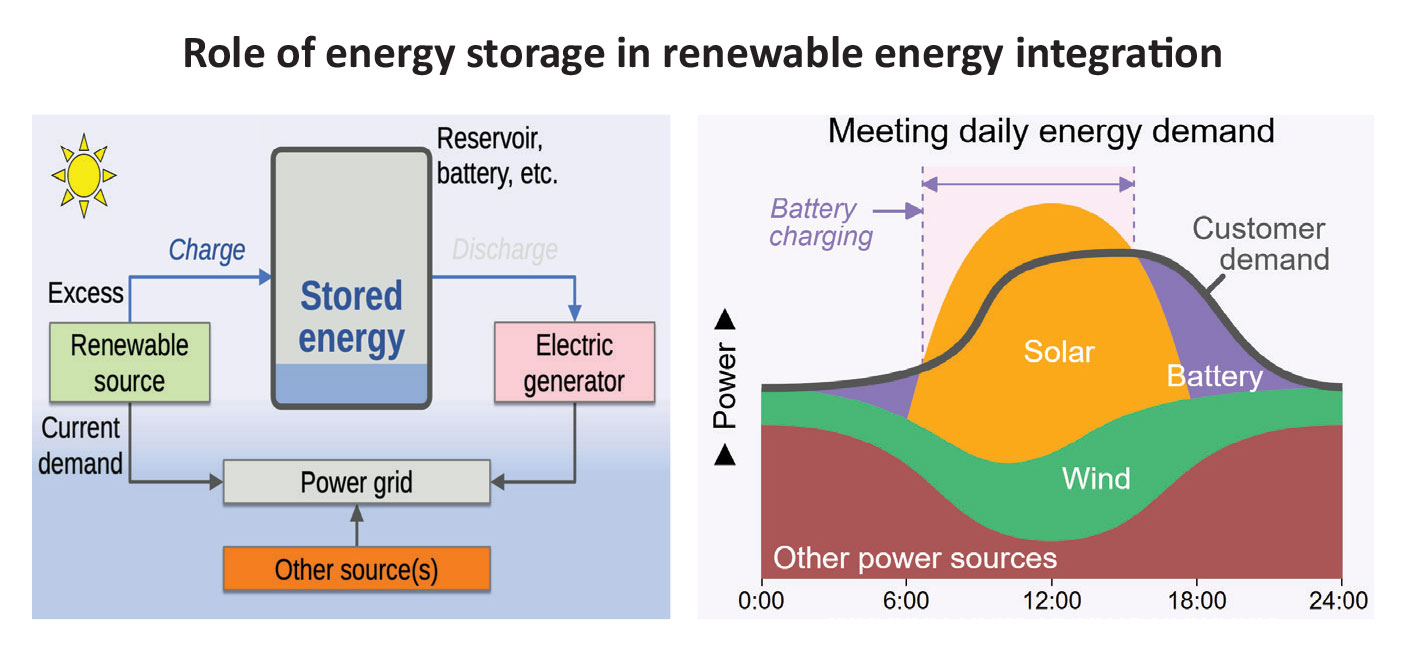
Energy storage is becoming a key enabler of flexibility at the distribution level. Several discoms are exploring battery energy storage systems to manage peak demand, smooth renewable output and support local grid stability. Time-of-day tariffs and demand response mechanisms are being introduced to influence consumption patterns and better align demand with renewable generation.
Policy support at the central and state levels is reinforcing these efforts. Many states have notified renewable energy policies and green open access regulations to encourage decentralised generation. Programmes such as the PM Surya Ghar: Muft Bijli Yojana are accelerating residential rooftop solar adoption, increasing the role of consumers as active participants in the distribution network.
Outlook
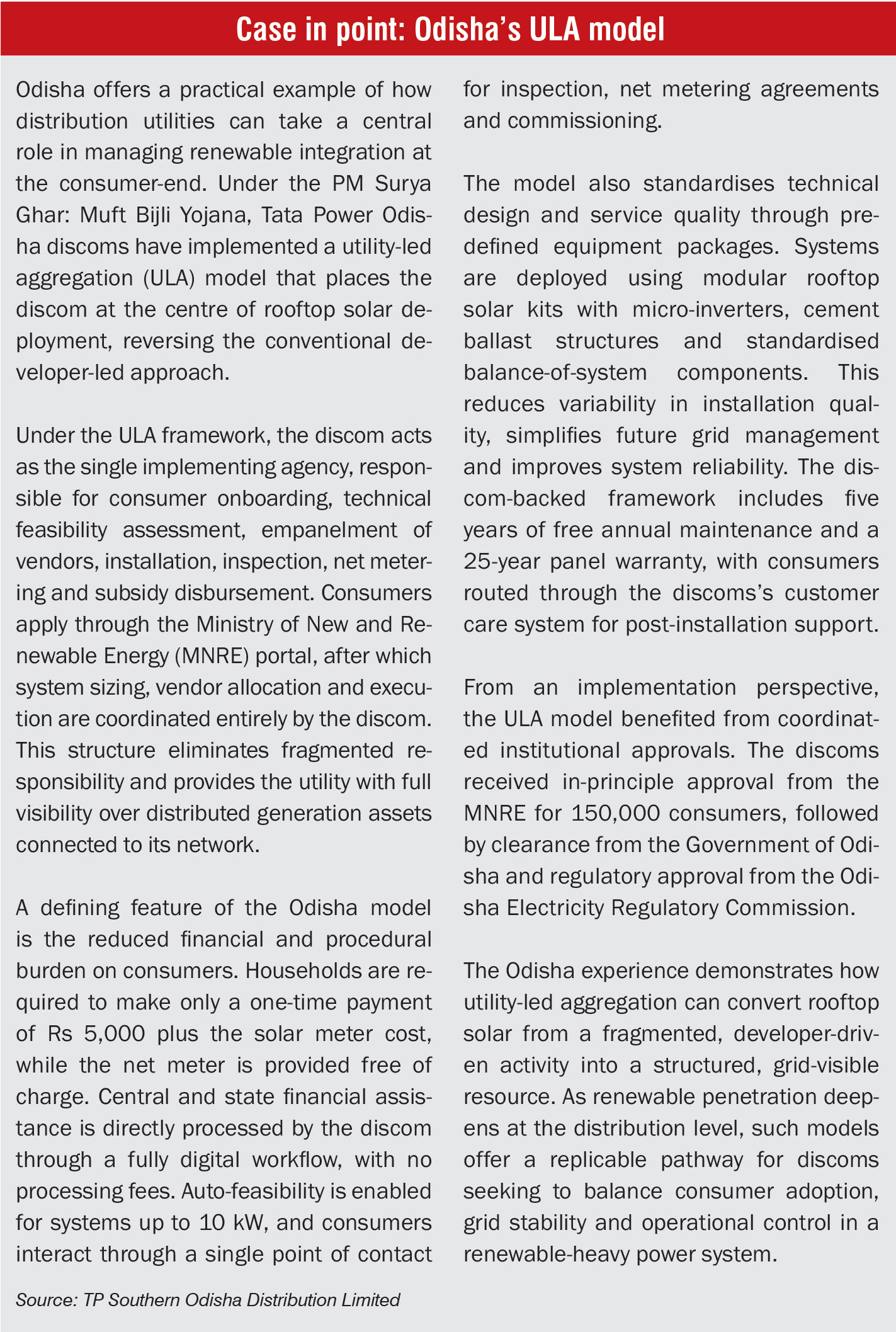
Renewable integration at the distribution level will increasingly define the performance of discoms. As rooftop solar, open access renewables and distributed storage scale up, utilities will need to combine digital systems, flexible procurement and consumer-centric models to maintain grid stability. Experiences such as Odisha’s utility-led aggregation framework indicate that discom-driven implementation can improve visibility, standardisation and control. Going forward, the pace of integration will depend less on capacity addition and more on how effectively discoms adapt their networks and business models to a decentralised energy landscape.
Based on presentations by TP Southern Odisha Distribution Limited and BSES Yamuna Power Limited at a recent Power Line conference