Operations and maintenance (O&M) strategies are central to the efficiency, availability and operating life of hydropower assets. Given the capital-intensive nature, long asset life and site-specific characteristics of hydropower projects, effective O&M practices are essential for sustaining generation performance and optimising life cycle costs.
Technical, operational and administrative activities aimed at ensuring reliable asset performance are covered under hydropower maintenance. Well-planned O&M frameworks help improve efficiency, reduce forced outages, extend equipment life and support systematic failure tracking. While maintenance was traditionally reactive and focused on corrective repairs, evolving operational requirements and technological advances have driven a shift towards structured, strategy-led maintenance aligned with grid needs and cost optimisation.
Need for O&M planning
In hydropower, the primary objective of O&M planning is to maximise asset availability by undertaking maintenance at the appropriate time and at an optimal cost, while ensuring continuity of generation. Plant operators must balance maintenance requirements against operational demands, as both excessive and delayed interventions come with performance risks. Frequent maintenance can disrupt generation schedules, extend outage durations and in some cases, accelerate component wear, while deferred maintenance increases the likelihood of equipment failure, forced outages and grid instability.
In India, the need for effective O&M planning is further amplified by an ageing hydropower fleet and challenging operating conditions. Many plants are exposed to high silt loads, sediment erosion and accelerated wear of turbine and generator components, particularly in the Himalayan river systems.
To support better maintenance decision-making, hydropower operators are increasingly focusing on improved visibility of asset health. The deployment of sensors and digital monitoring systems enables continuous condition tracking and early detection of performance deterioration, supporting predictive maintenance planning. However, translating these insights into effective maintenance actions remains complex due to the interaction among operational planning, asset availability and system-level requirements.
Operational constraints
Hydropower assets operate under a range of system-level constraints that directly influence equipment condition and maintenance requirements. Forced outages result in generation losses, water spillage with limited economic value and could potentially lead to unmet demand during critical periods.
These challenges highlight the importance of structured maintenance management policies that prioritise system reliability and operational continuity. Cost-effective maintenance planning must account for asset interdependencies, hydrological uncertainty and operational flexibility. Maintenance schedules, therefore, need to be forward-looking, adaptive and capable of responding to evolving system conditions and unforeseen operational disruptions.
Maintenance strategies
Maintenance strategies can broadly be classified into design-out, preventive and corrective. Each approach serves a specific purpose and can be applied based on asset criticality, failure modes and operational context.
Design-out maintenance
Design-out maintenance focuses on eliminating or significantly reducing maintenance requirements through design modifications. This approach leverages insights gained from operational experience and historical maintenance data to improve system architecture and component design. Design-out strategies are particularly relevant for assets with high maintenance costs arising from design limitations, poor accessibility or operation beyond original specifications.
By addressing the root cause of recurrent failures at the design stage, operators can reduce long-term maintenance expenditure and improve asset reliability. While design-out maintenance often involves higher upfront costs, it can deliver substantial life cycle benefits, especially for critical equipment with frequent failure histories.
Preventive maintenance
Preventive maintenance aims to reduce the probability of failure or performance degradation by intervening before faults occur. Time-based maintenance involves performing maintenance activities at fixed intervals, regardless of the asset condition. This approach is commonly followed for non-repairable components or systems with predictable wear patterns. While simple to implement, time-based maintenance can result in unnecessary interventions and suboptimal use of component life.
Condition-based maintenance, also known as predictive maintenance, relies on real-time or periodic monitoring of the asset’s condition to determine the optimal timing of maintenance actions. Components susceptible to unexpected failures benefit significantly from this approach, as it enables early detection of anomalies and targeted interventions.
Corrective maintenance
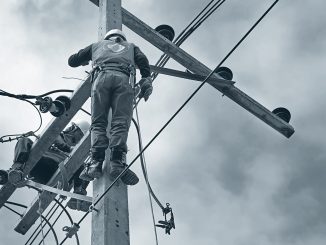
Corrective maintenance involves repairing or replacing components after a fault has been detected, in order to restore functionality. Depending on the severity and operational impact of the fault, corrective actions may be undertaken immediately or deferred.
In competitive power markets, unplanned outages resulting from corrective maintenance can lead to revenue losses, reduced availability and reputational risks. Additionally, safety and environmental considerations further limit the reliance on run-to-failure approaches, particularly for critical hydropower assets.
 Role of digital monitoring
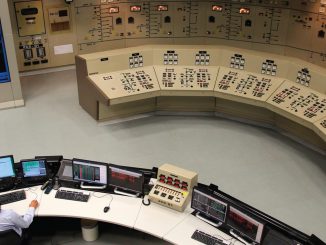
Condition monitoring systems have become integral to modern hydropower O&M practices. Integrated condition monitoring platforms collect and analyse data from a wide range of sensors to assess the performance and health of generation assets. In hydropower plants, sensor data is primarily used for anomaly detection, fault diagnosis and system protection.
The focus of condition monitoring systems is typically on major equipment such as turbines, generators and auxiliary systems. Vibration analysis, in particular, is widely used to detect early signs of mechanical issues such as imbalance, misalignment and bearing wear. Changes in vibration amplitude and frequency can indicate incipient damage, enabling timely maintenance interventions before failures occur.
Condition monitoring techniques can be broadly classified into mechanical, electrical and hydraulic monitoring. Mechanical monitoring includes vibration analysis, shaft displacement measurement and bearing temperature monitoring. Electrical monitoring focuses on insulation systems, partial discharge measurements and analysis of electrical parameters such as current, voltage and power factor to identify winding and rotor faults. Hydraulic monitoring involves tracking parameters such as pressure, flow and temperature to detect cavitation, flow instabilities and turbine wear.
Modern digital monitoring platforms now combine advanced analytics, cloud computing and digital modelling tools to provide continuous visibility into hydropower plant performance. These systems enable early detection of performance deviations, allowing operators to intervene before issues escalate into major outages. Integration with supervisory control and data acquisition systems and internet of things infrastructure supports remote monitoring and centralised analysis across multiple units and plants. Automated alerts, trend analysis and fleet-level dashboards improve decision-making, optimise maintenance scheduling and enable more efficient allocation of resources.
Outlook
The future of hydropower O&M lies in the integration of advanced analytics, digital twins and system-level optimisation models. As hydropower assets age and operational demands increase, traditional maintenance approaches will be insufficient to meet reliability and flexibility requirements.
Such frameworks must be capable of modelling fleet-level interactions, incorporating hydrological uncertainty, market dynamics and operational constraints. By aligning maintenance decisions with generation planning and reservoir management, operators can minimise downtime, optimise resource utilisation and enhance overall system performance.
Policy support and regulatory incentives will also play a key role in accelerating the adoption of advanced O&M practices. Investments in digital infrastructure, workforce training and data governance will be essential to unlock the full potential of condition-based and predictive maintenance strategies.
In an increasingly renewables-dominated energy system, hydropower’s role as a provider of flexibility and reliability will only grow. Ensuring the long-term performance of hydropower assets through robust, technology-enabled O&M strategies will be central to sustaining this role and maximising value for utilities, consumers and the grid.
Aastha Sharma